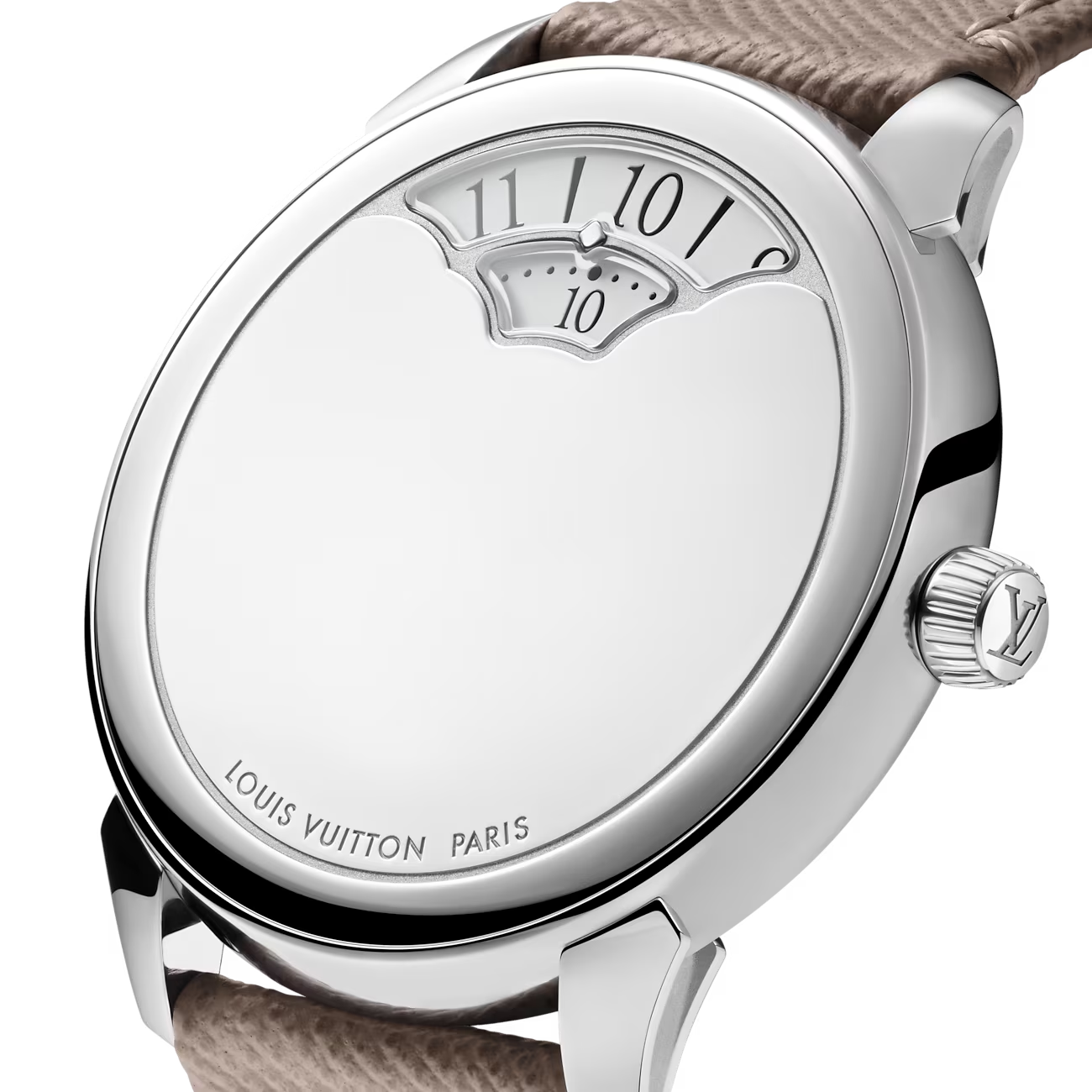
Louis Vuitton introduces a mirror-finished hardened-steel interpretation of its Tambour Convergence, combining an unconventional guichet display with proprietary movement technology and contemporary materials.
Louis Vuitton continues to explore the possibilities of contemporary watchmaking with a new interpretation of its Tambour Convergence collection. Executed in hardened steel with an exceptionally reflective finish, the latest 37mm timepiece brings together unconventional display architecture, specialised material treatment and the maison’s in-house mechanical expertise.
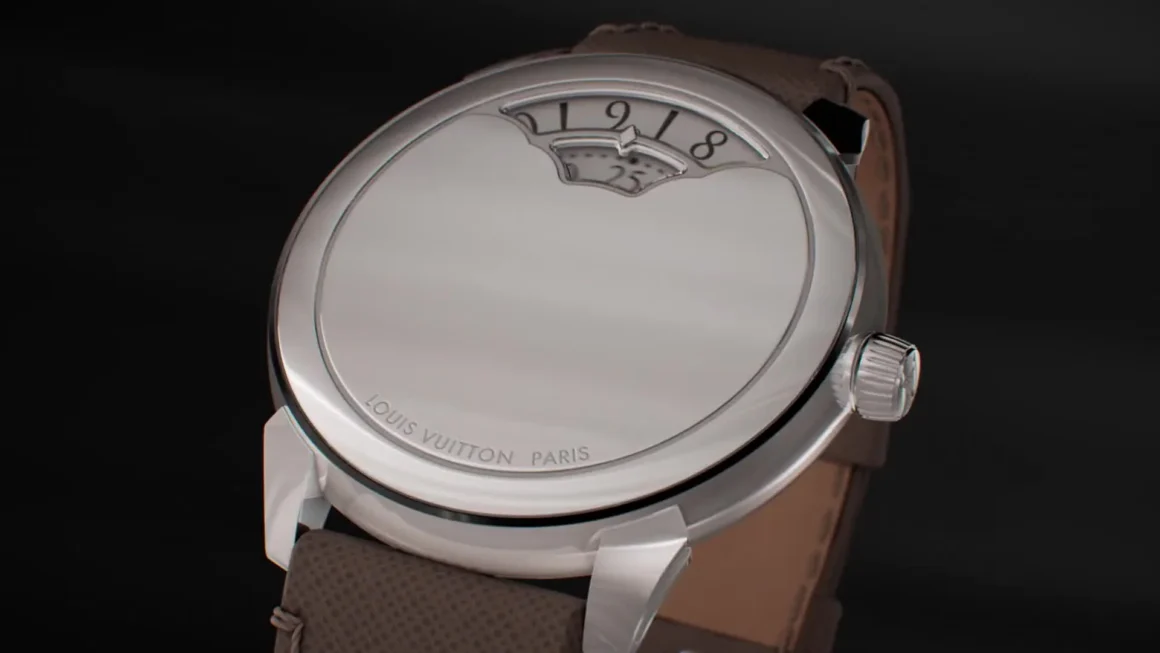
Rather than relying on a conventional watch face, the Tambour Convergence adopts the guichet display, an approach in which apertures reveal the time through rotating discs instead of traditional hands and hour markers. The result is a watch that places mechanical movement and visual restraint at the centre of its identity.
Following earlier interpretations in rose gold and platinum, the new steel edition introduces a different material character, with a mirror-like surface that gives the watch an almost sculptural presence.

A Different Way Of Reading Time
The guichet display has a distinctive place in horological design. Instead of presenting the hours and minutes across a conventional dial, the time is revealed through small windows or apertures.
On the Tambour Convergence, this principle is realised through overlapping hour and minute discs. Their gradual movement reveals the time through carefully positioned openings, creating a display that is both functional and visually distinctive.
The arrangement gives the dial a clean, uninterrupted appearance while allowing the mechanical components to remain central to the experience.
It is an approach that reflects Louis Vuitton’s willingness to explore alternative interpretations of established watchmaking conventions.

The Character Of Hardened Steel
The defining feature of this edition is its specially treated steel construction.
Louis Vuitton uses a patented surface-hardening treatment that, according to the manufacturer, makes the material six times harder than its original form. The process is intended to improve resistance to scratches and everyday wear while preserving the highly polished appearance.
The mirror-finished surface creates a striking contrast with the watch’s more restrained proportions. Its reflective quality changes with the surrounding light, giving the case and dial an almost liquid appearance.
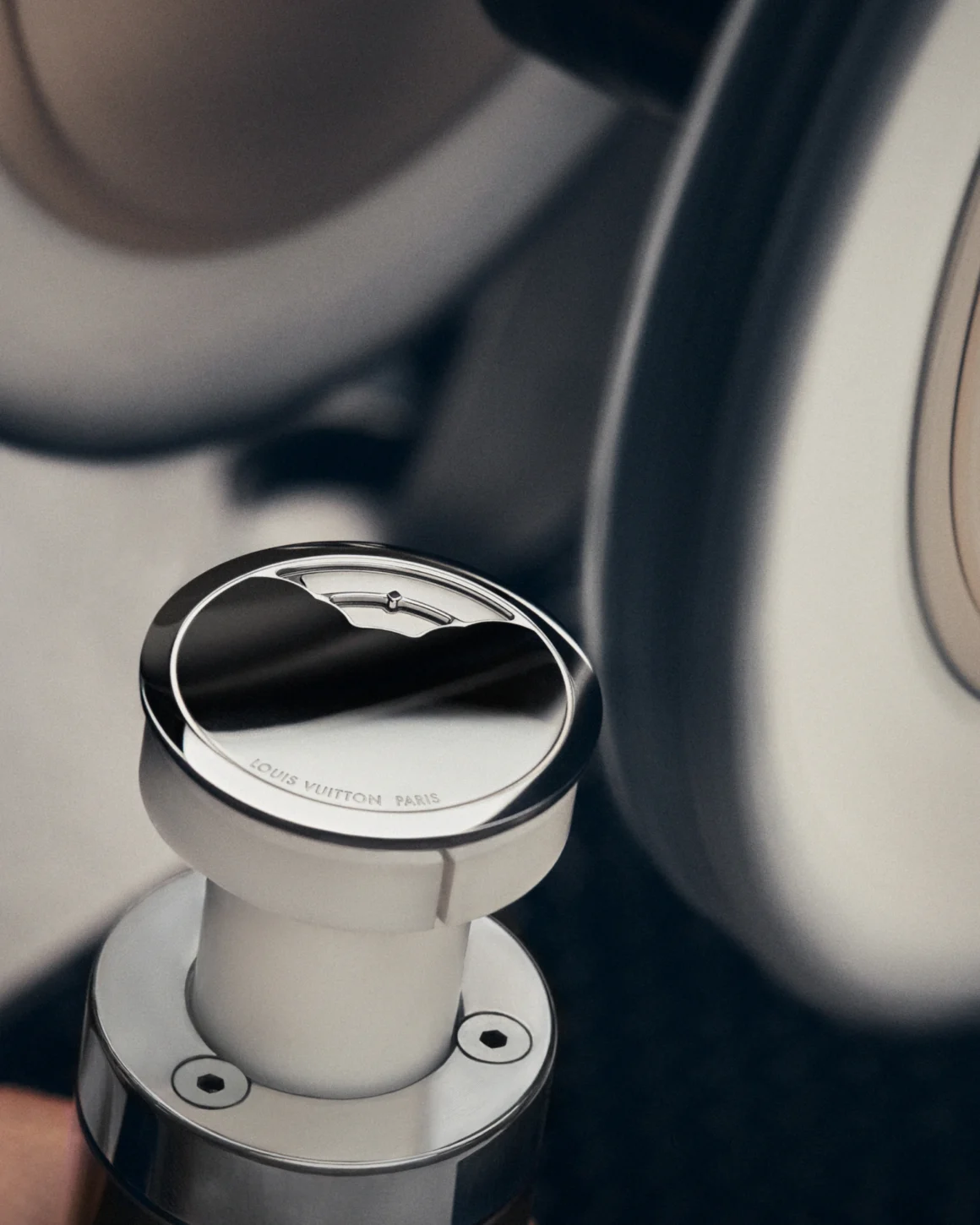
The material is shaped by artisans at La Fabrique des Boîtiers, Louis Vuitton’s specialist case-making facility. The hollowed lugs receive a combination of mirror polishing and sandblasted finishing, introducing subtle variations in texture across the exterior.
The result is a watch whose identity is defined as much by its material treatment as by its mechanical construction.
Inside The LFT MA01.01 Movement
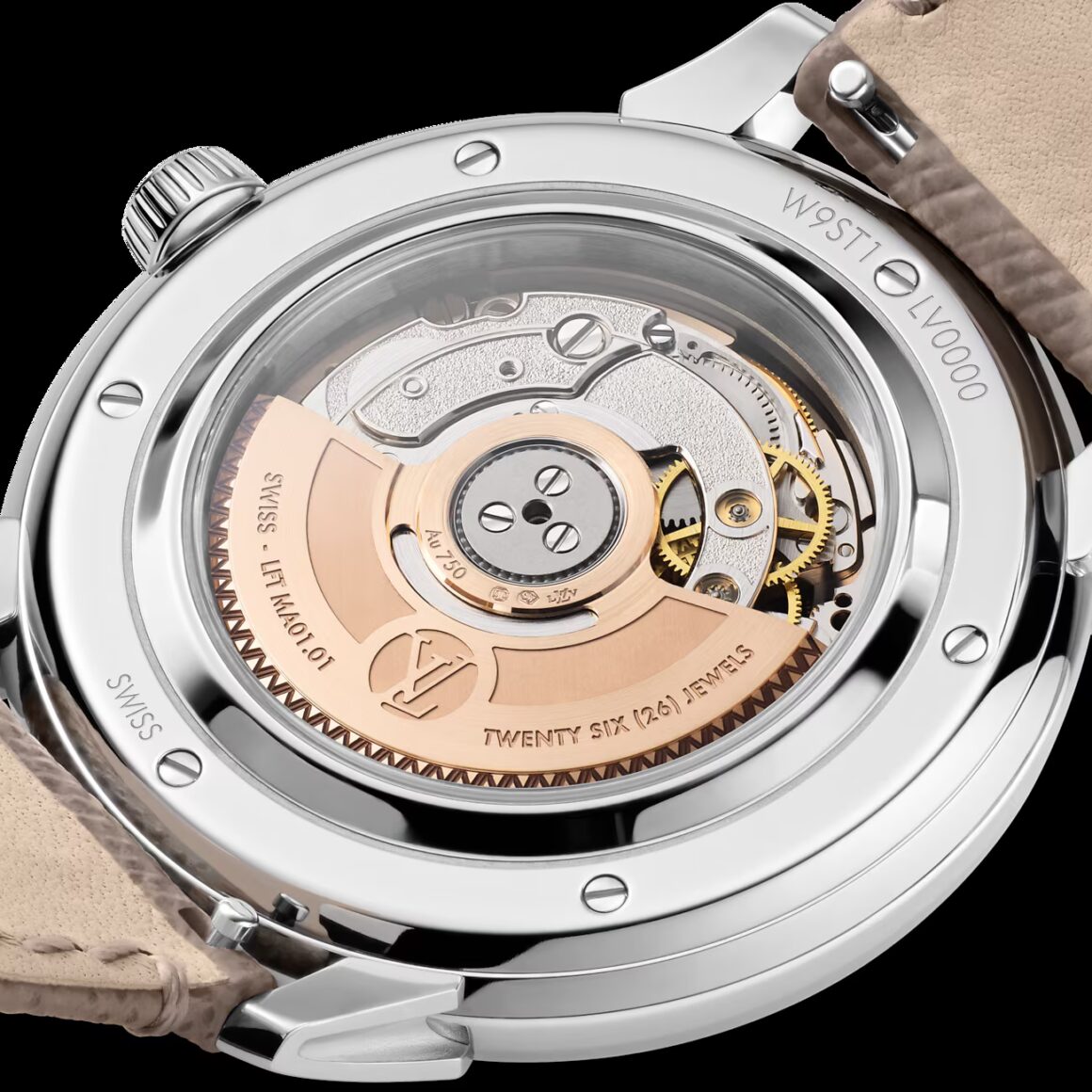
Powering the Tambour Convergence is the in-house automatic LFT MA01.01 calibre.
The 26-jewel movement drives the overlapping hour and minute discs, translating the unconventional display into a mechanical timekeeping system.
An open caseback provides a view of the movement, introducing another dimension to the watch’s design. Rather than concealing its mechanical construction, Louis Vuitton allows the wearer to appreciate the engineering behind the display.
The combination of an unconventional dial and an automatic in-house movement positions the Tambour Convergence within the maison’s broader effort to develop a more distinctive horological identity.
Considered Details And Finishing
The 37mm case is complemented by a hand-stitched Arroyo Grey Saffiano calf leather strap, introducing a restrained contrast to the reflective steel.
A hardened-steel pin buckle carries the Louis Vuitton signature, while the overall finishing balances polished surfaces with more subdued textures.
The watch is also presented with a dedicated monogrammed storage case, extending the maison’s familiar attention to presentation into its watchmaking offering.
These details reinforce the relationship between Louis Vuitton’s established design vocabulary and its expanding horological ambitions.
Contemporary Watchmaking Through A Different Lens
The Tambour Convergence demonstrates how established luxury houses are continuing to explore new expressions of mechanical watchmaking.
For Louis Vuitton, the appeal lies in combining traditional horological disciplines with distinctive materials and design choices. The guichet display challenges familiar expectations of how time should be presented, while the hardened-steel treatment gives the watch a material identity that sets it apart from more conventional steel timepieces.
Priced at US$25,200, approximately R421,000 at an illustrative exchange rate of R16.70 to the dollar, the watch is available through Louis Vuitton.
Its significance, however, extends beyond its price. The Tambour Convergence offers a considered interpretation of modern horology, where the display, material and movement work together to create a recognisable design language.
In a category where heritage and established conventions carry considerable influence, Louis Vuitton is making its own statement about how a contemporary watch can look, feel and communicate time.