After surviving revolution, disappearing in a spectacular robbery and reportedly being concealed inside an apple, a historic 9.01-carat pink diamond returns to public view at the Château de Chantilly.
Some jewels are defined by their brilliance. Others are distinguished by the history they carry. The Grand Condé belongs to the latter category, a rare natural pink diamond whose story moves through French aristocratic history, a daring theft and an extraordinary act of concealment.
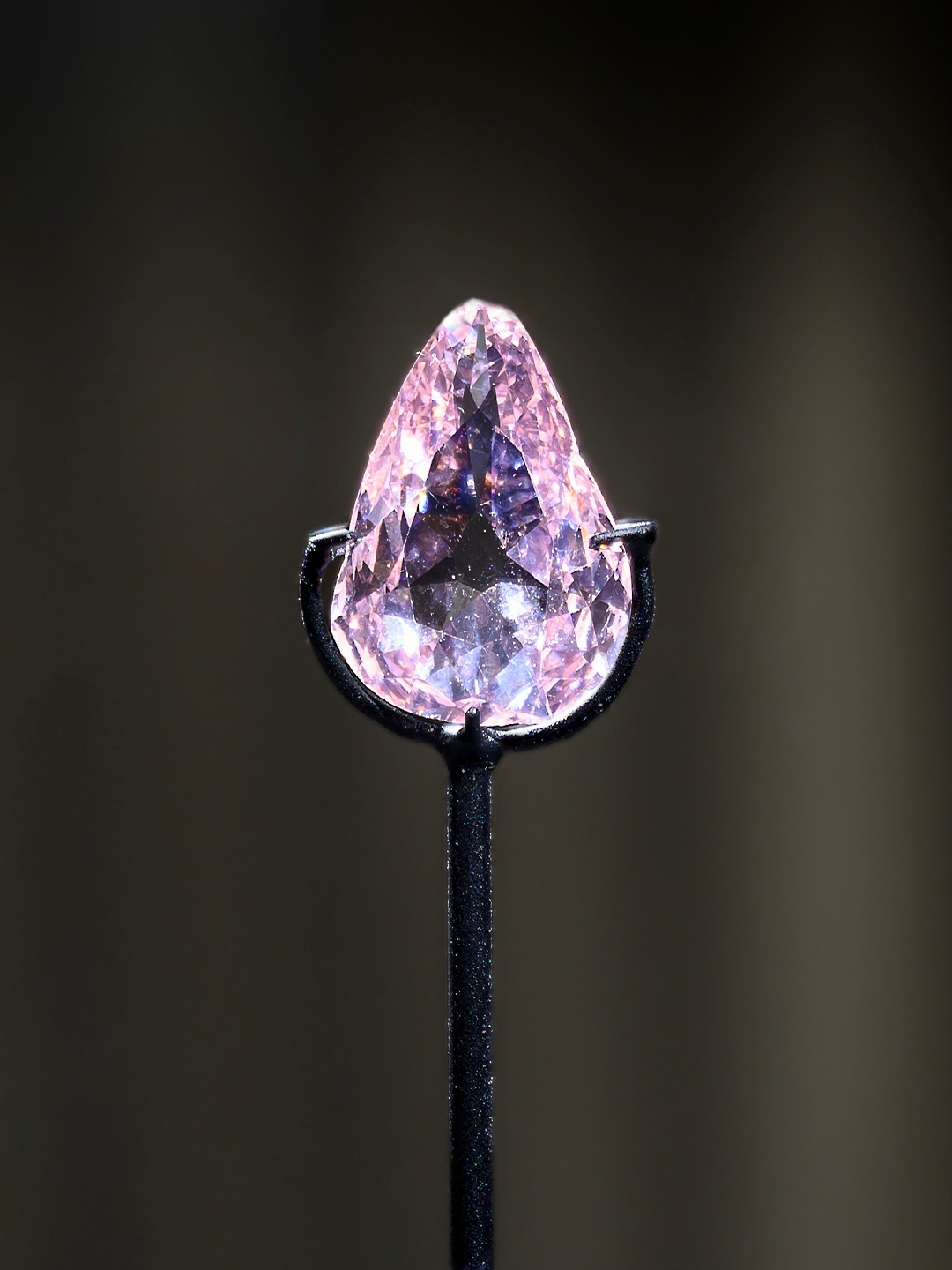
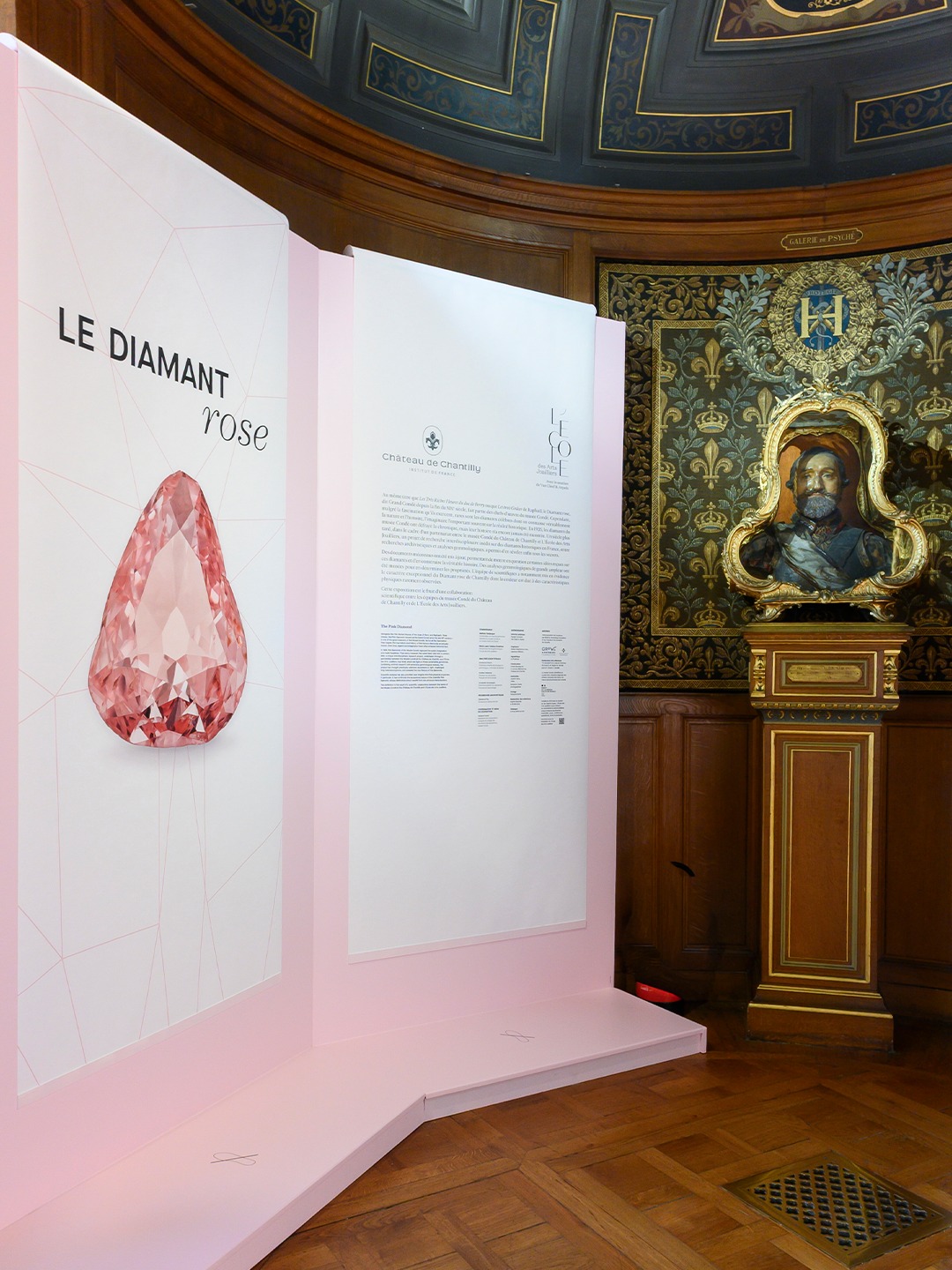
The 9.01-carat, pear-shaped gemstone, part of the historic collections of the Château de Chantilly in France, is returning to public display at the Condé Museum for the first time in almost a century. Its exhibition offers visitors an opportunity to encounter a jewel whose past is as remarkable as its physical rarity.
According to the account accompanying its return, the diamond was stolen from the château in October 1926 and later hidden inside an apple. After decades away from public view, the original stone is once again on display, with the exhibition scheduled to run until 3 January 2027.
A Jewel That Survived Revolution
The Grand Condé’s significance extends beyond its unusual colour. Its history includes the upheaval of the French Revolution, a period during which aristocratic collections and symbols of inherited wealth faced extraordinary uncertainty.
The diamond ultimately became part of the historic collections associated with the Château de Chantilly, a French estate renowned for its cultural and artistic heritage. Its presence within the Condé Museum places it within a wider tradition of collecting in which objects are valued not only for their materials but also for their connections to people, institutions and historical events.
That provenance gives the gemstone a particular character. It is not simply a rare diamond preserved for its beauty; it is an object whose survival connects different chapters of French history.
The Theft That Became Part Of Its Legend
In October 1926, the Grand Condé was stolen from the Château de Chantilly. The story of its disappearance acquired an especially unusual detail: the diamond was reportedly concealed inside an apple.
The hiding place is striking precisely because of its simplicity. A gemstone associated with aristocratic wealth and protected within a historic collection was reduced to something that could be concealed in an everyday object.
The original press photographs from the period document jeweller Maurice Seror working on the diamond’s setting following its recovery. They offer a visual link to the episode and to the restoration of the jewel’s place within its historical setting.
For a gemstone of this rarity, the theft might have permanently severed its connection to the collection in which it had been preserved. Its return instead added another chapter to its story, turning the circumstances of its disappearance and recovery into an enduring part of its identity.
The Science Behind The Pink
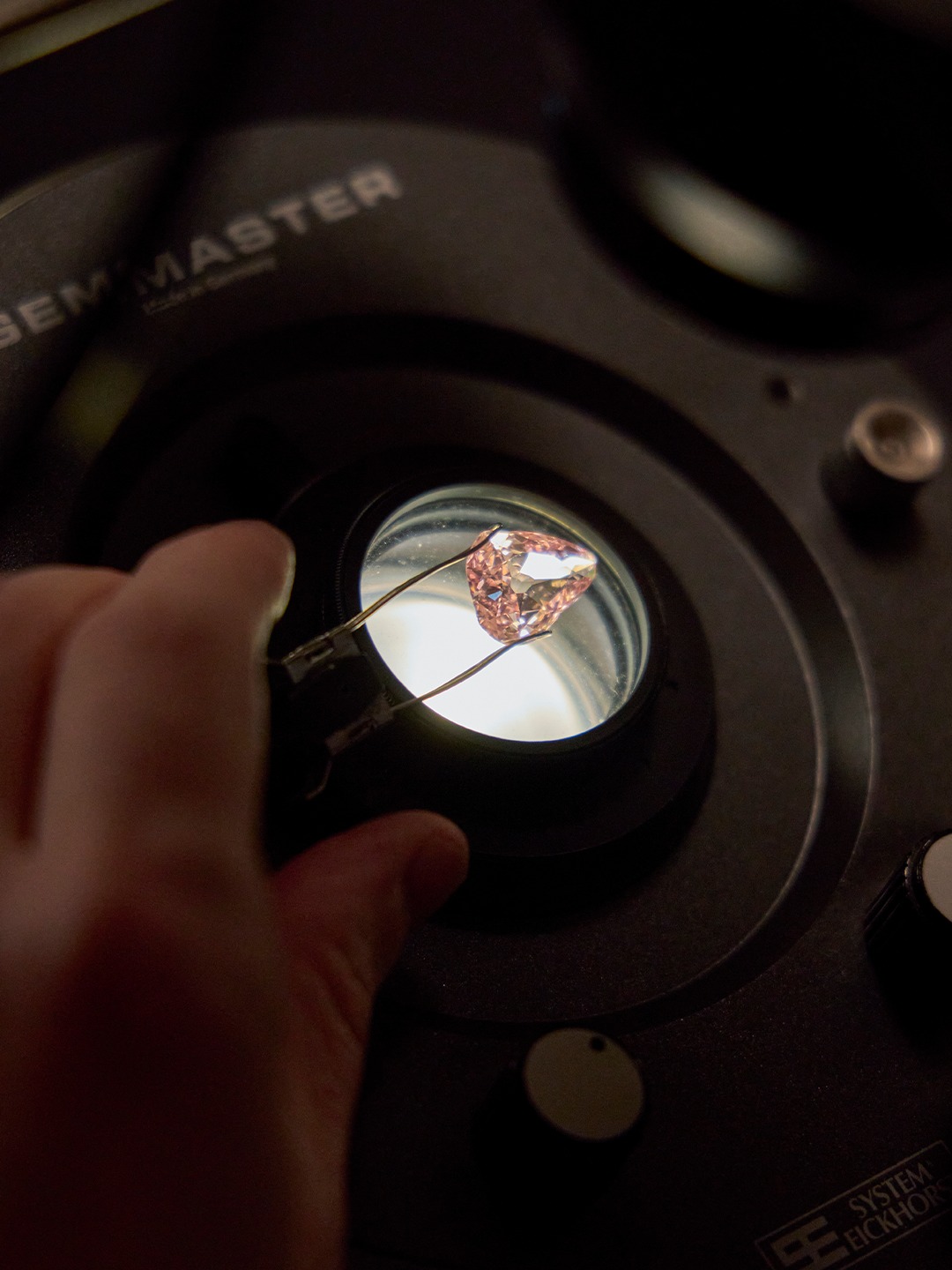
The Grand Condé is classified as a Type IIa diamond, a category associated with exceptionally low levels of measurable nitrogen and other impurities. Type IIa stones represent a small proportion of gem-quality diamonds, contributing to their interest among gemologists and collectors.
Its natural pink colour adds another layer of rarity. Unlike the more familiar colourless diamond, a naturally pink gemstone owes its appearance to structural characteristics within the crystal rather than simply to the presence of a colouring impurity. Natural pink diamonds remain among the most sought-after coloured stones in the jewellery world.
The Grand Condé is cut into an irregular pear shape, with 77 facets: 32 across the crown and 45 across the pavilion. These facets influence how light enters and returns through the stone, shaping its visual character.
Its cut and colour make it a distinctive example of historical gem craftsmanship. Yet the diamond’s appeal cannot be separated from the fact that its physical form has endured through decades of concealment and changes in its public presentation.
The Original Returns To View
For decades, visitors admired a replica while the original diamond remained locked away. The distinction between the two highlights an enduring challenge for museums: how to make extraordinary and historically significant objects accessible while safeguarding the originals.
The return of the Grand Condé gives audiences the opportunity to see the actual gemstone rather than a representation of it. For jewellery enthusiasts, that means encountering the precise colour, proportions and facets of the historic stone. For the wider public, it offers a tangible connection to an event that might otherwise survive only through photographs and written accounts.
Its exhibition at the Condé Museum continues until 3 January 2027, bringing the original diamond back into the public eye.
The Grand Condé’s story is ultimately about more than rarity. Its significance lies in the intersection of natural beauty, historical continuity and human ingenuity. A pink diamond survived revolution, disappeared in a theft and became associated with one of the most unusual hiding places imaginable. Nearly a century later, its return allows a new generation to encounter both the gemstone and the history embedded within it.