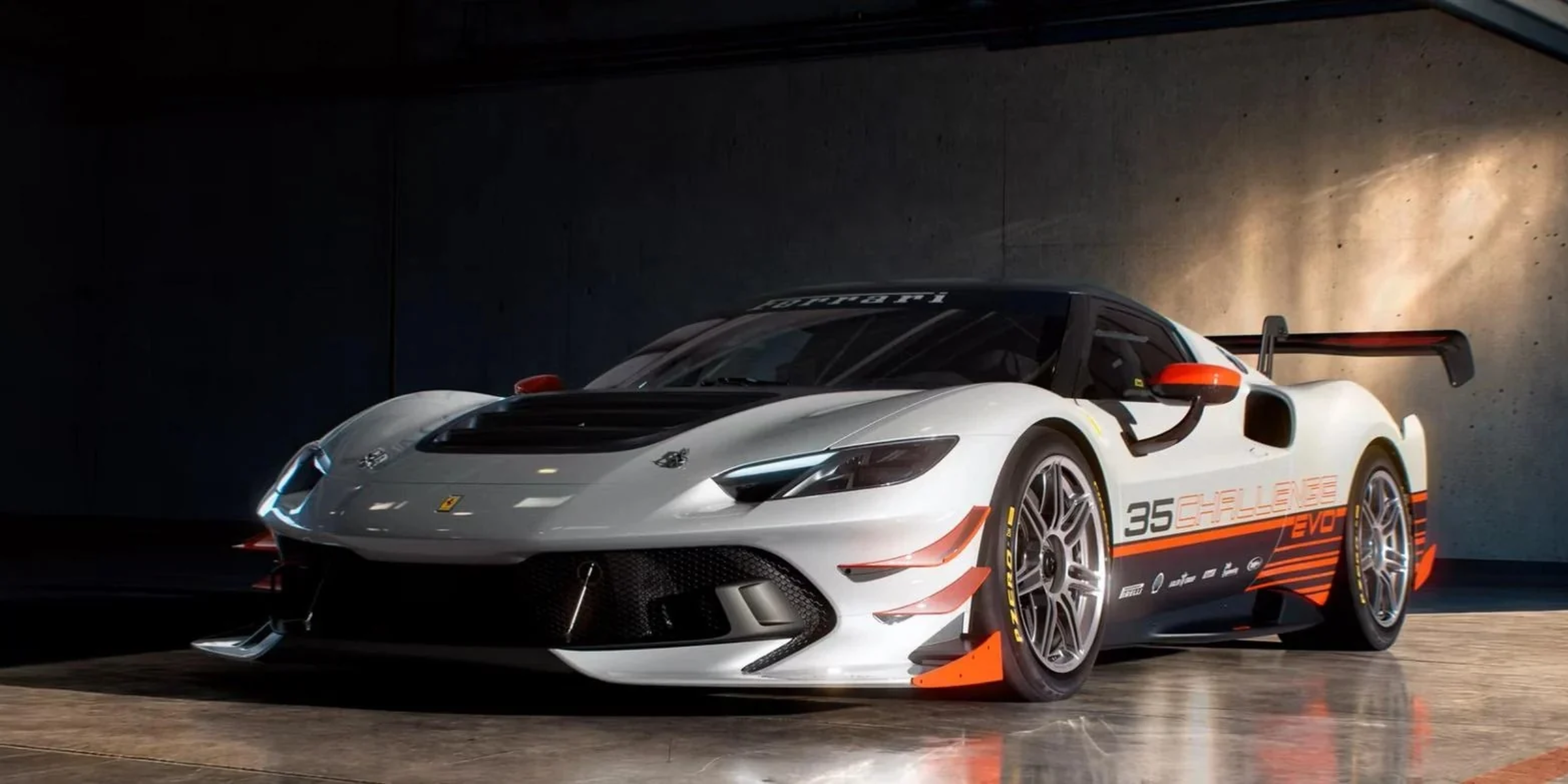
In an era when supercar manufacturers increasingly turn to electrification, additional power and increasingly sophisticated technology to extract performance, Ferrari has taken a rather different approach. The 296 Challenge Stradale removes the hybrid system from the equation, placing its emphasis on reduced weight, aerodynamic efficiency and a more direct connection between driver and machine.
Based on the 296 platform, the new model represents a more uncompromising interpretation of Ferrari’s modern V6 supercar. Its combination of a twin-turbocharged engine, extensive aerodynamic revisions and a stripped-back interior reflects a philosophy that has long occupied an important place in the marque’s history: performance is not always about adding more.
The name itself carries historical significance. The original 360 Challenge Stradale arrived in 2003, bringing the character and engineering of Ferrari’s racing programme into a road-legal package. More than two decades later, the new 296 Challenge Stradale revisits that ambition with a considerably more advanced mechanical and aerodynamic foundation.
A V6 Without Hybrid Assistance
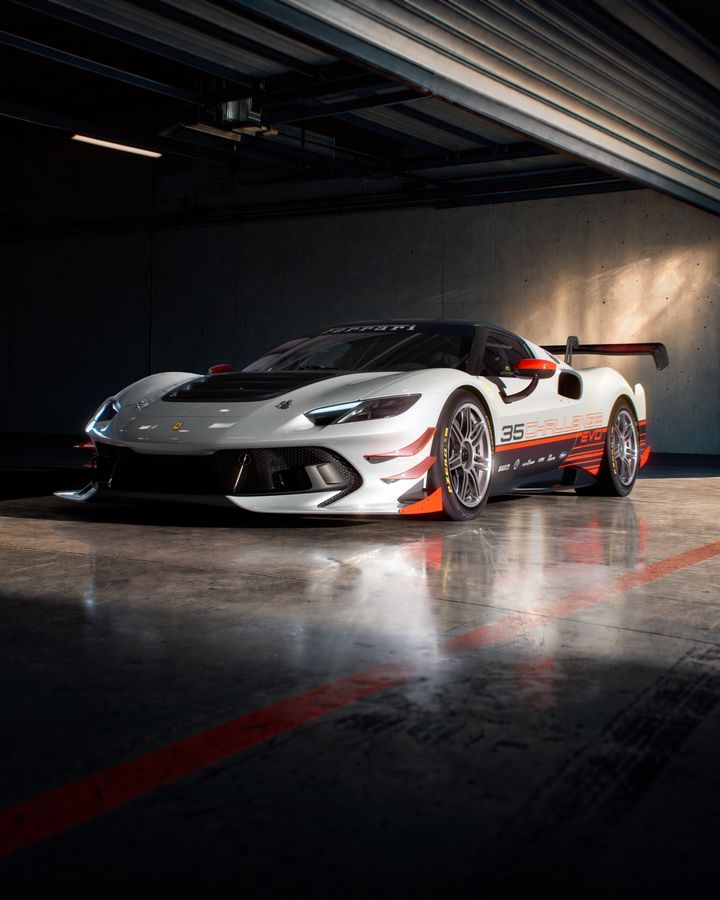
At the heart of the 296 Challenge Stradale is a 3.0-litre, 120-degree V6 engine featuring twin turbochargers. Producing 661 horsepower and 546 lb-ft of torque, the engine delivers its maximum power at 8,000 rpm.
Unlike the 296 GTB and 296 Speciale, the Challenge Stradale does without an electric motor and battery. Power is delivered exclusively through the combustion engine, with an eight-speed dual-clutch transmission sending it to the rear wheels.
Ferrari has revised the engine’s boost pressure and cam timing to improve torque delivery, helping compensate for the absence of electric assistance. The decision to remove the hybrid hardware also produces a considerable weight advantage.
The car is reported to be 309 pounds lighter than the 296 GTB and 176 pounds lighter than the 296 Speciale, with a claimed dry weight of approximately 2,932 pounds.
The resulting performance figures remain formidable. Acceleration from zero to 62 mph takes a claimed 2.8 seconds, while 124 mph arrives in 7.9 seconds. More revealing, however, is its reported Fiorano lap time of 1 minute and 18.5 seconds, placing it half a second ahead of the more powerful 296 Speciale.
It is an interesting demonstration of what can be achieved when weight reduction and mechanical focus become as important as outright power.
Aerodynamics With A Racing Purpose
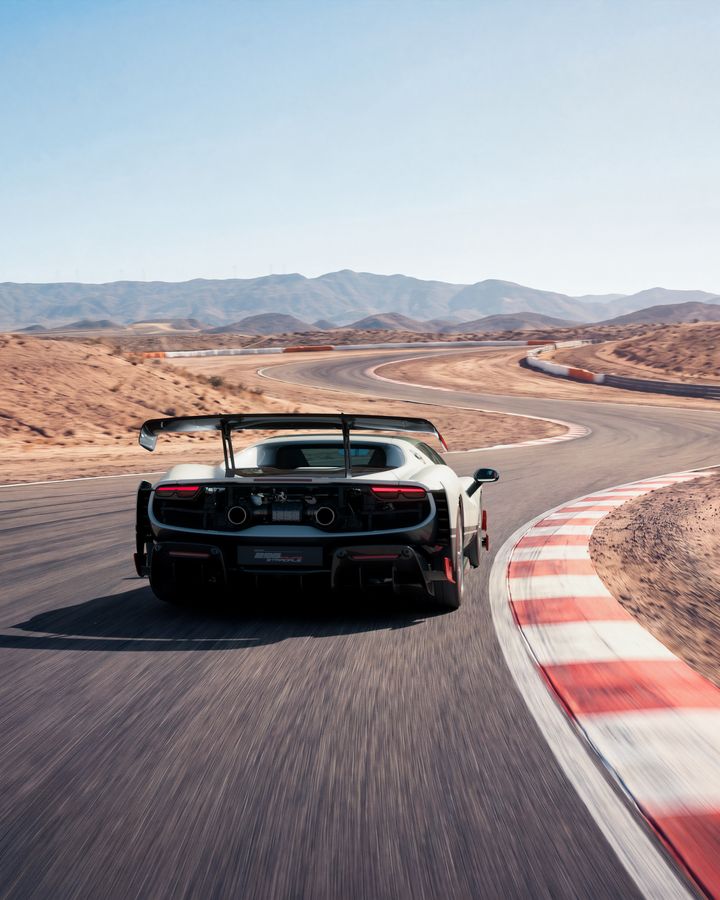
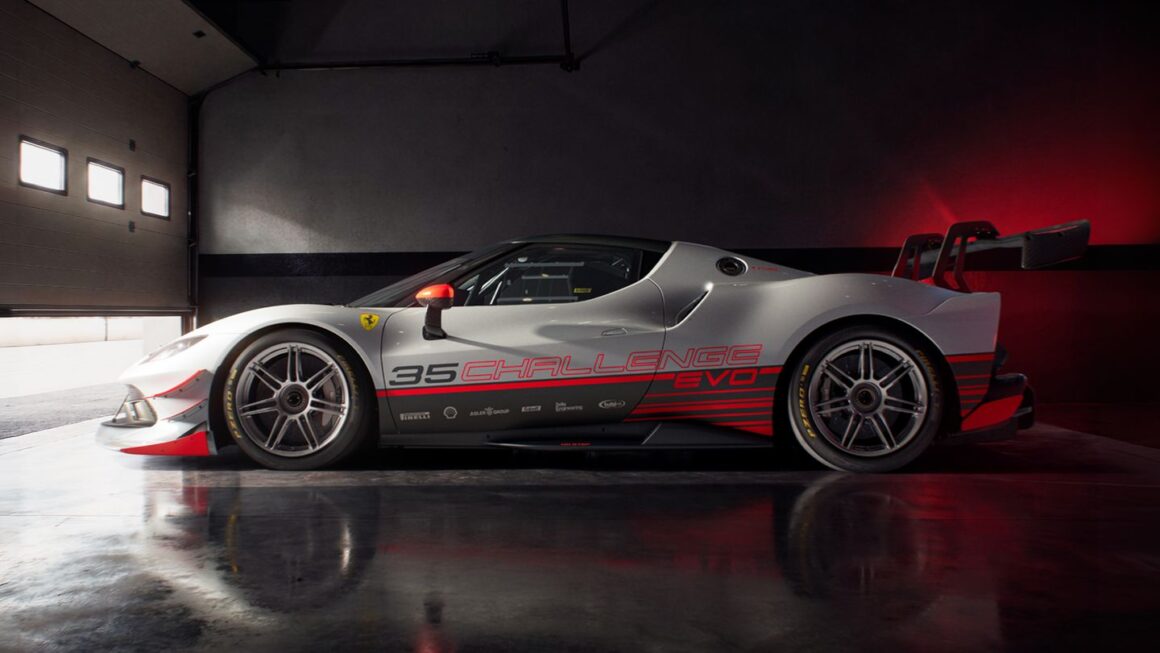
The Challenge Stradale’s exterior makes its intentions immediately apparent. A prominent front splitter, additional canards, revised bonnet openings, an enclosed underbody and a substantial fixed rear wing distinguish it from the standard 296.
Ferrari claims the aerodynamic package generates 1,360 pounds of downforce at 155 mph, a 72 per cent improvement over the 296 GTB. The rear wing alone contributes approximately 595 pounds, while the remaining components work together to maintain stability and grip at higher speeds.
The mechanical revisions extend beyond the bodywork. Stiffer suspension springs, recalibrated adaptive dampers and wider front and rear tracks contribute to a chassis designed for more demanding driving conditions.
Carbon-ceramic brakes provide stopping power, while buyers can choose between Pirelli P Zero R tyres and the more track-focused P Zero Trofeo RS. Ferrari has also revised its electronic systems, incorporating updated ABS Evo and predictive slip-control technology to help drivers manage the car’s considerable performance.
Despite its competition-inspired character, the Challenge Stradale retains two separate bumpy-road suspension settings, acknowledging that its life will not be restricted entirely to circuit driving.
A Cabin Stripped Of Convention
Inside, the same weight-saving philosophy continues.
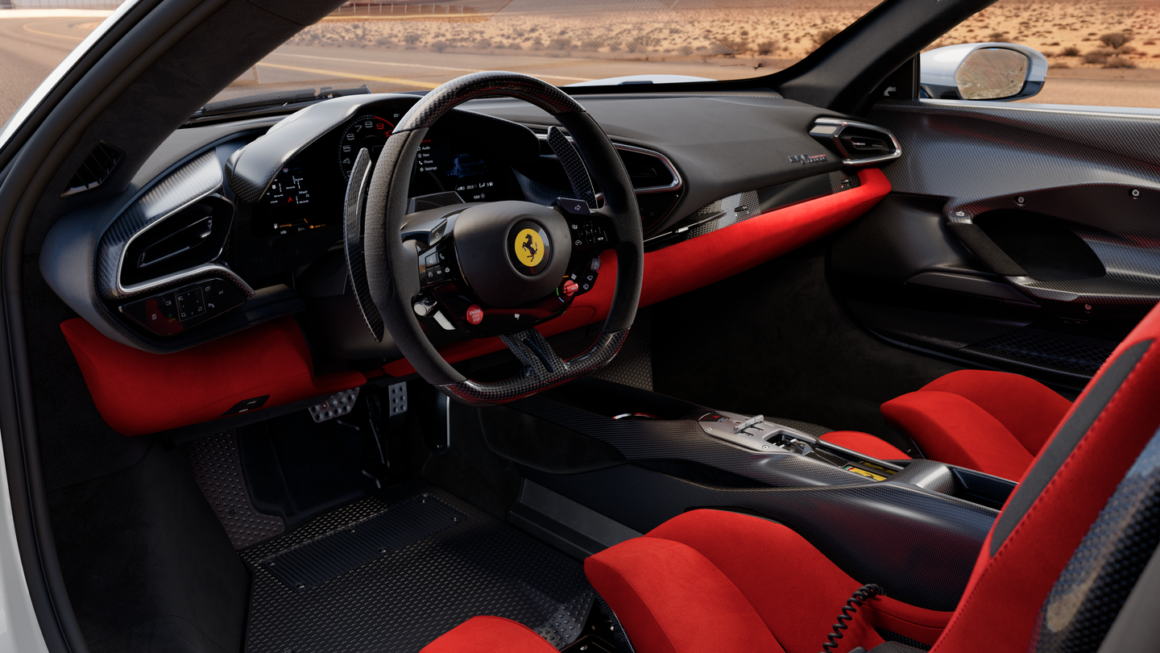
Extensive carbon-fibre components, lightweight tubular racing seats and simplified door panels replace some of the more conventional luxury appointments associated with road-going grand tourers. Conventional carpeting and sound insulation have been reduced or removed, allowing more of the engine’s mechanical character to enter the cabin.
An optional exposed-chassis configuration takes the approach further, reinforcing the car’s relationship with Ferrari’s competition machinery.
Yet the Challenge Stradale does not abandon modern convenience altogether. Driver assistance systems and selected everyday features remain available, preserving a degree of usability within an otherwise uncompromising package.
The distinction is important. Ferrari has not simply created a stripped-out track car. It has attempted to translate the priorities of competition engineering into a road-going machine.
A Different Interpretation Of The Modern Supercar
The 296 Challenge Stradale occupies an interesting position within Ferrari’s current performance hierarchy. Rather than pursuing the most powerful or technologically complex interpretation of the 296, it places greater emphasis on precision, feedback and reduced mass.
Its philosophy brings to mind the Porsche 911 GT3 RS, a car whose reputation has been built around aerodynamic efficiency, chassis development and circuit performance rather than power alone.
With an anticipated price of approximately US$330,000 based on reported British pricing, the Challenge Stradale is positioned below the more expensive 296 Speciale. Ferrari is also positioning it as a regular-production model rather than a strictly limited collector’s edition.
That makes its significance less about exclusivity and more about the engineering philosophy behind it.
At a time when electrification is becoming an increasingly important part of high-performance motoring, Ferrari’s decision to remove the hybrid system is a notable departure from the prevailing direction of the industry.
The 296 Challenge Stradale makes a compelling case for another interpretation of progress: one where performance is found not only in what can be added, but also in what can be removed.
Sometimes, the most revealing expression of engineering ambition is knowing exactly what to leave behind.