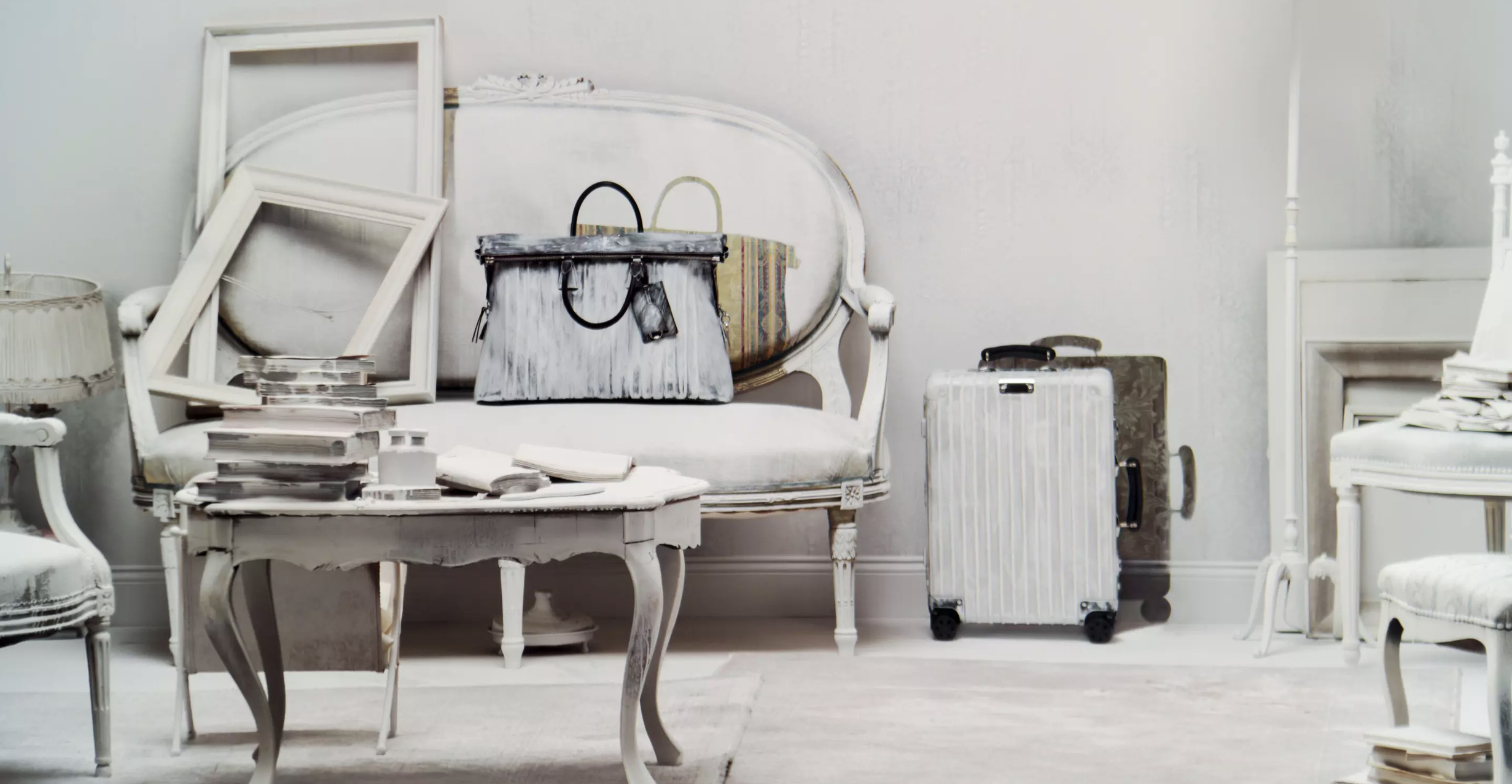
Luxury luggage is traditionally designed to preserve its appearance, resisting the marks and imperfections that accumulate through travel. The latest collaboration between RIMOWA and Maison Margiela proposes a different perspective. Rather than concealing the effects of use, the two houses have created a collection that allows time, movement and handling to become part of its aesthetic identity.
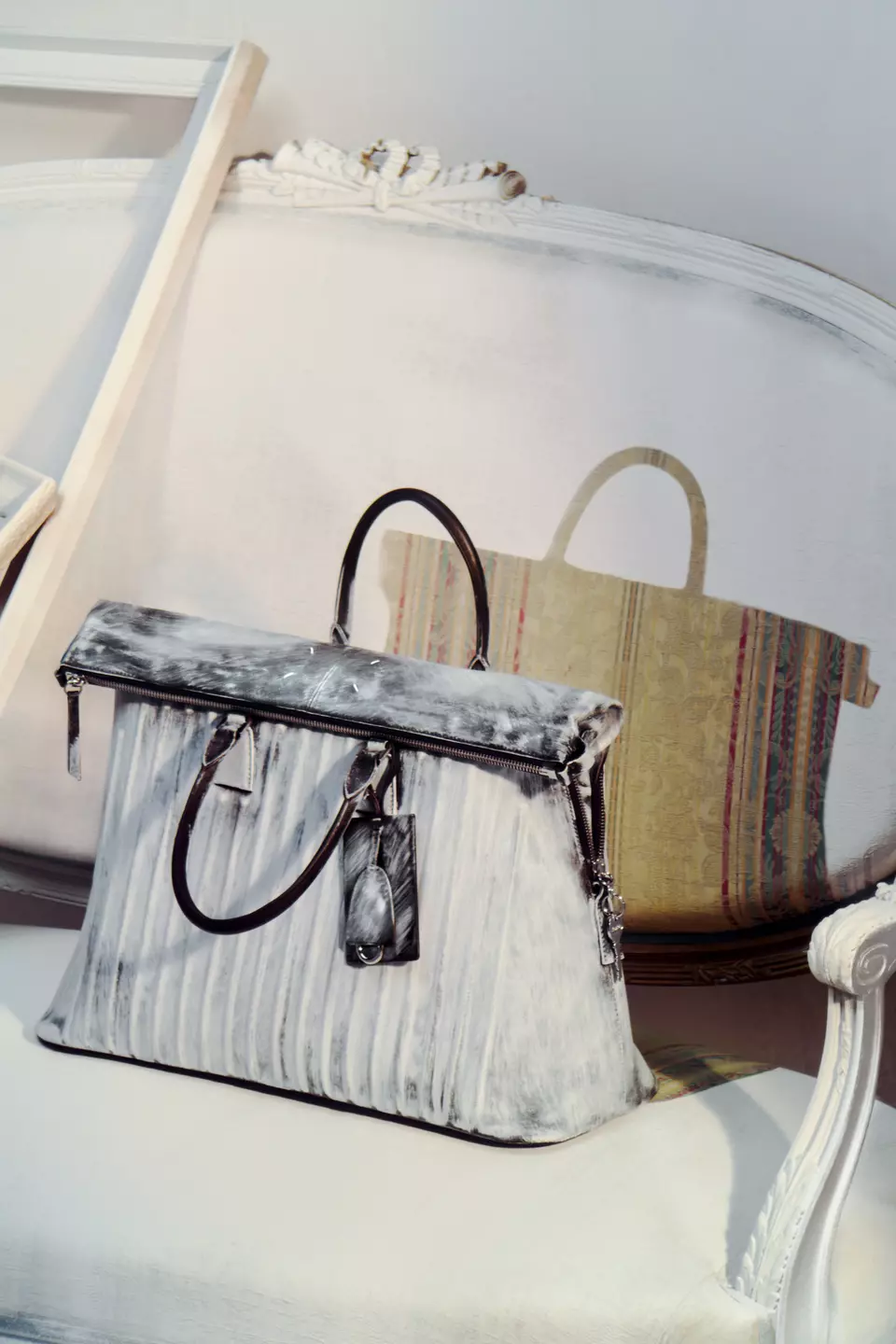
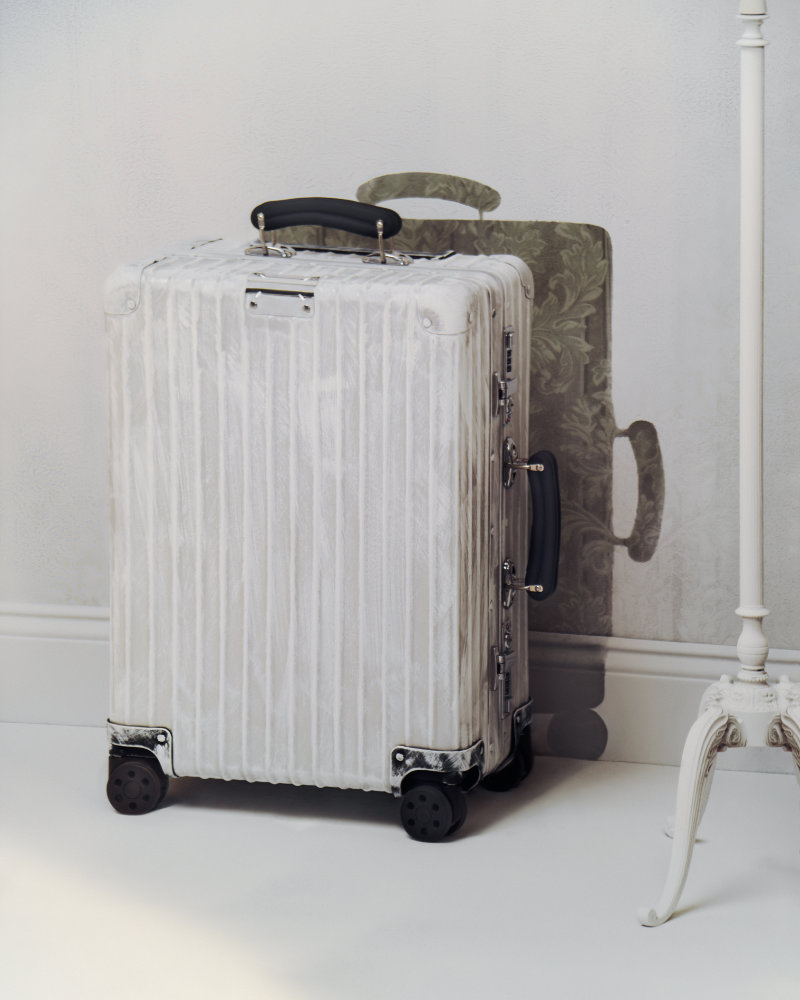
The limited-edition collaboration brings together RIMOWA’s aluminium engineering and Maison Margiela’s distinctive approach to material, construction and craftsmanship. Its centrepiece is a reinterpretation of the Classic Cabin suitcase, accompanied by the Maison Margiela 5AC XL bag. Both pieces share a hand-applied white finish designed to evolve with use, gradually revealing the materials beneath.
It is a collaboration built around a simple but compelling idea: an object does not necessarily become less beautiful as it ages. Sometimes, its history is what gives it character.
The Language Of Bianchetto
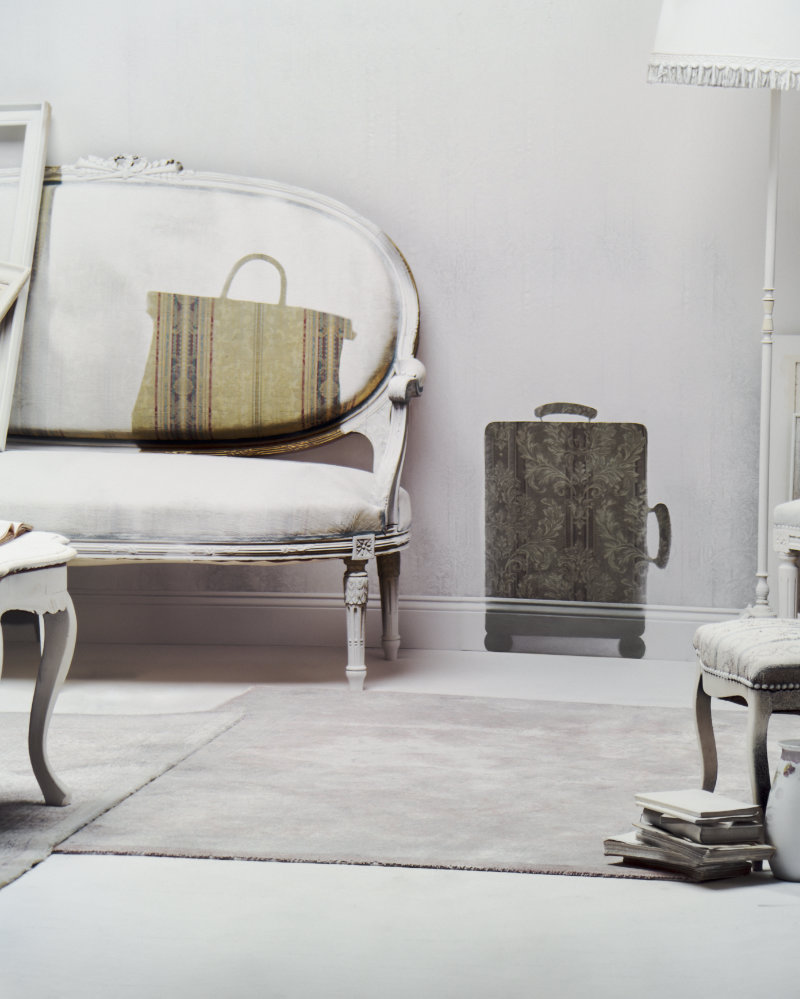
At the heart of the collection is Maison Margiela’s Bianchetto technique, a method of hand-applied white overpainting introduced by Martin Margiela in 1988.
Originally used to paint second-hand furniture in the fashion house’s studio, the technique became an enduring part of Maison Margiela’s visual identity. Its appeal lies in the relationship between the painted surface and the object beneath it.
Applied to the RIMOWA suitcase and 5AC XL bag, the white coating features visible brushstrokes and an intentionally imperfect finish. With continued use, the paint gradually cracks and fades, exposing sections of the underlying materials. Each journey contributes to the process, creating a surface that develops its own individual patina.
Rather than treating wear as damage to be hidden, the collaboration embraces it as evidence of an object’s life.
Aluminium Meets The Inside-Out Aesthetic
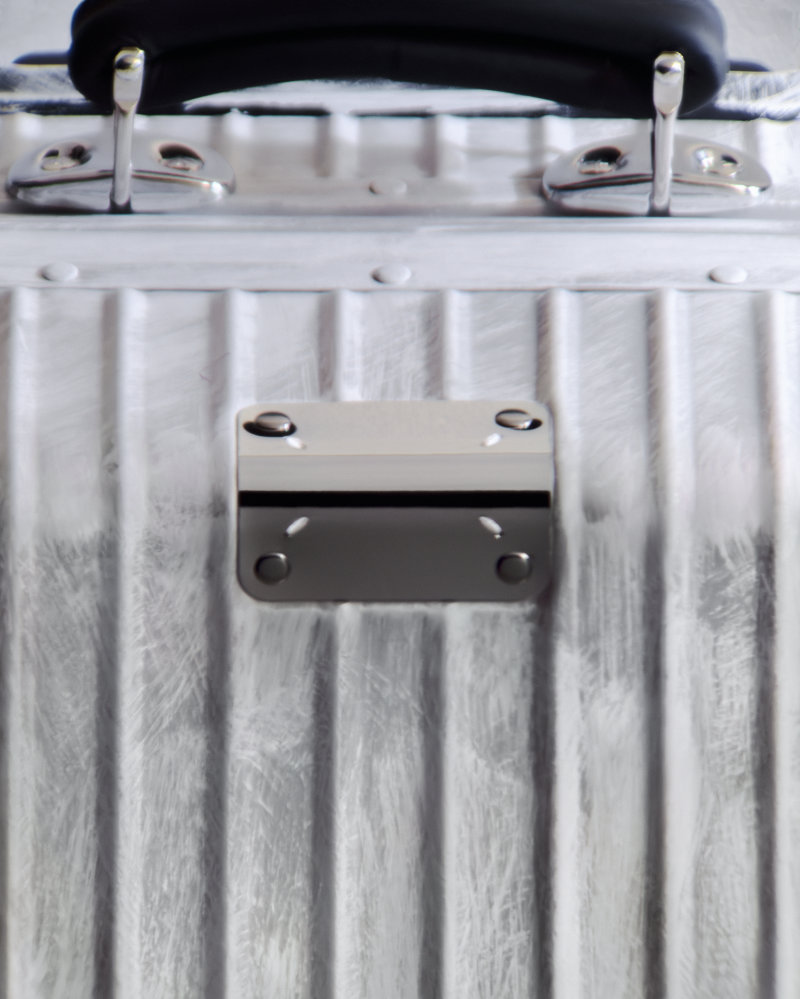
The collection brings together two recognisable design languages. RIMOWA’s signature aluminium grooves provide a structural and visual reference across both pieces, extending the suitcase’s familiar ribbed appearance to the Maison Margiela 5AC XL bag.
The Classic Cabin retains its recognisable hard-shell construction, while the 5AC XL offers a softer interpretation of the same visual vocabulary.
The bag incorporates Maison Margiela’s characteristic inside-out approach to construction. Its internal lining extends beyond the leather exterior and can either remain tucked inside or be pulled outward, transforming the proportions and allowing the piece to function as a weekender.
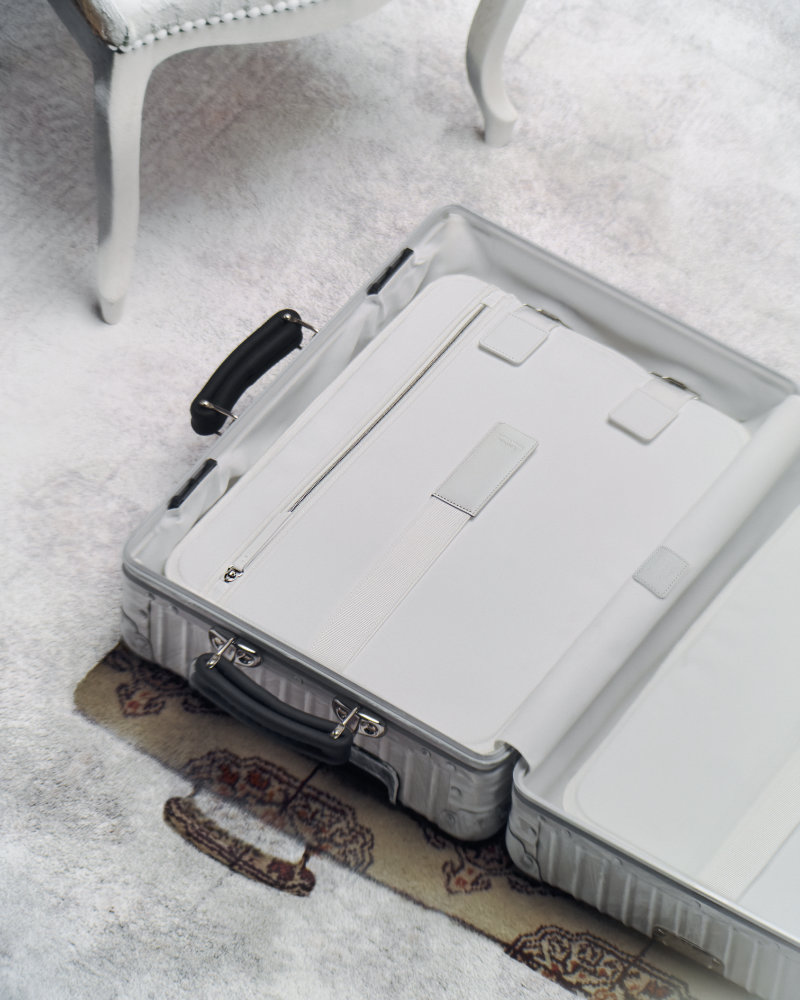
The suitcase carries this attention to construction into its interior. Canvas and white leather are combined with exposed stitching and overlocked edges, details that reference garment-making and the techniques of an atelier.
The result is a collection in which industrial engineering and fashion craftsmanship meet without either identity being entirely surrendered.
Details That Tell A Story
The collaboration’s finishing touches continue its restrained approach to branding.
Each piece is hand-finished, meaning variations in the painted surfaces are intentional rather than manufacturing inconsistencies. A co-branded aluminium badge incorporates Maison Margiela’s four diagonal white stitches, applied using real thread.
A matching key bell and luggage tag complete the accessories, attached around the handle and extending the collaboration’s visual language beyond the main body of each piece.
These details are significant because they avoid relying on prominent logos. Instead, the identity of the collaboration is communicated through construction, material and recognisable design codes.
A Different Relationship With Travel
The RIMOWA x Maison Margiela collection raises an interesting question about the objects we carry through life. Luggage is designed to accompany movement, yet the luxury market has often placed considerable emphasis on maintaining its original appearance.
This collaboration challenges that expectation. Its surfaces are designed to change, allowing the marks accumulated through travel to become part of the object’s character.
There is something particularly fitting about this approach. A suitcase is rarely just a container for belongings. It accompanies departures, arrivals, unfamiliar places and personal milestones. Its exterior becomes a record of movement, even if those experiences remain invisible to anyone who handles it.
Through Bianchetto, RIMOWA and Maison Margiela give that idea a physical expression.
The Collection
The limited-edition RIMOWA x Maison Margiela collection comprises the Classic Cabin suitcase and the 5AC XL bag. Both pieces feature the hand-applied white finish and material treatments developed for the collaboration.
The collection launches on 19 November 2026 through the official websites of both brands. It will also be available at seven selected RIMOWA boutiques in Paris, Milan, Tokyo, Shanghai, Singapore, New York and Los Angeles, alongside selected Maison Margiela locations.
Ultimately, this collaboration is less concerned with preserving an object in its original condition than allowing it to develop a history of its own. In a world increasingly drawn to pristine finishes and immaculate presentation, RIMOWA and Maison Margiela make a persuasive case for the beauty of imperfection.
Some objects are defined by how they look when they are new. Others become more interesting with every journey.