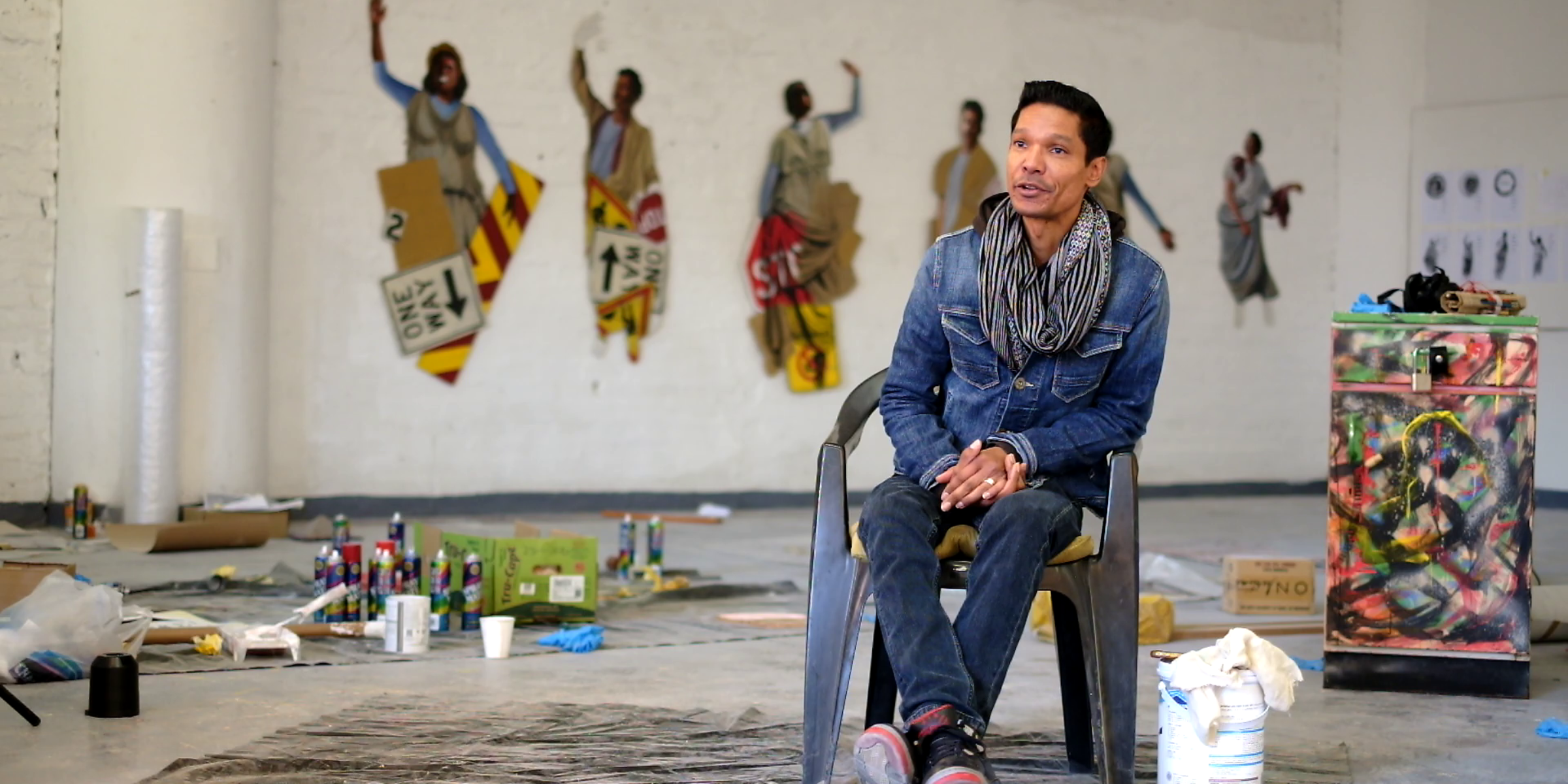
Some artists build from a blank canvas. Vivien Kohler begins with what already exists: found objects, discarded materials and fragments of lives once lived. Through these elements, he constructs works that explore identity, memory, belonging and the elusive idea of home.
Born in Cape Town, Kohler’s practice draws on personal history while reaching towards something more universal — a shared human experience that transcends the boundaries of race, geography and background. In this conversation with Grandiose, he reflects on the origins of his visual language, the relationship between art and identity, the evolving gallery landscape, and the responsibility of leaving something meaningful behind.
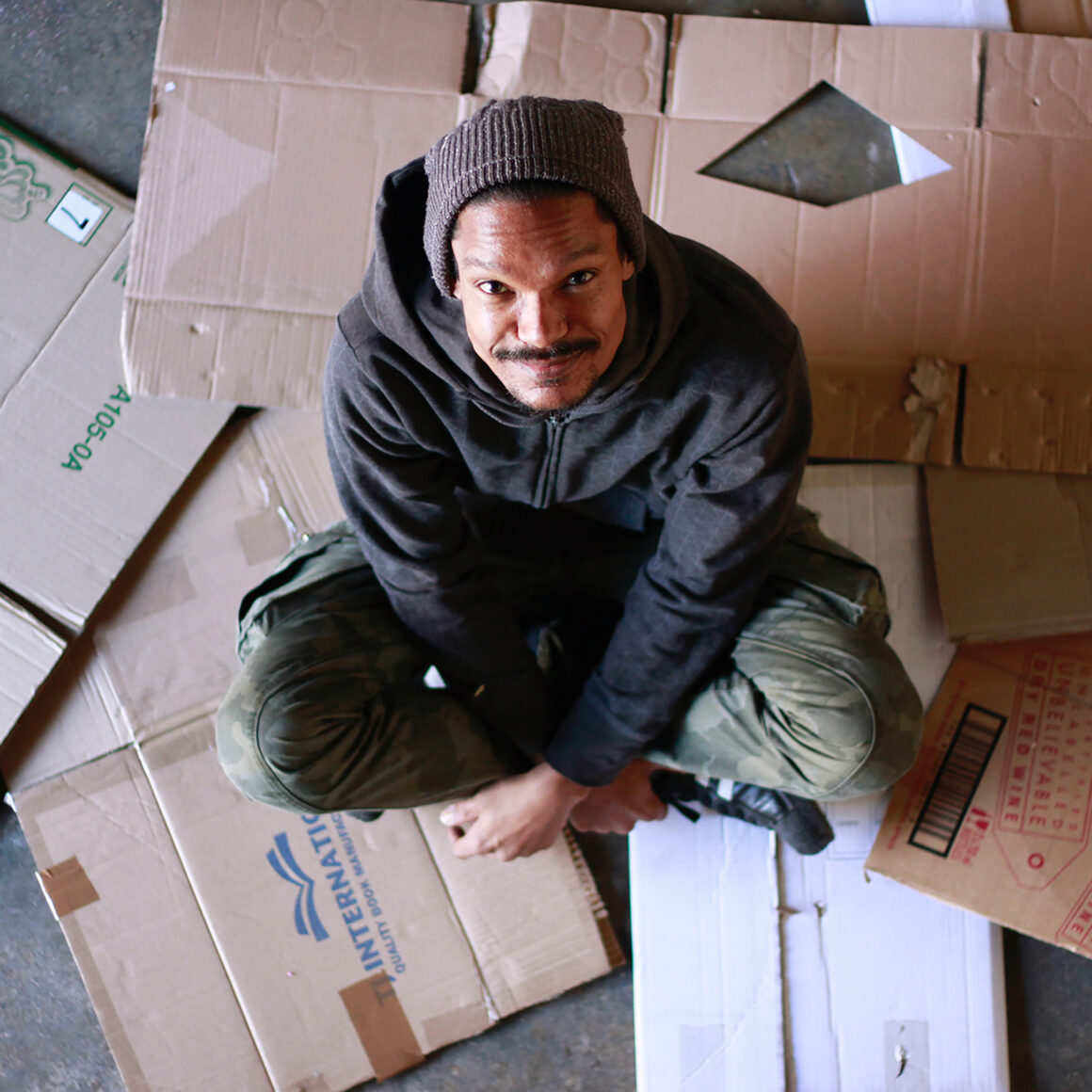
You’ve described being “born with a paintbrush” rather than a silver spoon, and painting on almost everything as a child. Looking back, how did that instinct survive the detour through graphic design before you found your way to fine art at Ruth Prowse?
That instinct came so naturally to me that it was completely a part of who I was, in much the same way that breathing or blinking is something we do without conscious thought or effort. It was never something I felt I had to deliberately cultivate or consciously apply, but rather something that existed as an inherent part of how I thought, approached things, and engaged with the world around me. Because it was so intrinsically ingrained, it inevitably formed and informed part of everything I did, finding expression in different ways throughout my various interests, experiences, and pursuits en route toward fine art.
Looking back, I can recognise how each of those experiences contributed something valuable to my understanding, not only of the creative process itself, but also of how I approached problem-solving, experimentation, and the development of ideas. What may have appeared at the time to be a series of unrelated pursuits were, in many ways, interconnected experiences that gradually shaped my creative thinking and approach.
In that sense, the detour was not really a detour at all, but rather a very necessary shaping process. Each experience contributed to the development of a broader understanding and a particular way of seeing and engaging with things, all of which continue to influence and inform my current artistic practice.
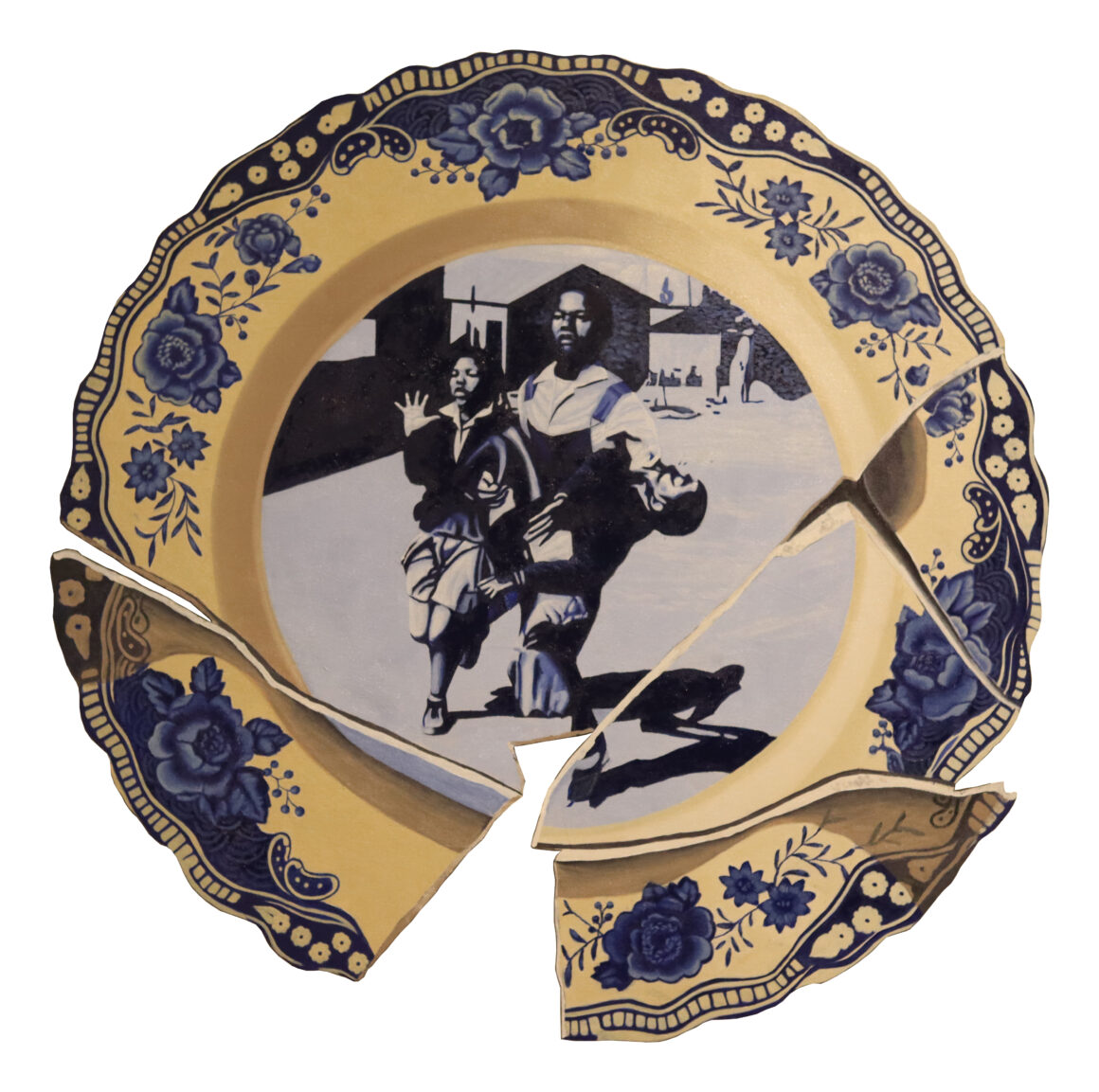
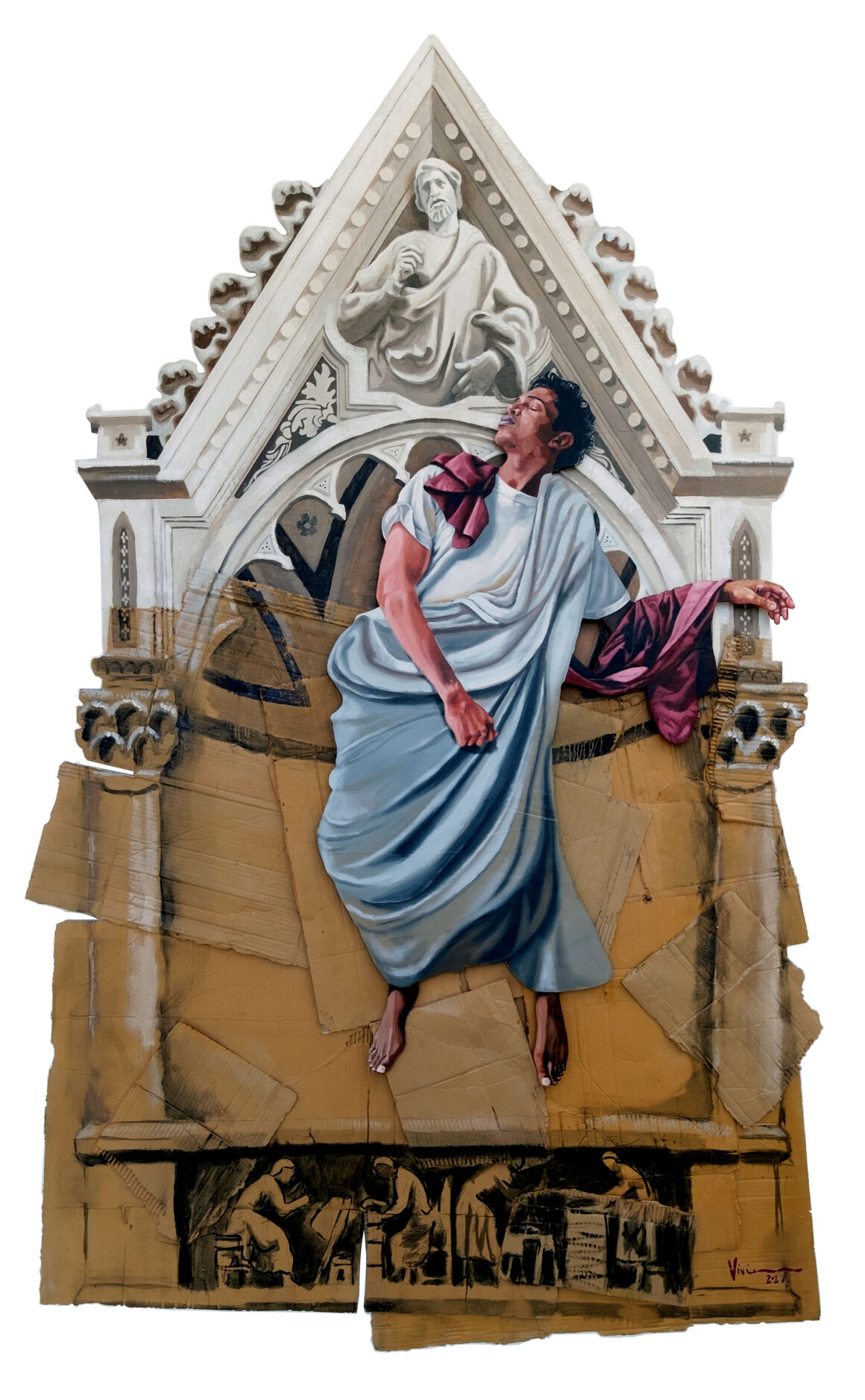
Your work is built from found objects, parquet, cardboard and materials with their own past lives, combined with human figures representing past, present and future. How did this visual language take shape, and what does each of those signifiers mean to you?
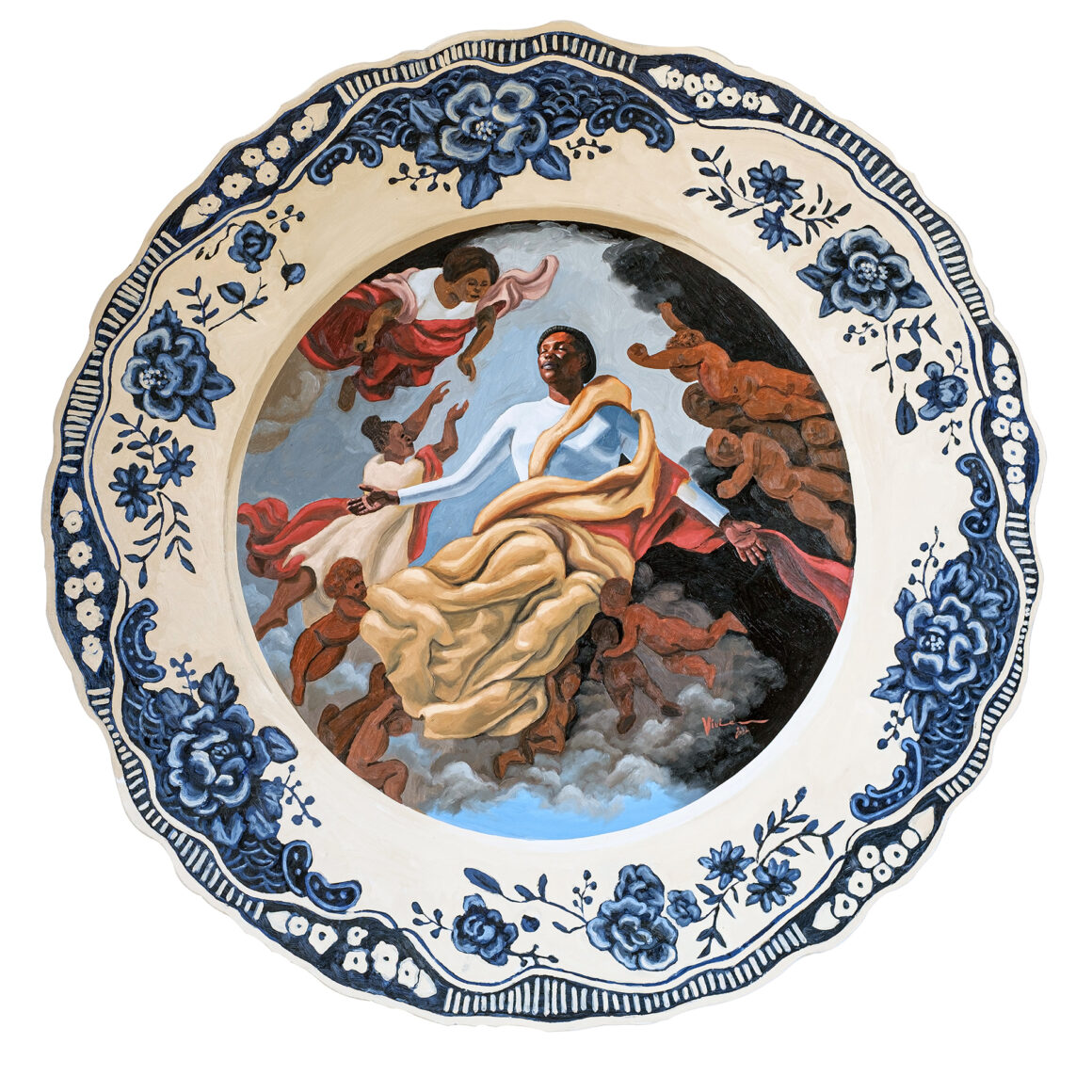
The inclusion of materially embedded histories, shards of recollection, and gleaned narratives of bygone lived experiences is something I cannot truly explain in terms of why I was initially drawn toward them. To me, they hold an emotional significance that is difficult to articulate outside of a certain sense of mystery. Music, I believe, has an extraordinary ability to harness this enigmatic substance, evoking something deeply familiar yet almost impossible to define. In much the same way, I attempt to harness these fragments poetically, creating a sort of cultural poetry capable of traversing the boundaries we construct around ourselves, such as race, economics, gender, and the like.
I was drawn to their seemingly unbiased emotion, their unyielding ability to communicate something truthful and profoundly human. In direct conjunction or juxtaposition, the figures within my work further echo these sentiments. The body, too, carries and expresses these emotional qualities through its beautifully persuasive gestures and poses, communicating what words often cannot.
These signifiers, as you put it, each point toward a shared core resonance, something I refer to as “A Place Called Home.” This notion extends beyond any geographically locatable place, proposing home as a conceptually tangible yet immaterial condition of being.
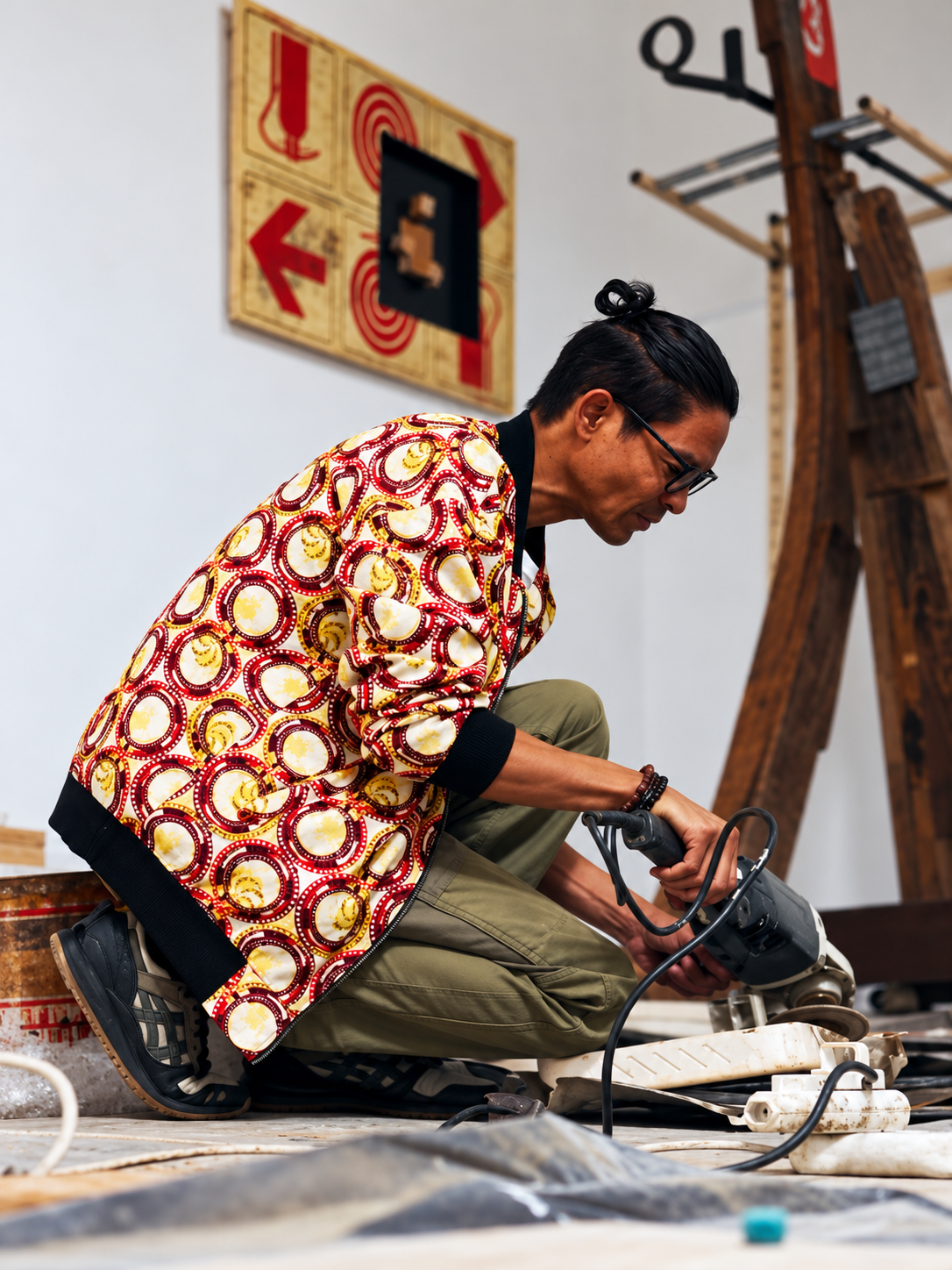
You’ve said your work is about “self,” but not Vivien-self, rather a collective self, something everyone can access regardless of background or education. How do you build a piece so that both an academic and someone off the street can find their own way into it?
This is actually something which I have never really done consciously. I find it to be more of an intuitive process. At the end of the day, the common factor between the “academic and someone off the street” is their humanity. It is the bridge which connects, rather than the diploma which divides, that I find of particular interest. This comes back to one of the main core factors of my practice. Commonality, the self, our shared humanity; this is where I find that universal access point into understanding and engaging with the artwork.
If I were to approach that process more consciously, I believe it would become more of a hindrance than a conceptual aid. There would be a level of authenticity that would inevitably be compromised or lost in the final artwork. It is precisely this authenticity which I believe the viewer connects with when encountering an artwork, regardless of their background, education, or lived experience.
We instinctively look for something of ourselves within what is visually presented. Whether through a gesture, an expression, a familiar object, or an inexplicable emotional resonance, we recognise something that speaks to our own humanity. It is within that recognition that I believe meaningful engagement occurs, without the necessity for intellectual explanation or academic interpretation.
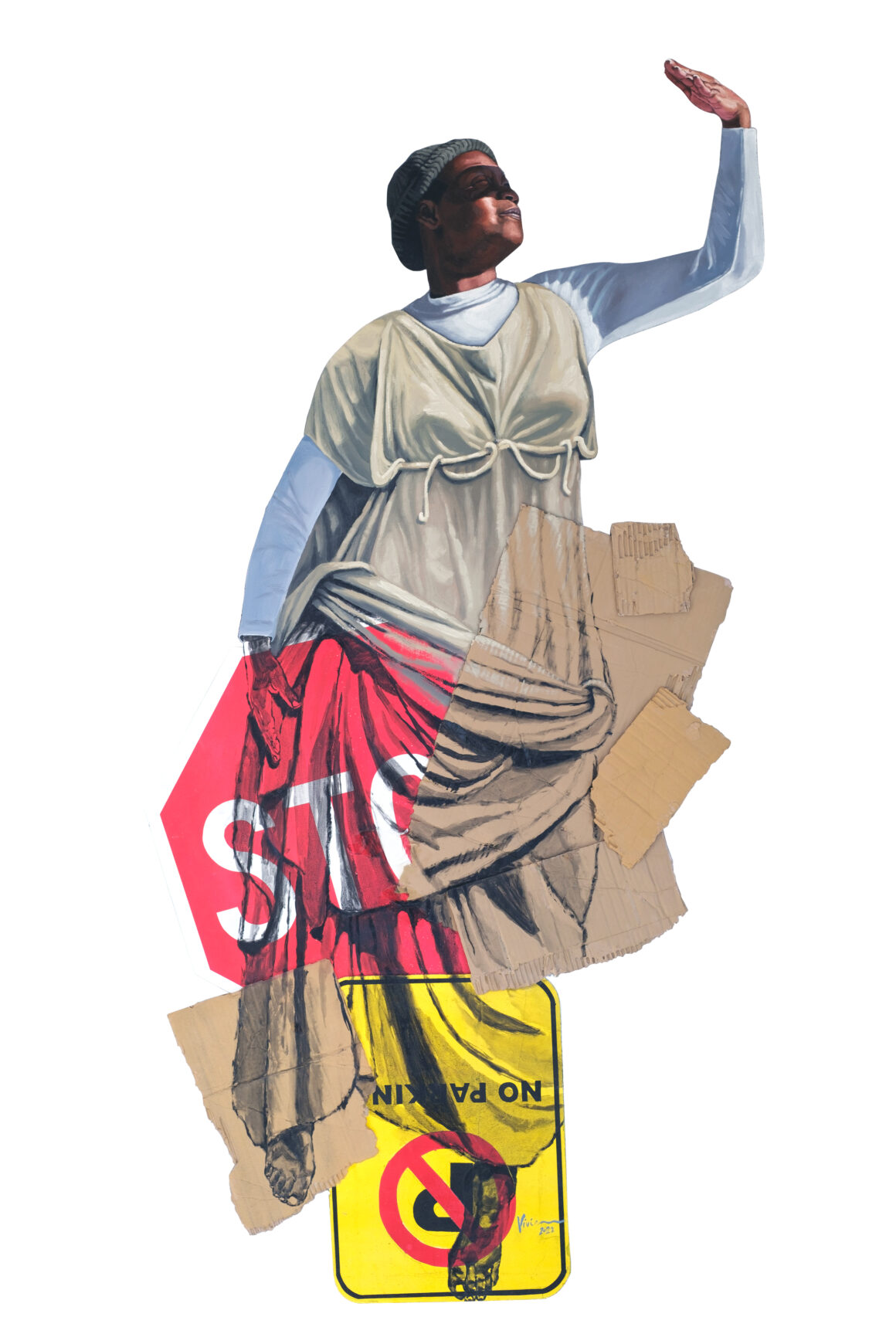
Central to your practice is what you call “the search for a place called home.” Can you unpack that idea, and how do your own history and heritage shape the way you explore it?
Central to my practice, as you have pointed out, is a concept I term “A Place Called Home.” This notion extends beyond a geographically locatable place, proposing home as a conceptually tangible yet immaterial condition of being. While our material environment represents the physical manifestation of home, memory, consciousness, and spirit suggest an interior dimension that cannot necessarily be confined to geographical space.
I’m particularly interested in how found objects carry materially embedded histories, fragments of memory, and traces of bygone lived experiences. These fragments speak not only to what has been lost or preserved, but also to the possibility of what is yet to come.
Jacques Derrida’s assertion that “A spectral messianicity is at work in the concept of the archive and ties it, like religion, like history, like science itself, to a very singular experience of the promise” (1996, p. 36) resonates with my understanding of home as something that exists beyond chronology and geography. It suggests a future possibility, a promise not yet materially realised, but perhaps spiritually perceptible.
Although my practice engages with broader questions of identity and belonging, it is also grounded in my own positionality as a Coloured male born in Cape Town. The legacy of apartheid-era forced removals provides a point of departure for exploring fragmented identities and displaced histories.
However, these experiences serve as a metaphorical foundation rather than an exclusive narrative, allowing my personal socio-historical context to become part of a broader human conversation around memory, identity, belonging, and our collective search for a place called home.
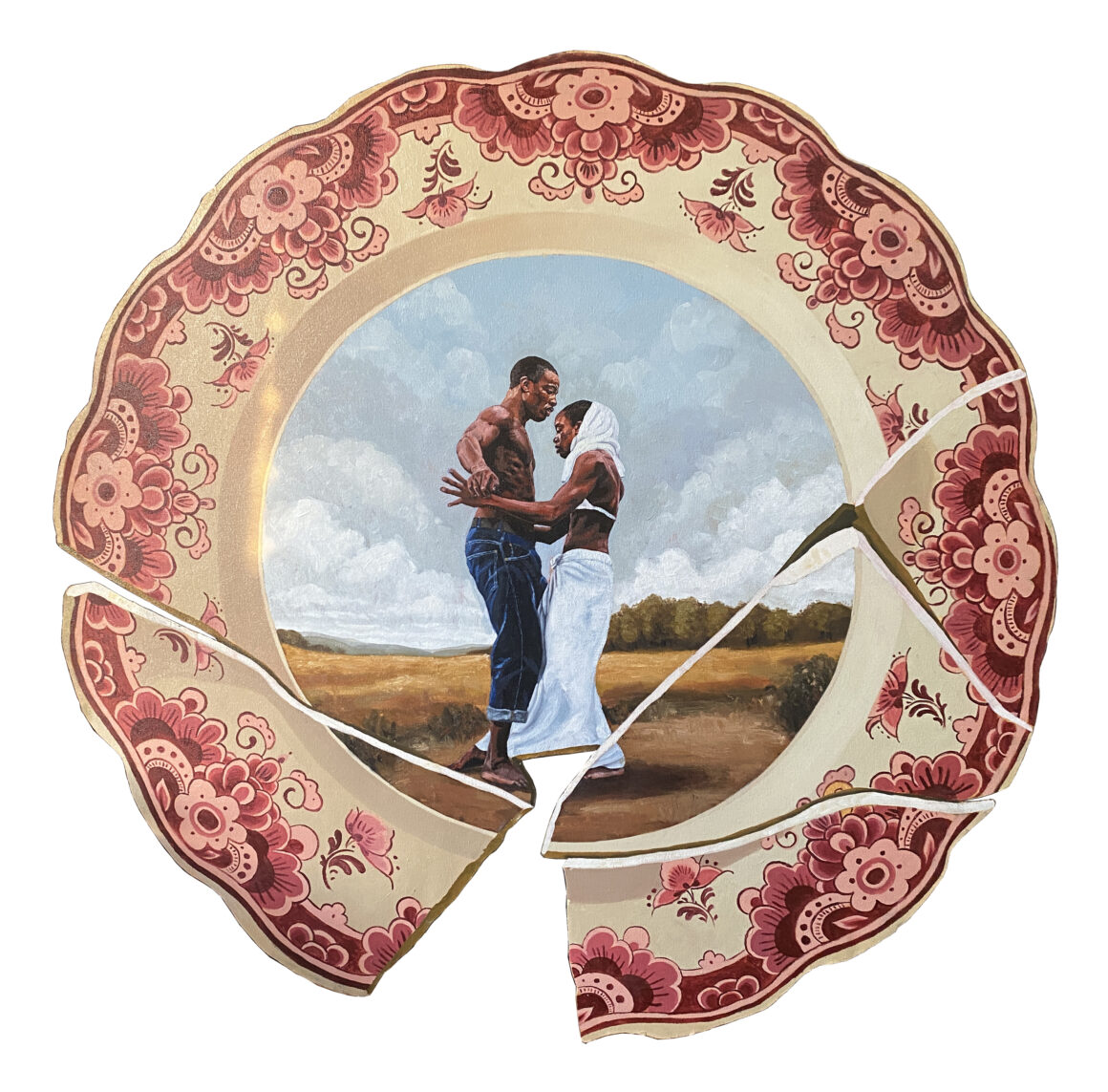
You’ve spoken about identity as the epicentre of an artist’s agency, while also choosing to steer clear of party or race politics in favour of what you call “relational politics.” How do you navigate that line between deeply personal work and broader accessibility?
I don’t necessarily see the deeply personal and the universally accessible as opposing positions. In many ways, I believe it is precisely through our individual experiences that we begin to recognise something of our collective humanity. Although our histories, circumstances, and cultural identities may differ considerably, there remains a commonality within the human condition that transcends these distinctions.
When I speak about identity as the epicentre of an artist’s agency, I’m referring to the authenticity of one’s positionality, the particular experiences and perspectives through which we understand and engage with the world. My own socio-historical context inevitably informs my practice, but I don’t believe it needs to determine or restrict the ways in which the work can be understood.
My interest in relational politics stems from this understanding. Rather than positioning the work within a particular political or racial narrative, I’m more interested in the relationships that exist between people, their histories, memories, and lived experiences. This doesn’t mean disregarding the significance of those political and historical realities, but rather considering how they resonate within a broader human conversation.
I believe art has the capacity to create a space in which these distinctions become less definitive, allowing individuals to encounter something of themselves within experiences that may initially seem entirely removed from their own.
Ultimately, I’m not attempting to remove the personal from the work in pursuit of universal accessibility. Rather, I’m interested in how the deeply personal can become a point of departure toward something collectively recognisable.
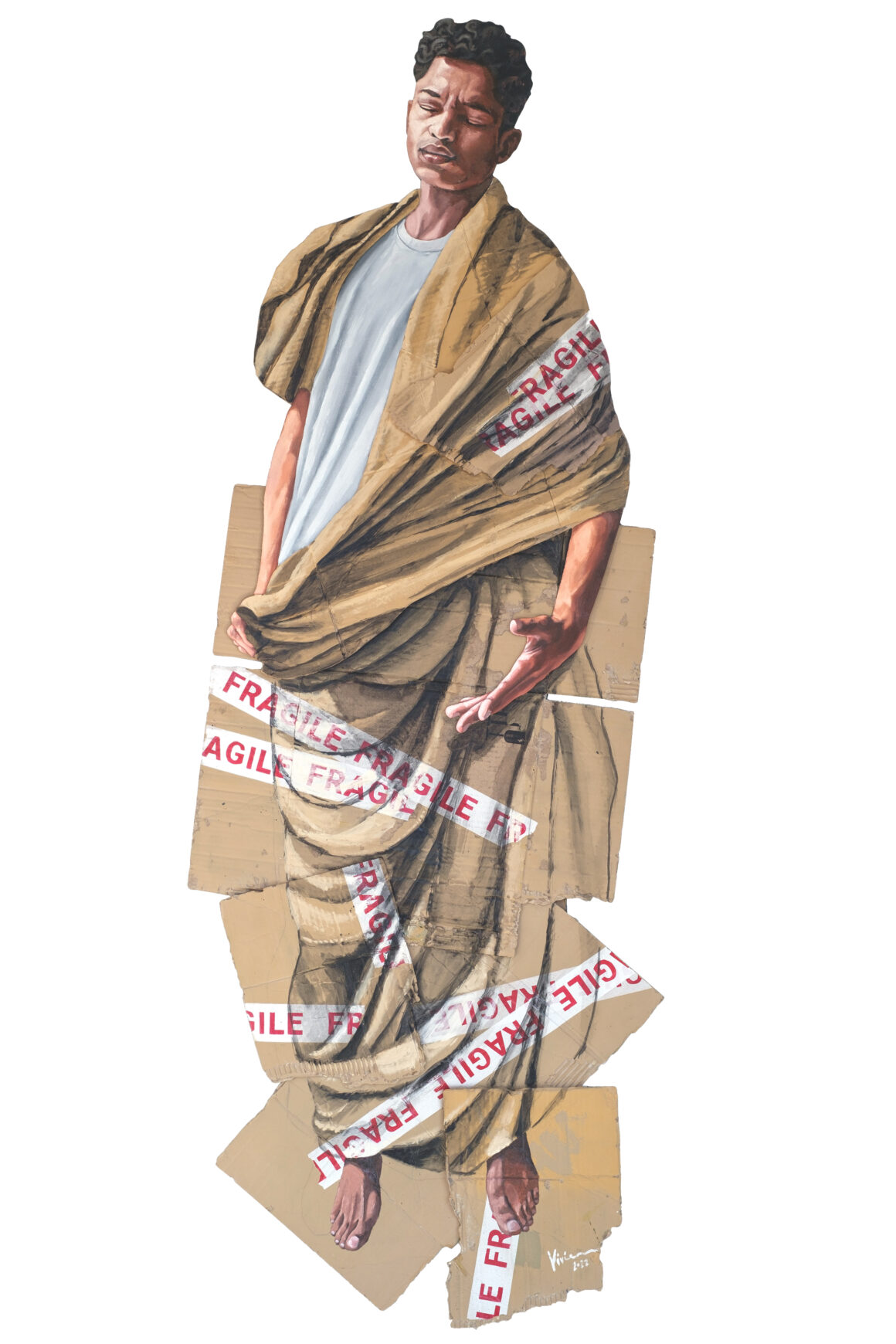
You describe your relationship with the gallery system not as working for it, but as a genuine business partnership. How has that mindset shaped your career, and what do you think needs to change in the gallery model going forward?
I’ve always viewed my relationship with galleries as a partnership rather than a conventional employer-employee arrangement. Both parties bring something of value to the relationship, and both are ultimately invested in its success. The artist contributes the creative practice, intellectual property, and the work itself, while the gallery brings its expertise, networks, resources, and understanding of the market. I believe recognising this mutual dependency creates a healthier foundation for working together.
Looking forward, I believe the gallery model will continue to evolve through an increasingly collaborative approach, one that recognises and appreciates the unique contributions both parties bring to the relationship. Galleries play an invaluable role in developing an artist’s career, not only through their professional expertise, established networks, and understanding of the art market, but also through the considerable time, resources, and personal investment involved in representing an artist.
I believe the strength of this relationship lies in mutual trust, open communication, and a shared commitment to long-term growth. Rather than viewing the gallery model as something that necessarily needs changing, I see opportunities for it to continue adapting to the evolving needs of both artists and galleries.
Technology and AI have barely touched the traditional gallery experience, even as they transform almost every other industry. Where do you think artists, and the wider art market, are headed as that starts to shift?
This is such a contested site at the moment and I do not pretend to know the answers, particularly in light of its daily exponential evolution. However, in light of history’s various industrial revolutions, AI would be considered the 4th Industrial Revolution. The important distinction is that AI is a central technology of the Fourth Industrial Revolution, rather than an industrial revolution in itself.
I think the emergence of artificial intelligence presents us with an interesting philosophical dilemma, particularly concerning how we understand creativity, identity, and authenticity. We are entering a period in which the ability to produce imagery and narratives is no longer exclusively associated with human agency. However, I don’t believe this diminishes the significance of human creativity. If anything, it encourages us to reconsider where that significance truly resides.
I don’t view this as a threat to traditional artistic practice or the gallery system, but rather as an opportunity to reconsider how we understand and value creativity. Technology may increasingly influence how artworks are produced, presented, experienced, and exchanged, history has already proven that fact, but I believe the significance of human creativity extends beyond the production of an object or image.
For me, artistic authenticity remains intrinsically connected to identity, consciousness, memory, and lived experience. These are the foundations from which meaningful creative expression emerges, and I believe they will become increasingly important as technology advances.
Perhaps the greater question is not whether artificial intelligence can replicate what we create, but whether it can meaningfully inhabit the experiences that compel us to create in the first place.
My opinion is that the future lies not in choosing between technology and tradition, but in finding a considered balance where innovation enhances rather than diminishes the human experience at the centre of art.
From selling early assemblage pieces at a tiny Church Street gallery to shows with Sulger-Buel Lovell in London and Gallery MOMO in Johannesburg, your practice has moved through several distinct chapters. What do you feel is the next one?
For me at this stage its more about the refining of the concept and the mastery of my practice. Being able to visually express its authenticity and the capacity of the gifting within me. I think there is something profoundly important about allowing one’s creative journey the necessary time and space to mature, rather than becoming preoccupied with where that journey might eventually lead.
Doors will present themselves, but if the work isn’t profoundly ready for ‘the next one’, we risk stepping into a space our creative journey has not yet prepared us to inhabit.
I feel my next one is called “My A Game”. This is not to suggest that I haven’t given my best in the past, but rather an acknowledgement of how much I have grown since then. With that growth comes a deeper understanding of my practice, greater conceptual clarity, and an increasing awareness of what I am capable of achieving.
What excites me most is the opportunity to bring this development into display not only for the viewing public, but for myself as well. A personal encounter with the possibilities of my own gifting, and the responsibility of bringing them to their fullest expression. In many ways, it is as much a process of personal discovery as it is one of artistic development.
In other words… You ain’t seen nothing yet lol.
Grandiose celebrates excellence, craftsmanship, creativity and legacy. When you think about your own legacy, what do you hope your work leaves behind?
We live in a polarising world which does its utmost to divide and alienate us from one another. Whereas our earliest experiences as children model a very different human relationship. One where the distinctions and divisions we come to recognise later in life have not yet taken hold, and where our instinctive desire for connection and belonging precedes the social constructs that eventually separate us.
When one speaks of legacy I feel an incredible responsibility attached. For me it’s more of a sense of destiny. Being able to fulfil the purpose we have been born for. In that sense the legacy and gift becomes greater than ourselves, and the responsibility thereof even more so. This purpose is relational, and that comes back to my initial statement about the world trying to divide us. Our purpose and destiny is communal and in relation to legacy this becomes an even more important endeavour. What we leave behind should therefore not simply be a reflection of ourselves, but something that continues to speak into the lives of others, long after our own voices have fallen silent.
So, what do I hope my work leaves behind?
The most valuable attribute of an artwork is its ability to speak clearly and uncompromisingly far beyond the lifespan of the artist. My most sincere hope is that once I have moved on to the next world my work speaks with a sacred voice. A voice communicating the authenticity of my own skin. A skin which is both Black and White, yet neither, but at the same time one. One in struggles, and one in victories. One in hardships, but one in rewards. One through hopes, and one through dreaming. One in death, yet one in life. One in weakness, yet rising together in power.
Perhaps it is within these seemingly opposing conditions of our existence that we discover the very commonality which binds us together. Not through the absence of difference, but through the recognition of something profoundly human that exists within us all.
We are indeed one human race and one family. As cheesy as it sounds, I am reminded of the iconic 1996 SABC1 tagline… “Simunye – We Are One” (lol).