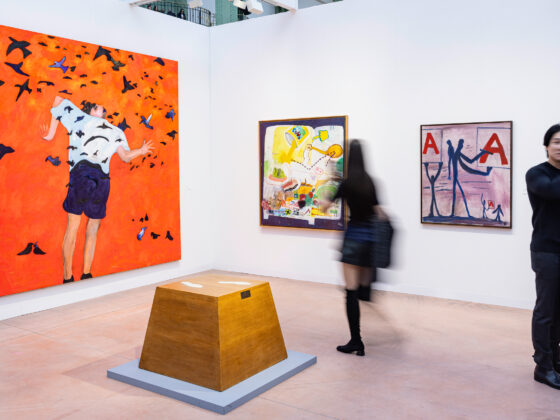
Designed like a spacecraft and built around more than 1,300 displayed works, the Lucas Museum of Narrative Art brings fine art, comics, cinema and visual mythology into one ambitious cultural destination.
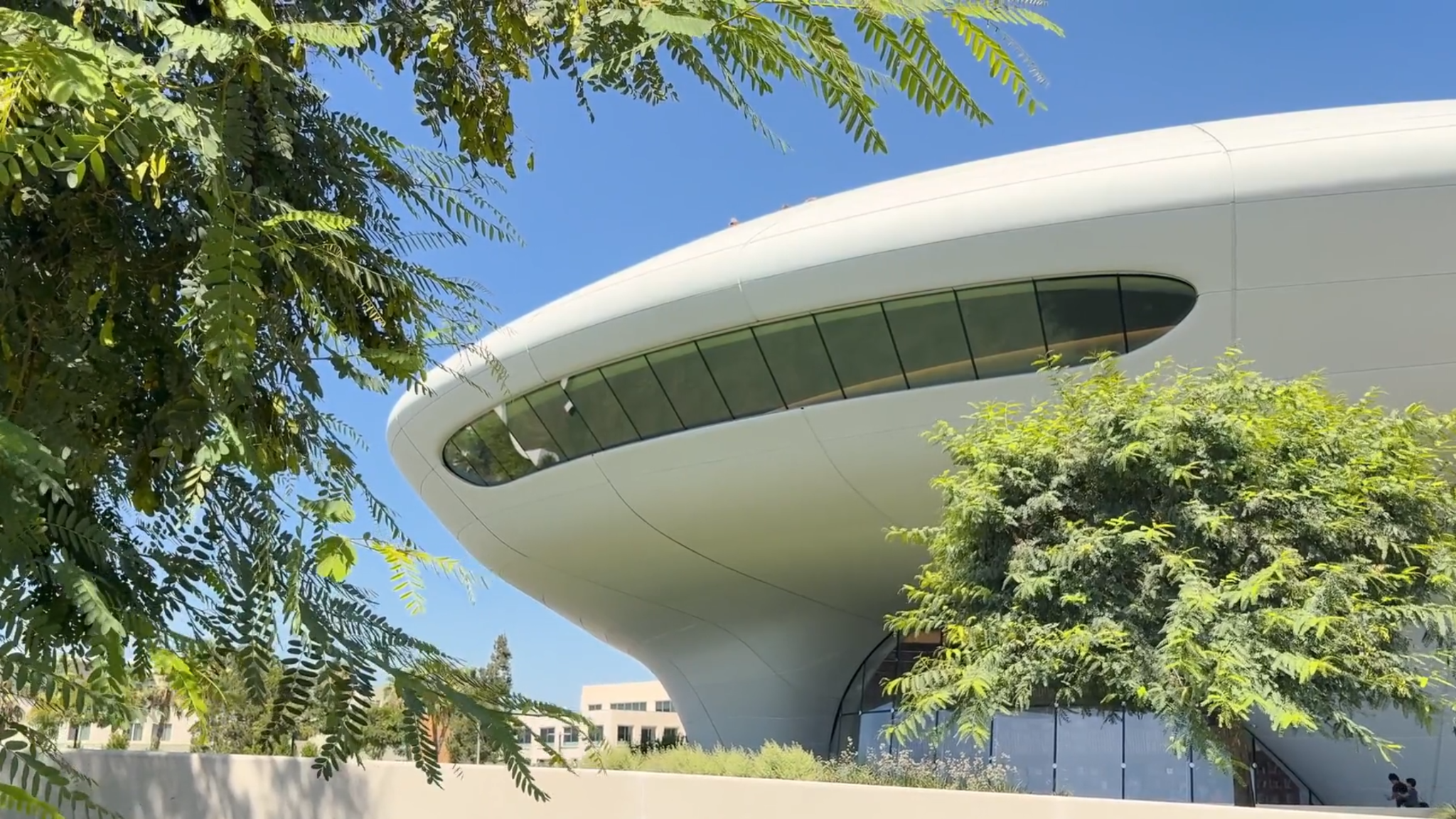
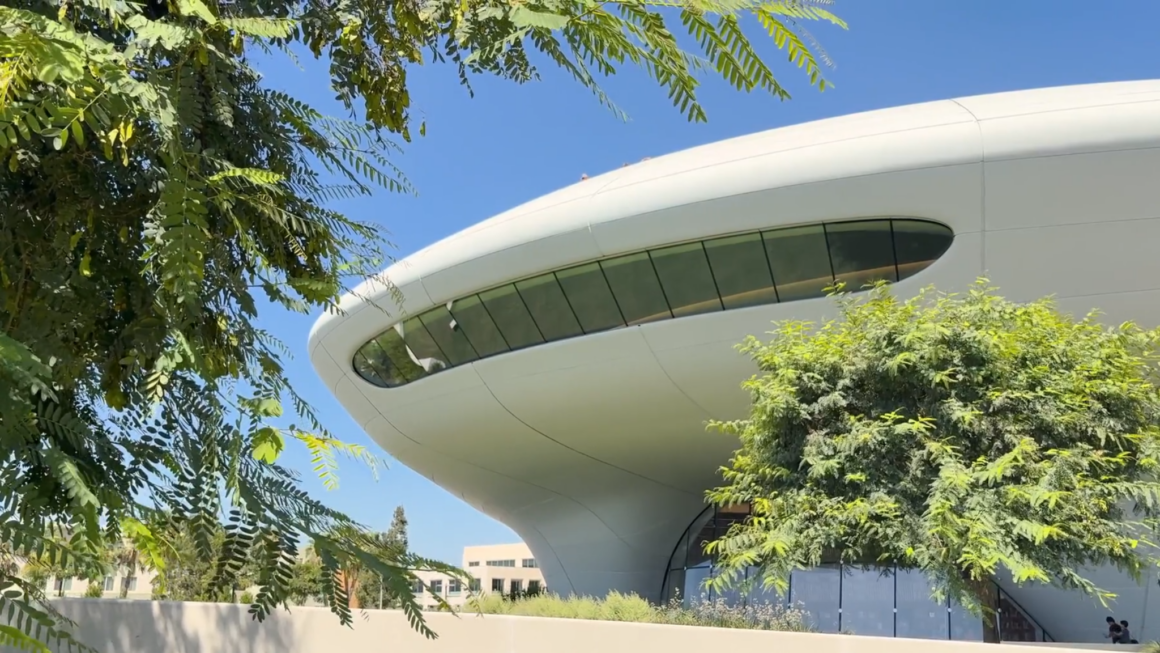
In Los Angeles, a futuristic white structure appears to hover above the landscape of Exposition Park. Its flowing silhouette resembles a spacecraft, its gardens soften the boundary between architecture and nature, and inside, the familiar hierarchies of the art museum begin to dissolve. A painting by a celebrated fine artist can share the same cultural conversation as a comic-book illustration, a cinematic prop or an iconic piece of science-fiction concept art.
This is the world of the Lucas Museum of Narrative Art, the institution founded by filmmaker George Lucas and businesswoman Mellody Hobson. Opened to the public on 22 September 2026, the museum represents an investment of approximately US$1 billion — around R16.7 billion at an indicative exchange rate of R16.70 to the dollar.
After more than 16 years of planning, abandoned locations and substantial development, the project has become one of the most ambitious private cultural undertakings in the United States. Its proposition is equally ambitious: that the images through which humanity tells stories deserve serious consideration, regardless of whether they originate in a fine-art studio, a comic book, a film production or an ancient civilisation.
An Architectural Landmark Built Around Imagination
Designed by Ma Yansong of MAD Architects, working with Stantec, the museum occupies a prominent position in Los Angeles’ Exposition Park. Its approximately 300,000-square-foot building incorporates more than 100,000 square feet of exhibition space, distributed across more than 30 galleries.
The architecture avoids the conventional appearance of a monumental, rectilinear museum. Its sweeping white form and organic curves suggest movement, while tube-like elevators and expansive interiors reinforce the sense of entering an environment shaped by imagination.
Yansong has described the building’s inspiration in terms of clouds, rather than simply its resemblance to a spacecraft. The distinction matters: the design is intended to shape how visitors experience the collection, not merely provide a dramatic exterior.
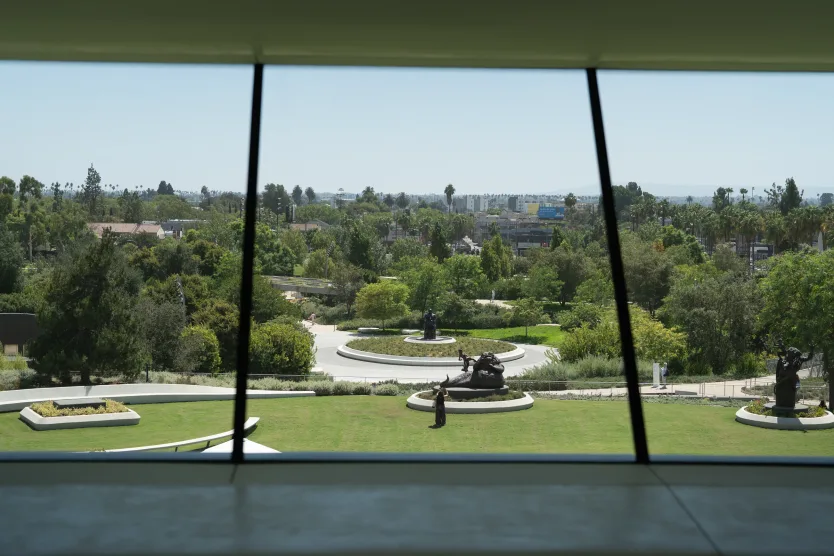
Landscape architecture by Mia Lehrer and Studio-MLA extends the experience into the surrounding gardens and public spaces. The resulting campus brings the building, greenery and public realm into a continuous composition.
The architecture is particularly significant because the museum’s central idea is experiential. Visitors are invited to move through stories, images and different cultural worlds rather than encounter art exclusively through traditional chronological or medium-specific displays.
A Collection That Crosses Cultural Boundaries
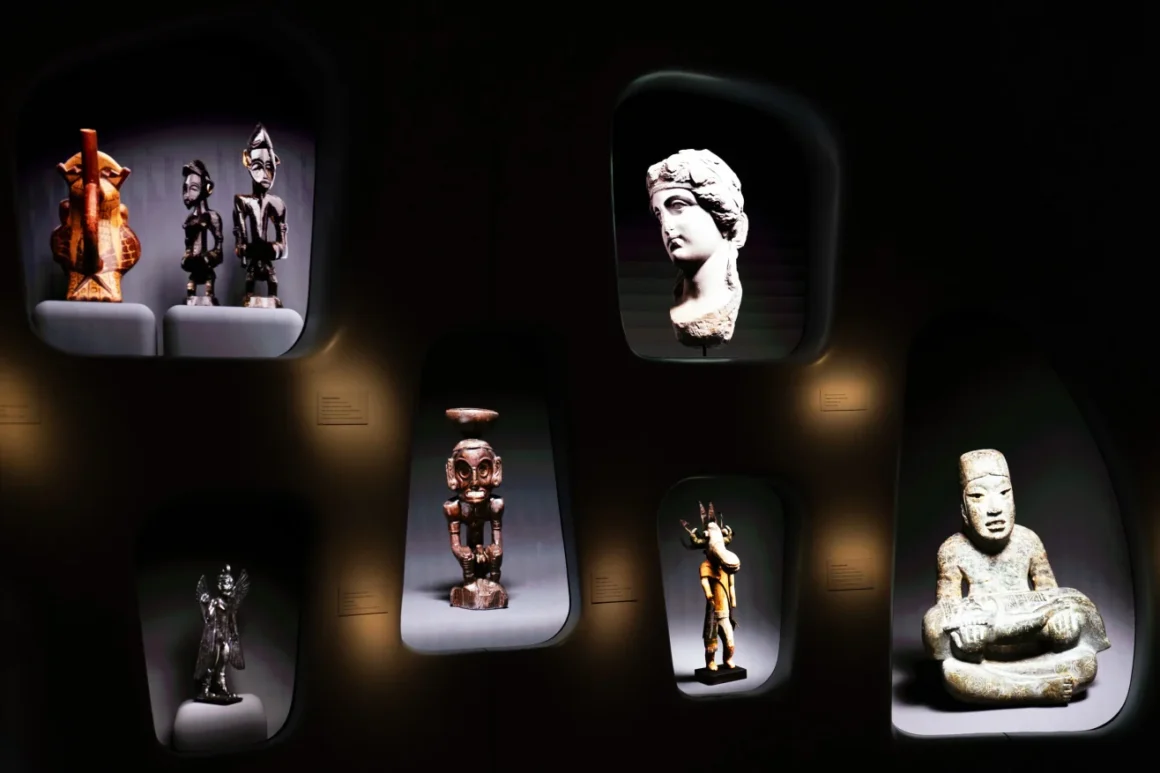
The museum’s inaugural presentation features more than 1,300 objects across 30 galleries. Its wider collection contains more than 40,000 works, assembled over decades by Lucas and Hobson and spanning fine art, illustration, photography, comics, costumes, film objects and memorabilia.
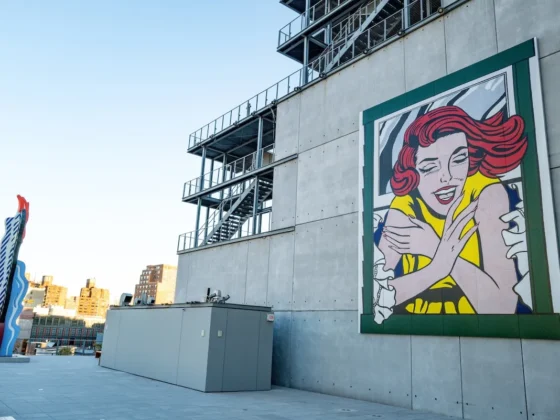
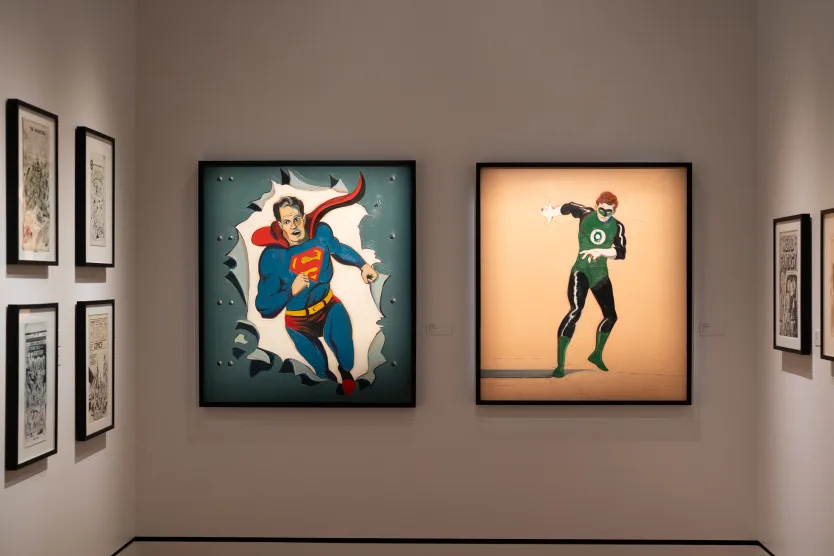
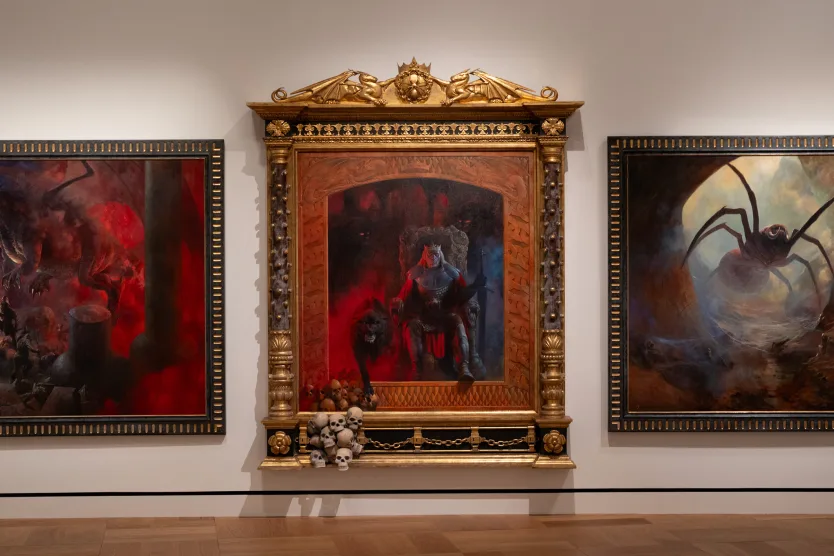
Among the artists represented are Frida Kahlo, Norman Rockwell and Gordon Parks. The collection also encompasses comic art, children’s-book illustration, manga, science-fiction imagery and works by artists whose contributions to popular visual culture have not always received the same institutional attention as traditional fine art.
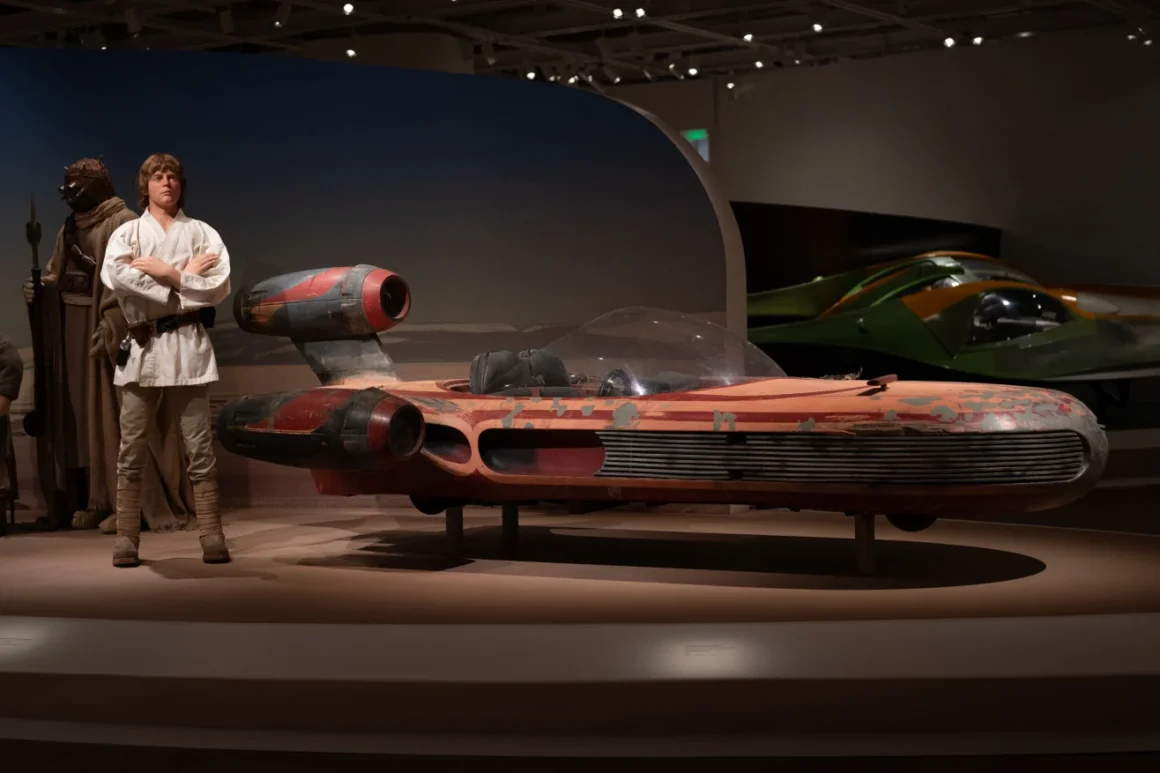
One of the museum’s defining characteristics is its treatment of these different forms as part of a larger history of visual storytelling. Its Star Wars material, for example, includes models and objects connected to the original films, but the franchise occupies only a small portion of the inaugural display.
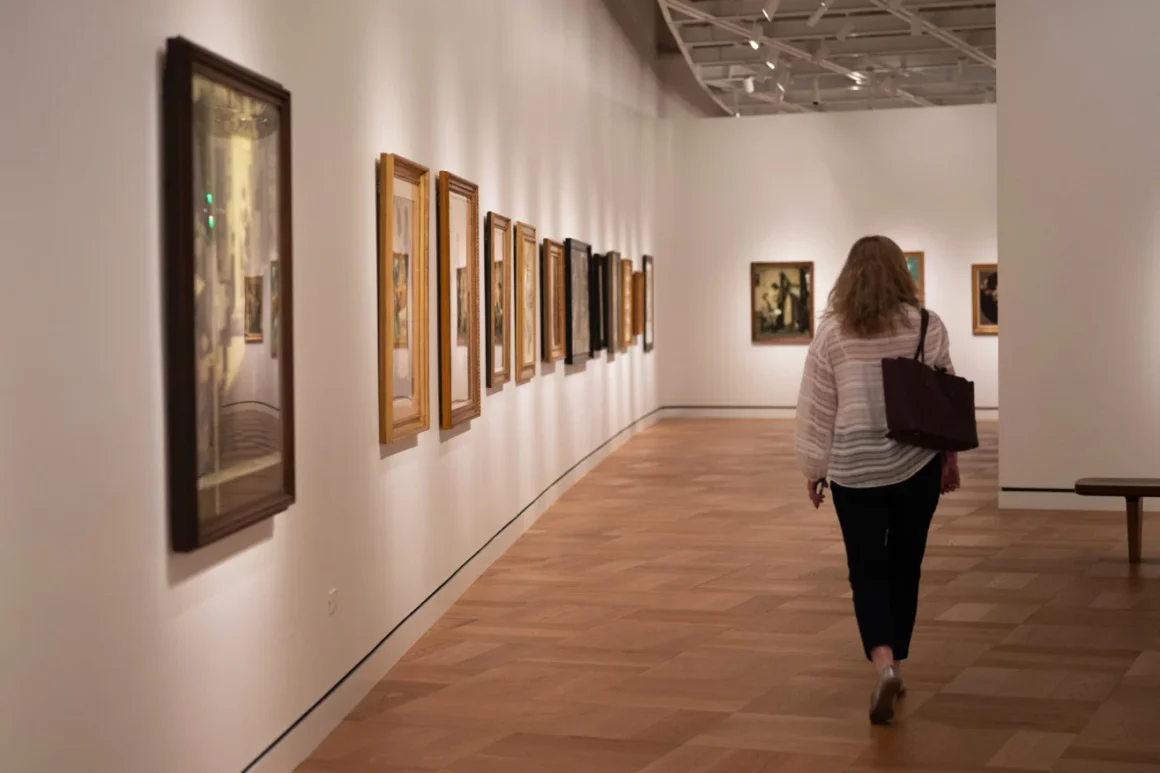
Visitors can move from paintings and photographs to comic-book art, cinematic objects and illustrated narratives. The intention is to encourage connections between works that might otherwise be separated by the boundaries of genre, medium or perceived cultural status.
For Lucas, whose career has been shaped by the relationship between cinema, mythology and visual imagination, this is a natural extension of his interests. For Hobson, the institution offers a way to examine how stories help communities establish shared beliefs, memories and identities.
From Princess Leia To The History Of Humanity
The museum’s approach is apparent even before visitors enter the galleries. Its gardens feature unexpected combinations of imagery, including a sculpture of Princess Leia overpowering Jabba the Hutt alongside more traditional sculptural subjects.
Inside, the inaugural exhibition The History of Narrative Art: Heroes • Myths • The Sacred traces visual storytelling across thousands of years. It brings together ancient imagery, mythological subjects and reproductions of significant works and historical sites that cannot easily be moved.
These include a reproduction of the Sistine Chapel ceiling, created through collaboration with the Vatican Museums, alongside other carefully produced representations of cultural and archaeological landmarks.
The approach allows visitors to encounter works from different parts of the world within a single exhibition environment. It also acknowledges the practical limits of assembling original objects from across centuries and continents.
Elsewhere, galleries are organised around themes such as love, family, community, adventure and civic life. Other spaces focus on individual artists or particular forms of visual expression.
The museum’s breadth is part of its appeal, although the challenge of creating a coherent experience from such a wide-ranging collection remains. Its ambition is to encourage dialogue between works rather than insist that every object fit within a single, established art-historical hierarchy.
Rethinking What Belongs In A Museum
The Lucas Museum enters a wider conversation about how major institutions define cultural value. Museums have increasingly reconsidered whose work is represented in their collections, how exhibitions are organised and which forms of creative expression receive institutional recognition.
Lucas’ proposition places illustration, comics and popular imagery within that discussion. These forms have shaped how generations understand heroes, villains, historical events, imagined futures and everyday life. Yet their cultural influence has not always translated into the same institutional standing enjoyed by painting and sculpture.
By placing such material alongside celebrated fine art, the museum challenges visitors to consider how images acquire meaning and why certain forms are elevated above others.
This does not mean that every work operates in the same way, or that differences in medium and artistic intention disappear. Rather, the museum invites a broader examination of how visual narratives influence collective memory and how cultural significance can emerge in unexpected places.
Its approach is especially relevant in an era in which visual storytelling moves continually between cinema, digital platforms, illustration, gaming and contemporary art. The boundaries between these fields are increasingly permeable, even as institutions continue to debate how best to preserve and interpret them.
A $1 Billion Personal Vision
The museum’s development was far from straightforward. Lucas initially pursued locations in San Francisco and Chicago before the project ultimately found its home in Los Angeles. Those abandoned plans, followed by years of development and construction, extended the journey from an initial proposal into a long-term cultural commitment.
The reported investment of US$1 billion — approximately R16.7 billion at the indicative exchange rate used here — places the project among the most substantial privately funded museum initiatives of its kind.
The scale of the investment is significant, but so is the decision to devote it to a subject that crosses conventional cultural categories. Lucas and Hobson are backing an institution that does not restrict its vision to the filmmaker’s own work or the popularity of Star Wars. Instead, the collection draws on a much wider history of image-making.
The museum has also attracted debate over its unconventional curatorial philosophy, ticket prices and the challenges of managing such an extensive institution. Its development included changes in leadership, staff reductions and questions about how future exhibitions will be organised.
These questions will become more consequential as the museum moves beyond its opening programme and begins establishing its long-term identity.
What Comes After The Opening
The museum’s inaugural galleries offer a substantial introduction to its collection, but its future will depend on how the institution develops its exhibitions, loans, commissions and public programmes.
Some works on paper, including comics, photography and children’s-book illustrations, require careful rotation because of their vulnerability to light and other environmental conditions. The museum has indicated that its displays will evolve over time, allowing new works and ideas to enter the visitor experience.
That creates an opportunity to keep the collection active rather than treating the opening presentation as a fixed statement. It also places pressure on the institution to maintain a clear curatorial direction across an unusually broad range of material.
For architecture enthusiasts, the building is already a defining addition to Los Angeles. For art audiences, its significance will ultimately be measured by the quality of the conversations it creates between works and the range of voices it brings into view.
For Lucas and Hobson, the larger ambition is to establish a lasting home for the images through which people make sense of their world.
The Architecture Of A Story
The Lucas Museum of Narrative Art is an unusual combination of private collection, architectural landmark and cultural argument. Its approximately R16.7 billion investment supports a building designed to be experienced as much as observed, housing a collection that moves from ancient imagery to contemporary popular culture.
Its central question is straightforward: what happens when the stories that shape human imagination are considered together, rather than separated by traditional definitions of artistic importance?
The answer will emerge over time, through exhibitions, public engagement and the institution’s willingness to challenge its own assumptions. For now, the museum stands as a major new cultural destination in Los Angeles and an ambitious expression of the belief that storytelling is fundamental to how people understand themselves and one another.
Museum Details
- Name: Lucas Museum of Narrative Art
- Founders: George Lucas and Mellody Hobson
- Location: Exposition Park, Los Angeles, California
- Public Opening: 22 September 2026
- Architect: Ma Yansong, MAD Architects, with Stantec
- Landscape Design: Mia Lehrer / Studio-MLA
- Reported Project Investment: US$1 billion, approximately R16.7 billion at an indicative R16.70/US$1 exchange rate
- Building Size: Approximately 300,000 square feet
- Exhibition Space: More than 100,000 square feet
- Inaugural Display: More than 1,300 works across 30-plus galleries
- Wider Collection: More than 40,000 works