|
Getting your Trinity Audio player ready...
|
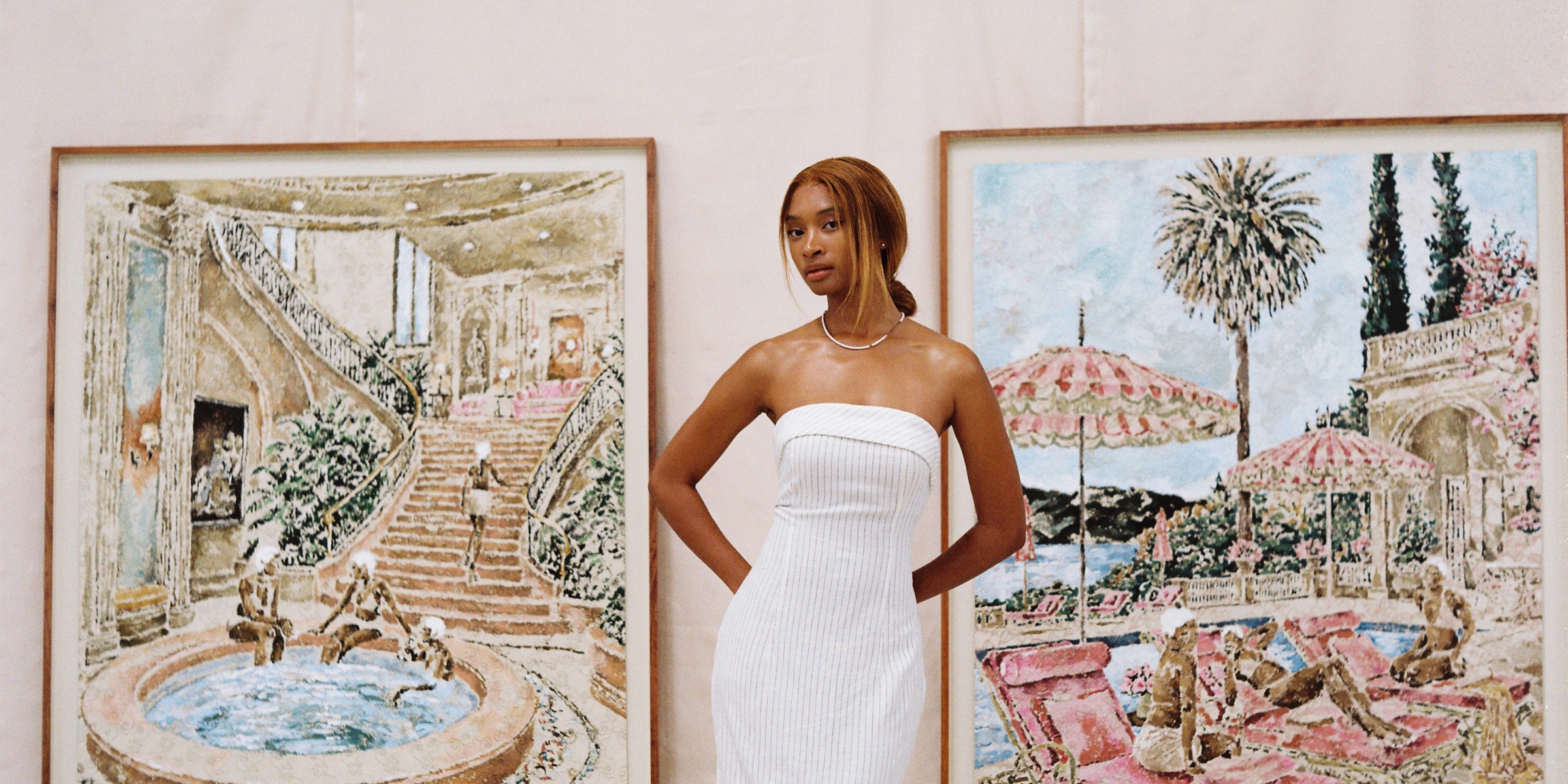
For her French solo debut, the South African artist transforms inherited lace, architectural space and scenes of Black womanhood into paintings that reconsider who gets to occupy a world of beauty, leisure and belonging.
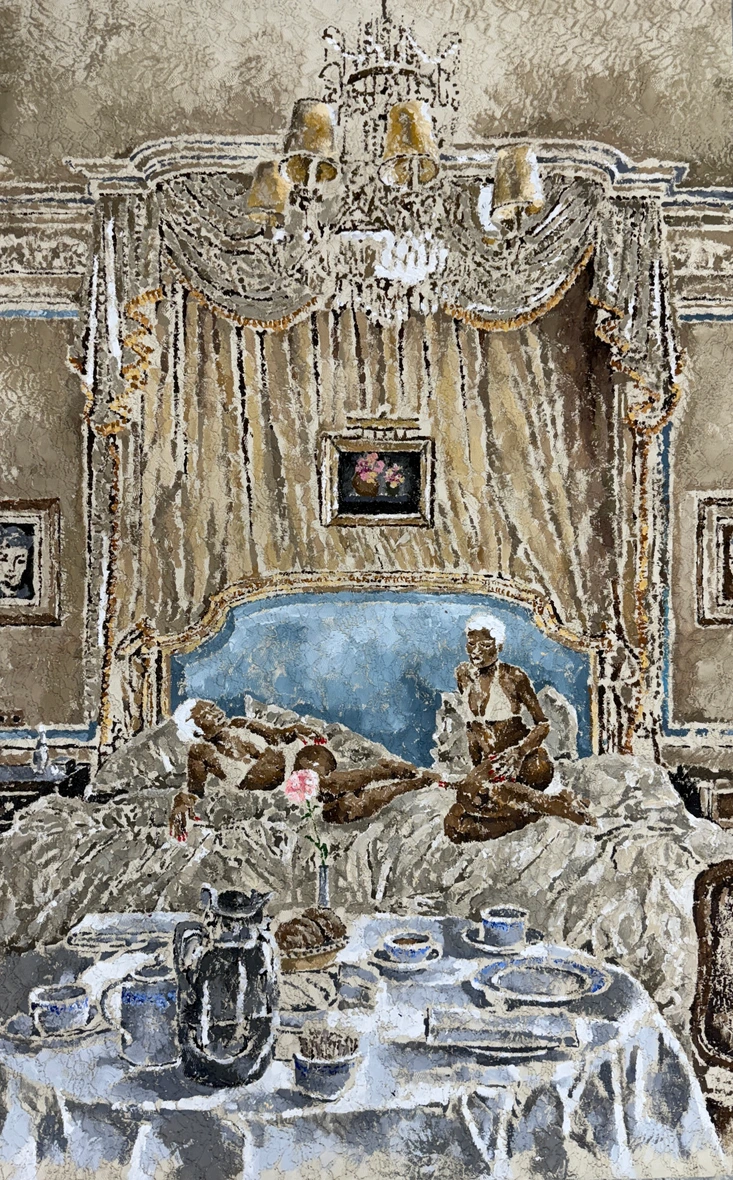
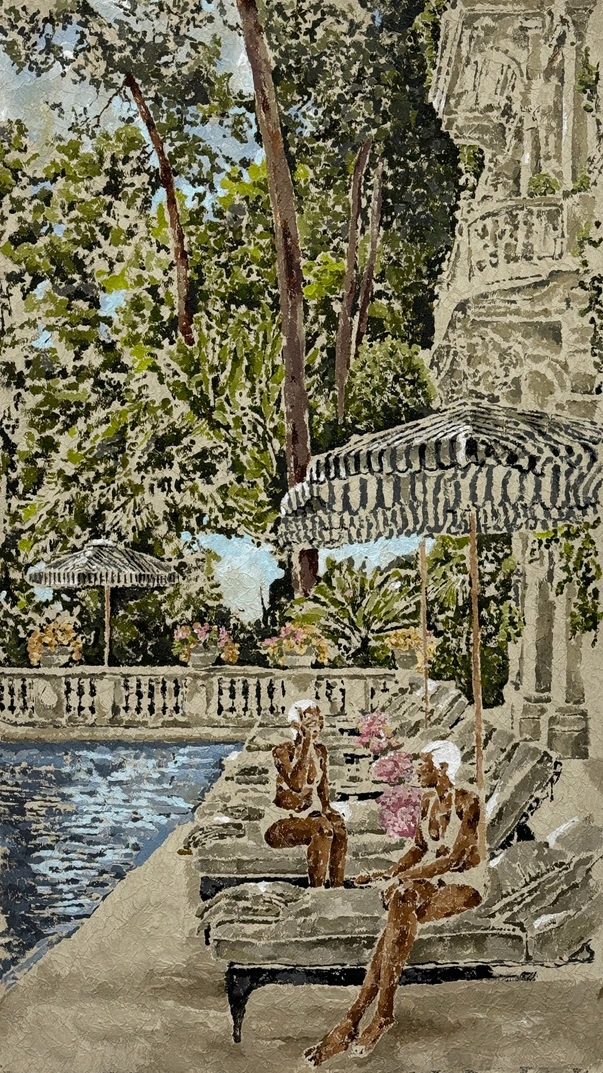
There is a particular confidence in the worlds created by Buqaqawuli Thamani Nobakada. Black women inhabit expansive interiors, gather around elaborately dressed tables and move through gardens framed by architecture and foliage. The settings suggest abundance and ease, yet the paintings carry a deeper consideration of space: who occupies it, how it is constructed, and what it means to feel entirely at home within it.
On 19 October 2026, the South African contemporary artist opens Our Dreams Began to Chase Us Back, her first solo exhibition in France, during Art Basel Paris week. Curated by Destinee Ross-Sutton, the presentation brings together six new paintings at the Paris gallery of Pierre Cornette de Saint Cyr. The exhibition marks a significant international moment for Nobakada, whose work brings together architectural thinking, family inheritance and representations of Black women in settings of unapologetic comfort and presence.
A Painter Who Thinks In Architecture
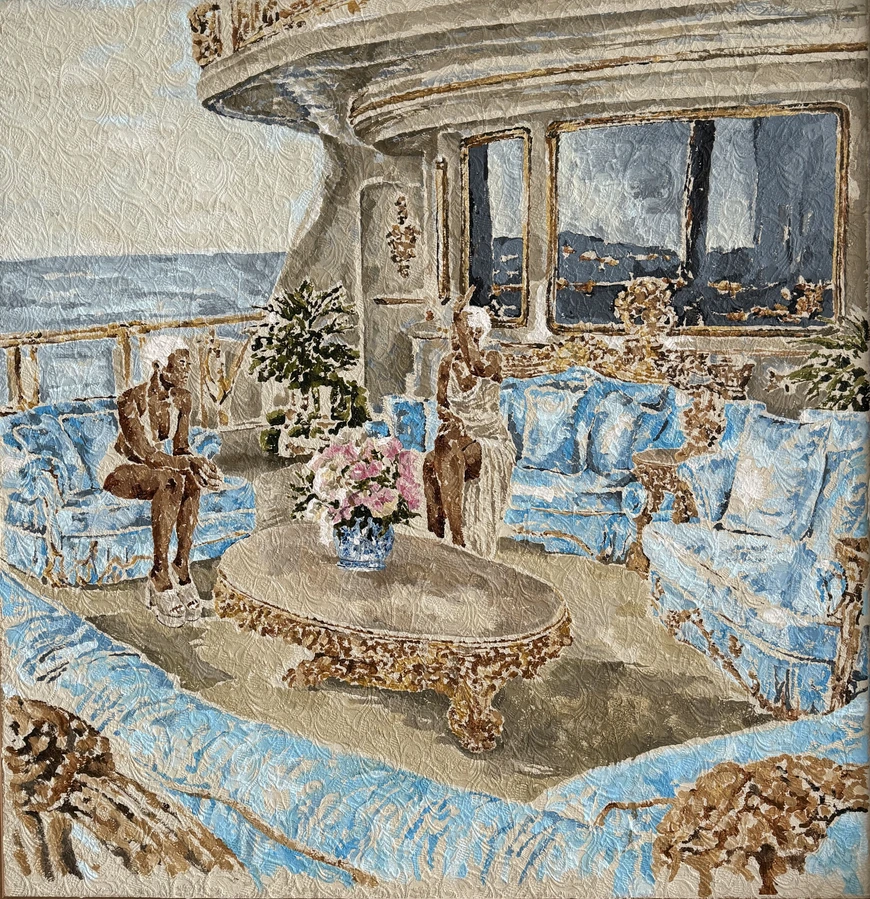
Before turning her attention to fine art, Nobakada studied architectural sciences at the University of the Witwatersrand. That training remains visible in the way she constructs her painted environments. Rooms, staircases, gardens and terraces are more than decorative backgrounds; they establish the spatial logic through which her figures exist.
Her compositions draw the eye across layered interiors and landscaped grounds, using perspective, furniture and architectural details to create a sense of depth. Figures occupy these spaces with an ease that feels deliberate. They rest, converse and gather without appearing out of place, their presence treated as an unquestioned part of the environment.
This relationship between figure and setting gives the paintings much of their force. Architecture becomes a way of thinking about belonging, while the domestic interior becomes a site in which identity and aspiration can be explored. Nobakada’s women are not peripheral to these worlds. They are central to them.
The Inheritance Held In Lace
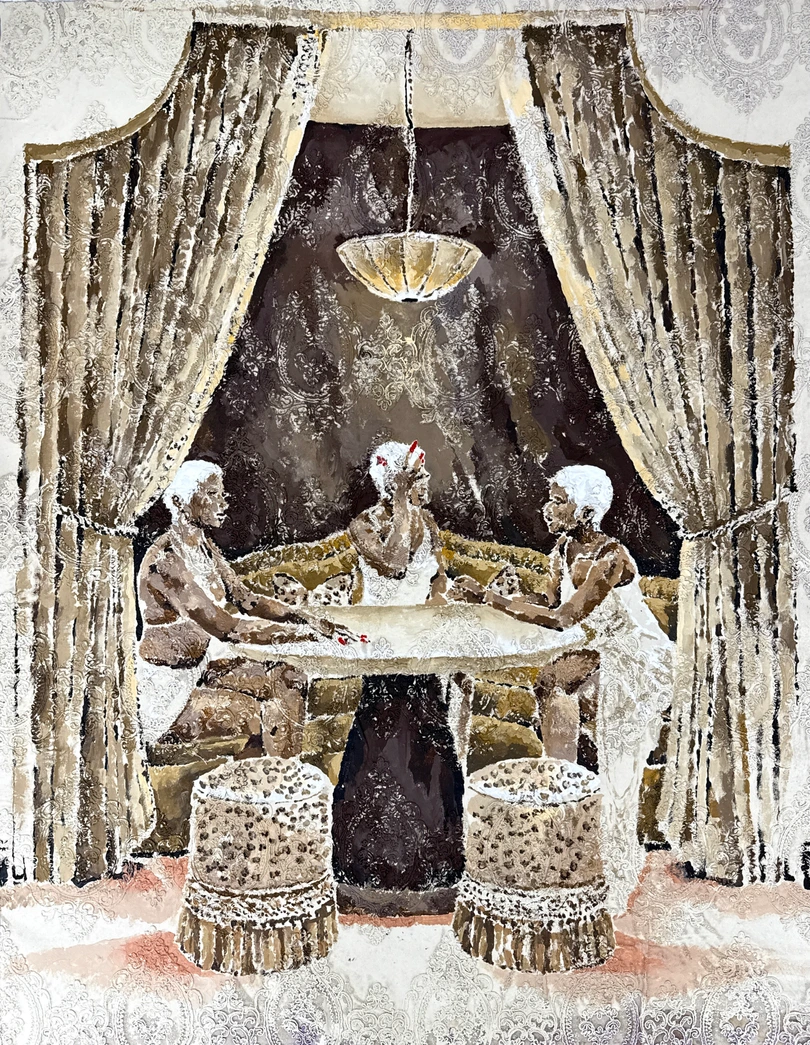
One of the most distinctive aspects of Nobakada’s practice lies in her choice of material. She paints with acrylic on hand-prepared lace sourced from her maternal grandmother’s curtains. The fabric was cared for by generations of women in her family before entering the artist’s work as a structural element.
This inherited material carries a history of domestic life before the first mark of paint is made. Once transformed, the lace becomes part of the physical foundation of her compositions, informing the surfaces through which walls, gardens and skin are represented.
The choice creates a connection between the intimate and the monumental. A material associated with the home becomes the ground on which expansive imagined environments are built. Family history is not simply referenced in the subject matter; it is embedded in the work itself.
There is also a quiet continuity between the lace and the women who inhabit Nobakada’s paintings. Both carry histories that extend beyond a single individual. The fabric has passed through generations, while the figures occupy spaces that suggest an inheritance of their own: one defined by comfort, beauty and the freedom to take up room.
The Modern Woman And The Right To Belong
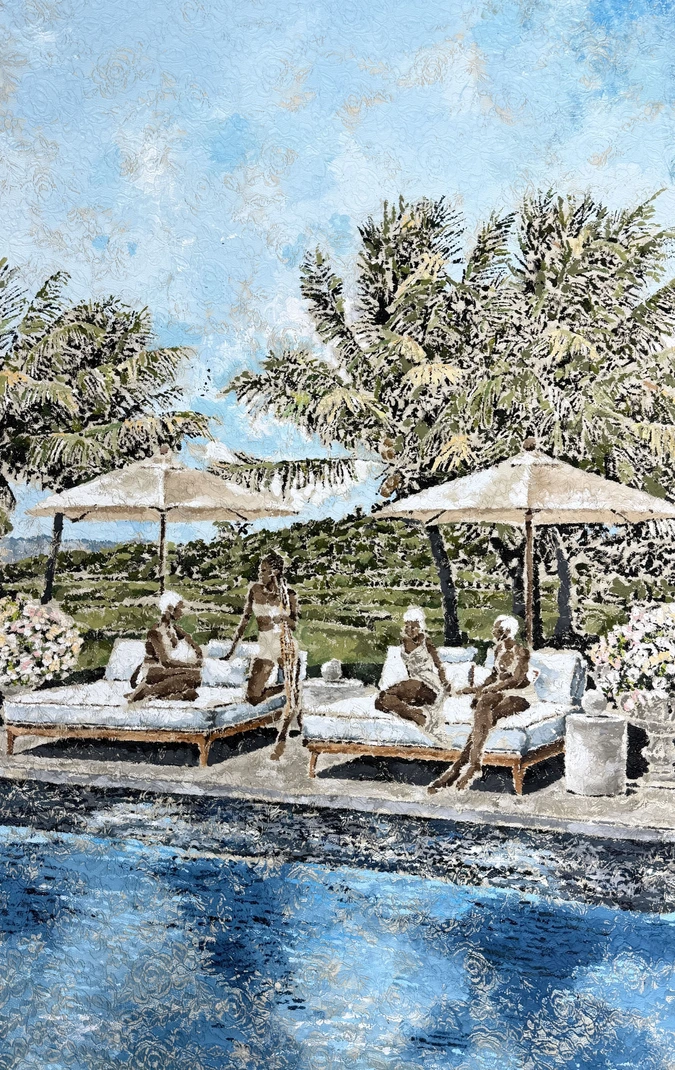
Among the six paintings in the Paris exhibition are The Modern Woman’s Guide to Productivity and The Châtelaine’s Banquet. Their titles point towards questions of social identity, domestic life and the expectations placed on women, while the works themselves present Black women within settings of opulence and leisure.
Gardens become places of movement and gathering. Tables bring figures together in carefully composed social scenes. Interiors open onto a world of cultivated detail, with the women occupying these environments as their natural inhabitants.
The significance lies partly in what the paintings refuse to explain. Their subjects do not appear to be asking permission to belong. Their presence is assured, and the surrounding spaces reinforce rather than challenge it.
In this sense, Nobakada’s work invites viewers to consider representation beyond visibility alone. It asks what kinds of lives are imagined for Black women, which environments they are permitted to inhabit in visual culture, and how painting can make room for alternative possibilities.
From South Africa To Paris
Nobakada’s French debut builds on an exhibition history that has taken her work to audiences in London, Chicago and Stockholm. Her paintings have also entered permanent museum collections, including the Albany Museum of Art in Georgia and the Iziko South African National Gallery in Cape Town.
At the Iziko South African National Gallery, her reinterpretation of Édouard Manet’s Olympia is currently on display, according to the exhibition information supplied by Tatler Africa. The reference places Nobakada’s practice in conversation with a pivotal work in the history of modern painting, while allowing her to reconsider its visual language through her own perspective.
Her presentation in Paris introduces six new paintings within an international art context, but the material and ideas underpinning the work remain closely connected to her personal and cultural history. The inherited lace, architectural compositions and carefully staged domestic worlds are not separate strands. They form a connected practice in which the physical construction of a painting and the world it imagines are inseparable.
The exhibition’s title, Our Dreams Began to Chase Us Back, offers a fitting frame for this movement between aspiration and inheritance. Dreams are not presented as distant abstractions. They take shape in rooms, gardens and shared spaces, becoming environments that can be entered and inhabited.
Building A World Of Her Own
Nobakada’s paintings bring together material memory, architectural structure and a considered vision of Black womanhood. Their richness is visual, but their concerns extend beyond decoration. The lace holds a family history; the architecture organises the space; and the figures establish a presence that needs no justification.
As Our Dreams Began to Chase Us Back opens in Paris, Nobakada brings a distinctly personal visual language into an international setting. Her work offers a world built from what has been inherited and what can still be imagined — one in which belonging is not an aspiration deferred, but a condition already lived.
Exhibition Details
- Exhibition: Our Dreams Began to Chase Us Back
- Artist: Buqaqawuli Thamani Nobakada
- Curator: Destinee Ross-Sutton
- Opening Date: 19 October 2026
- Location: Pierre Cornette de Saint Cyr gallery, Paris
- Occasion: Art Basel Paris week
- Works: Six new paintings
All Images © Buqaqawuli Thamani Nobakada.