|
Getting your Trinity Audio player ready...
|
For decades, luxury hospitality has been defined by grand hotels, legendary service, and prestigious addresses.
Today, a new model is quietly emerging.
One where privacy replaces scale, ownership replaces bookings, and architecture becomes the primary experience.
Few projects capture this shift more clearly than NOT A HOTEL Setouchi, the newly completed hospitality development by Bjarke Ingels Group on Japan’s Sagishima Island.
Perched above the Seto Inland Sea, the project is less a resort and more a vision of how affluent travellers may choose to experience destinations in the future.

Beyond the Traditional Hotel
Developed by NOT A HOTEL, the project challenges many of the conventions associated with luxury travel.
There is no grand lobby.
No crowded resort environment.
No traditional hotel experience.
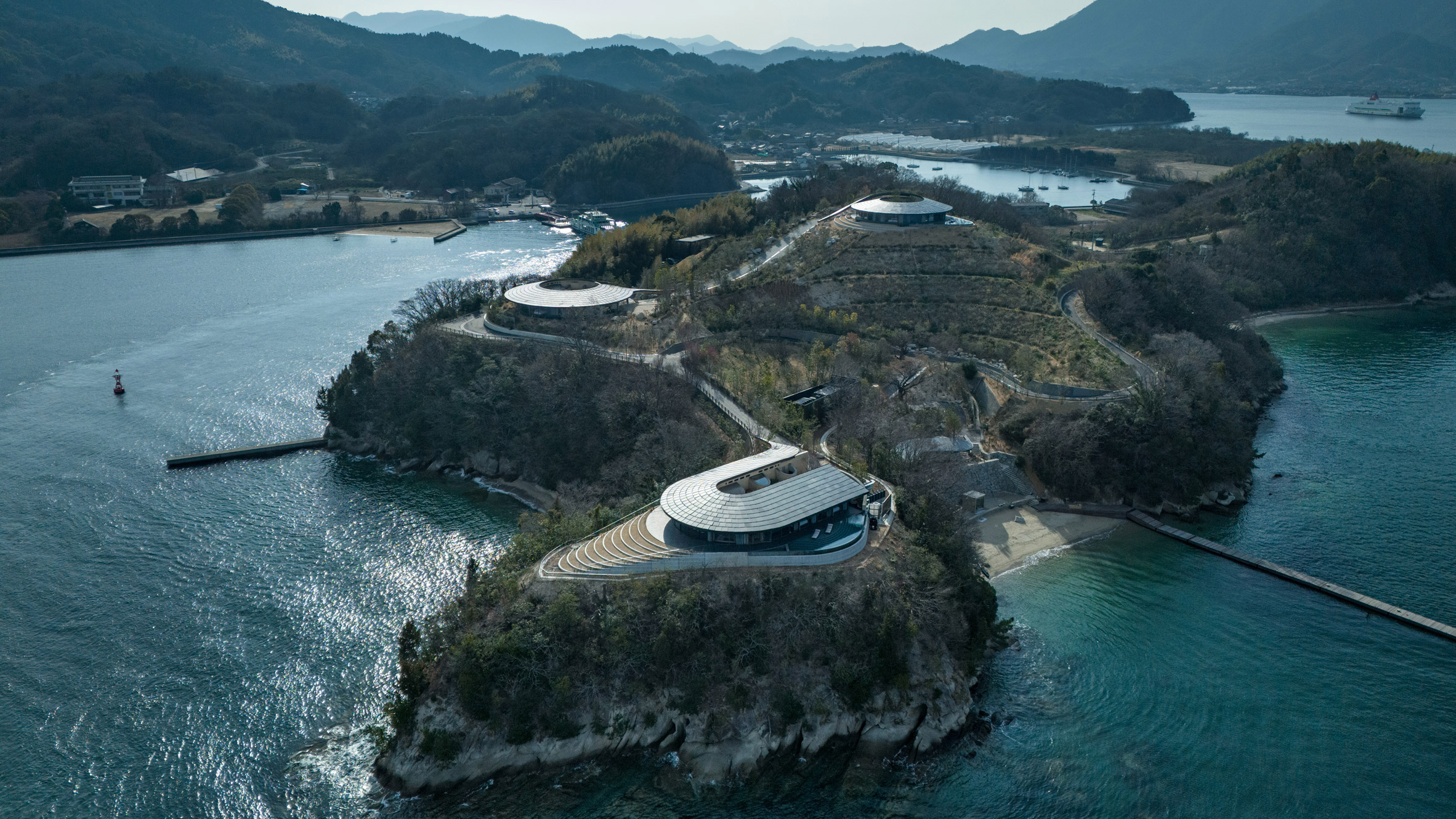
Instead, three architecturally distinct villas occupy a secluded 30,000-square-metre coastal site, offering an experience centred on privacy, landscape, and personal space.
The concept reflects a broader evolution within luxury hospitality.
Increasingly, travellers are seeking immersion rather than accommodation.

Architecture as Destination
Designed by BIG, the project follows the contours of Sagishima’s mountainous terrain, creating a continuous architectural gesture across the hillside.
Each villa responds directly to its position within the landscape.
Villa 360 forms a circular structure wrapped around a private courtyard with panoramic views across the sea.
Villa 270 opens toward the surrounding islands through outdoor living spaces, pools, and wellness areas.
Villa 180 follows the coastline itself, creating an intimate dialogue between architecture and water.
The result is architecture that feels inseparable from its environment.

Building From the Land Itself
Among the most compelling aspects of the project is its materiality.
Load-bearing rammed-earth walls were created using soil sourced directly from the site, embedding the physical character of Sagishima into the architecture itself.
The walls record layers of local geology while connecting the buildings to centuries-old construction traditions.
Throughout the villas, black slate flooring, timber interiors, and expansive glazing create a restrained palette that prioritises texture, light, and atmosphere over decoration.
This approach reflects a growing preference for authenticity within contemporary luxury design.

The Rise of Quiet Luxury Architecture
What makes NOT A HOTEL Setouchi particularly relevant is how closely it aligns with wider shifts in luxury culture.
The project avoids spectacle.
There are no dramatic gestures designed for social media.
No excessive ornamentation.
No visible attempt to impress.
Instead, value is created through:
- craftsmanship
- privacy
- landscape
- proportion
- material honesty
In many ways, the development represents the architectural equivalent of quiet luxury.

Ownership as Experience
The project also reflects changing attitudes toward travel itself.
NOT A HOTEL’s fractional ownership model allows members to own access to multiple architecturally significant properties rather than simply reserving accommodation.
The distinction may seem subtle.
Yet it reflects a larger movement toward experiential ownership, where people increasingly invest in access, lifestyle, and community rather than traditional assets alone.
Grandiose Perspective
The most influential hospitality projects of the coming decade may not be hotels in the conventional sense.
They will be environments.
Places where architecture, landscape, design, and experience merge into a single offering.
NOT A HOTEL Setouchi captures that evolution beautifully.
Its greatest luxury is not its location, its views, or even its architecture.
It is the sense of belonging it creates between visitor and place.
And increasingly, that may be the ultimate luxury.