Grandiose Magazine
  • AUTOMOBILES
  • TECH
  • SUAVE
  • TRAVEL
  • LIFESTYLE
  • ARTS AND CULTURE
  • ENTREPRENEURSHIP
  • About
  • Grandiose Luxury Awards
  • Partner With Grandiose
  • Contact
  • About
  • Grandiose Luxury Awards
  • Partner With Grandiose
  • Contact
Grandiose Magazine
Grandiose Magazine
  • AUTOMOBILES
  • TECH
  • SUAVE
  • TRAVEL
  • LIFESTYLE
  • ARTS AND CULTURE
  • ENTREPRENEURSHIP
  • ARTS AND CULTURE

Yayoi Kusama: The Infinite Legacy Of An Icon

  • 4 minute read
Total
0
Shares
0
0
0

Following the death of the Japanese artist at 97, her final major retrospective in Amsterdam takes on a different meaning, offering a moment to consider the universe she created and the legacy she leaves behind.

There is something different about entering a Yayoi Kusama installation now.

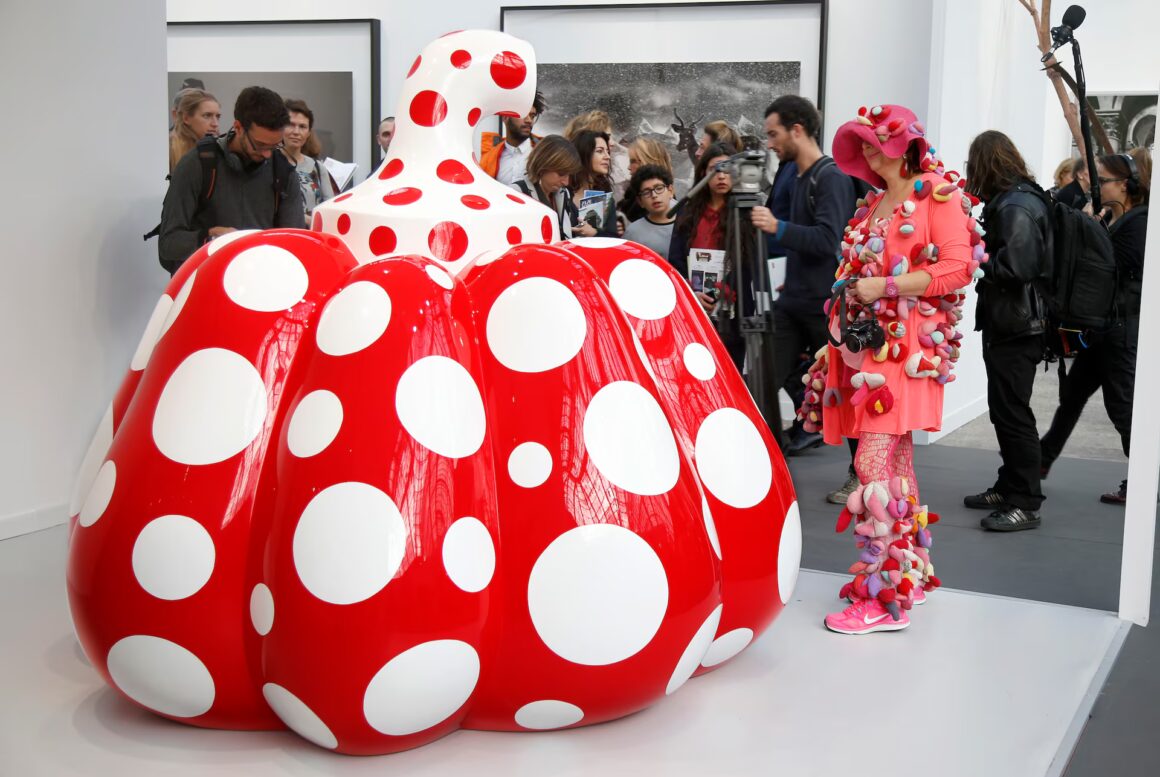
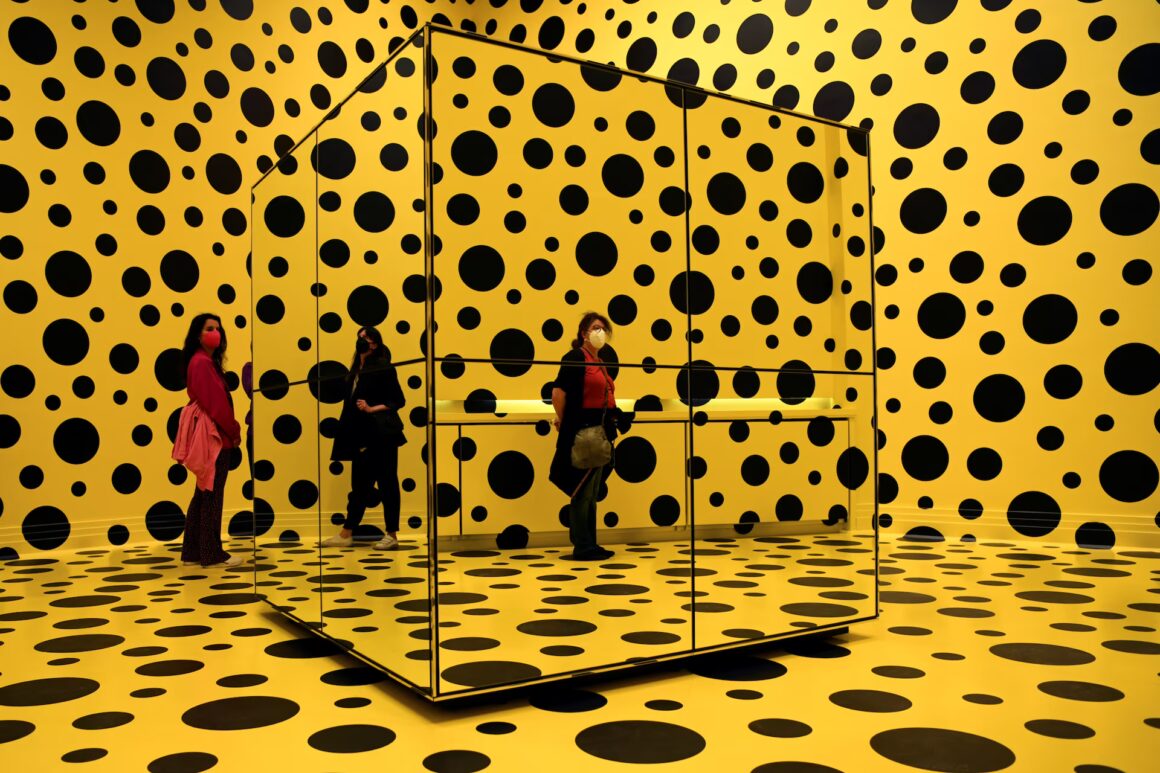
The dots remain. The mirrors still multiply the body. The pumpkins retain their unmistakable forms, and the patterns continue across surfaces and spaces with the same relentless rhythm that has defined Kusama’s visual language for decades.

But one thing has changed.

Yayoi Kusama is no longer here.

The Japanese artist died in Tokyo on 14 August 2026 at the age of 97, leaving behind a body of work that stretches from her earliest drawings to the immersive environments that eventually made her one of the most recognisable figures in contemporary art. Her death has inevitably changed the way her work is encountered, particularly as her final major retrospective opens at Amsterdam’s Stedelijk Museum.

What was conceived as another chapter in a long and extraordinary career now carries the weight of a final encounter.
A World Seen Through Repetition

Kusama’s relationship with repetition began long before the polka dots became a global visual signature. From childhood, she experienced hallucinations involving patterns, dots, flowers and nets, translating these experiences into drawings and paintings as a way of externalising what she saw.

That history matters because it changes the way her work can be understood. The dots were never simply a decorative device, just as the repetition was never merely a recognisable aesthetic. They became a method through which Kusama could explore the boundaries between herself and the world around her.

She spent a lifetime taking that process further.

A single mark became hundreds. Hundreds became thousands. A room became a field of reflections. The individual object became part of an environment in which the distinction between one thing and another began to disappear.

Repetition became a language for infinity.
From Japan to New York

Kusama left Japan for New York in 1957, entering an artistic environment that would profoundly shape the next stage of her career. There she developed her Infinity Net paintings and moved increasingly between painting, sculpture, performance and installation.

Her work challenged the boundaries separating disciplines. Sculpture became environment, performance became participation, and the viewer increasingly became part of the work rather than an observer standing outside it.

The significance of that period extends beyond the individual works she produced. Kusama was developing an artistic language that could exist at different scales, from the intimate surface of a canvas to an entire room.

That ambition would eventually become central to the Infinity Mirror Rooms.
The Disappearance of the Self

Kusama’s work is often described through its most recognisable imagery, but beneath the dots and mirrors lies a more complicated preoccupation with identity.

Inside an Infinity Mirror Room, the viewer encounters an endless sequence of reflections. The body is repeated until it becomes difficult to determine where one reflection ends and another begins. The room appears to continue beyond its physical boundaries, creating the sensation that the individual has entered something much larger.

There is an inherent contradiction here.

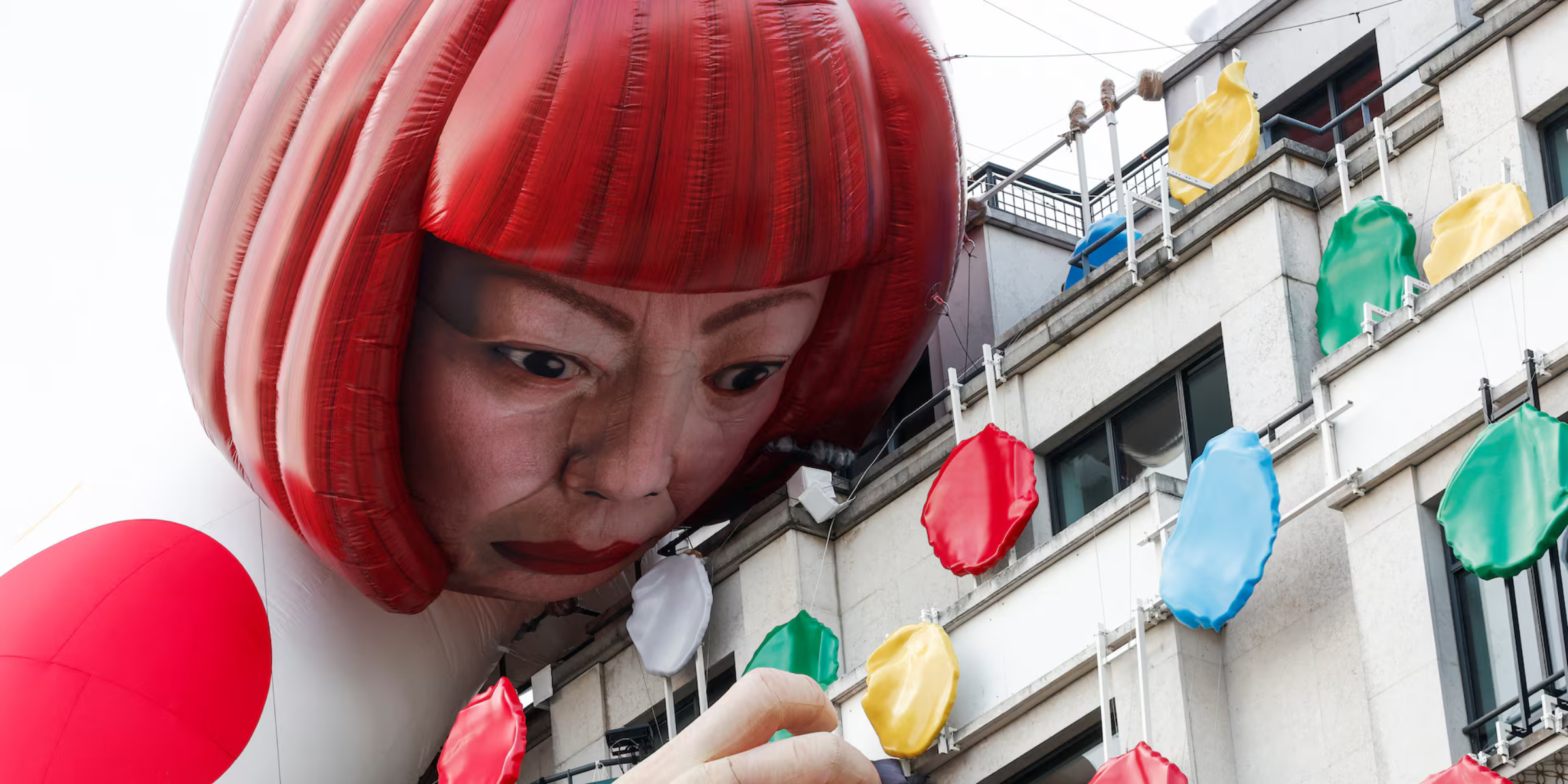
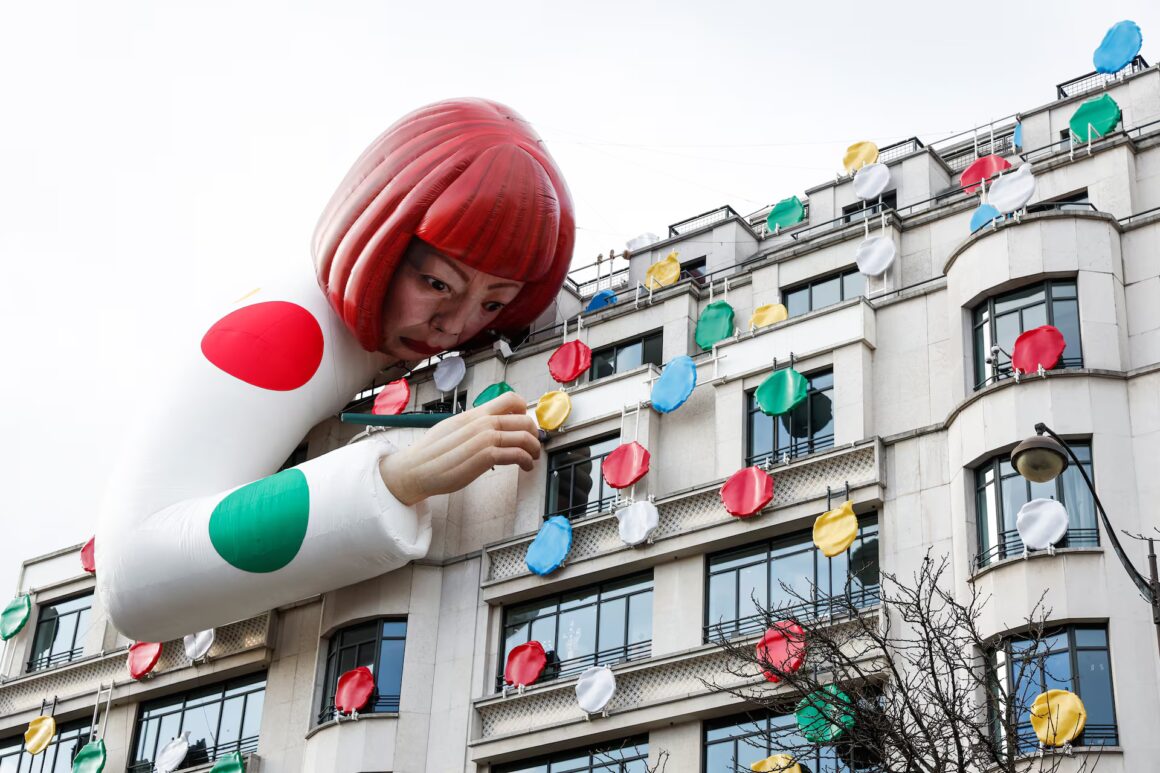
Kusama became one of the most recognisable artists in the world while producing work that repeatedly questioned the boundaries of the individual. Her red hair, distinctive clothing, pumpkins, dots and mirrored environments became an unmistakable public identity.

The artist who explored self-obliteration ultimately became an icon of individuality.

That tension is one of the most interesting aspects of her legacy.
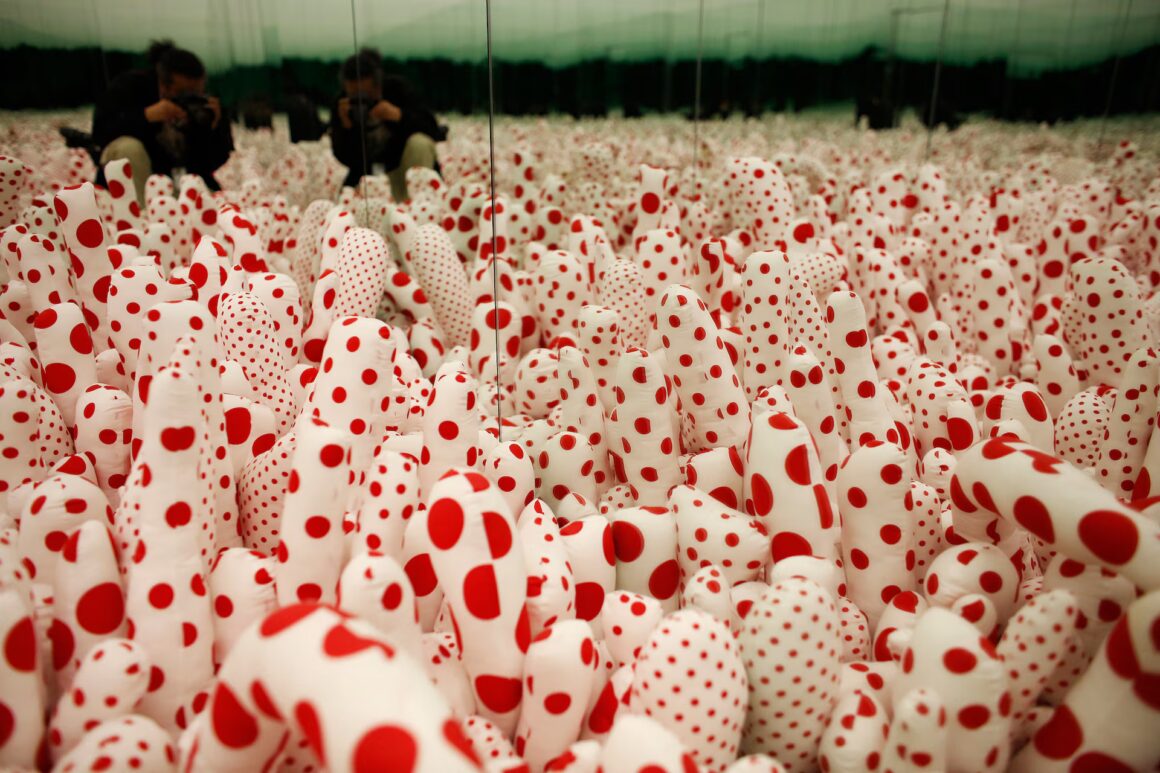
From Avant-Garde to Global Culture

Kusama’s journey from the avant-garde of 1960s New York to the world’s major museums and collections is equally remarkable. Her work moved beyond the traditional art world into fashion, popular culture and global commercial visibility, while retaining the visual language that had developed from deeply personal experiences.

The transition did not make the work less significant. Instead, it demonstrated the extraordinary portability of her ideas.

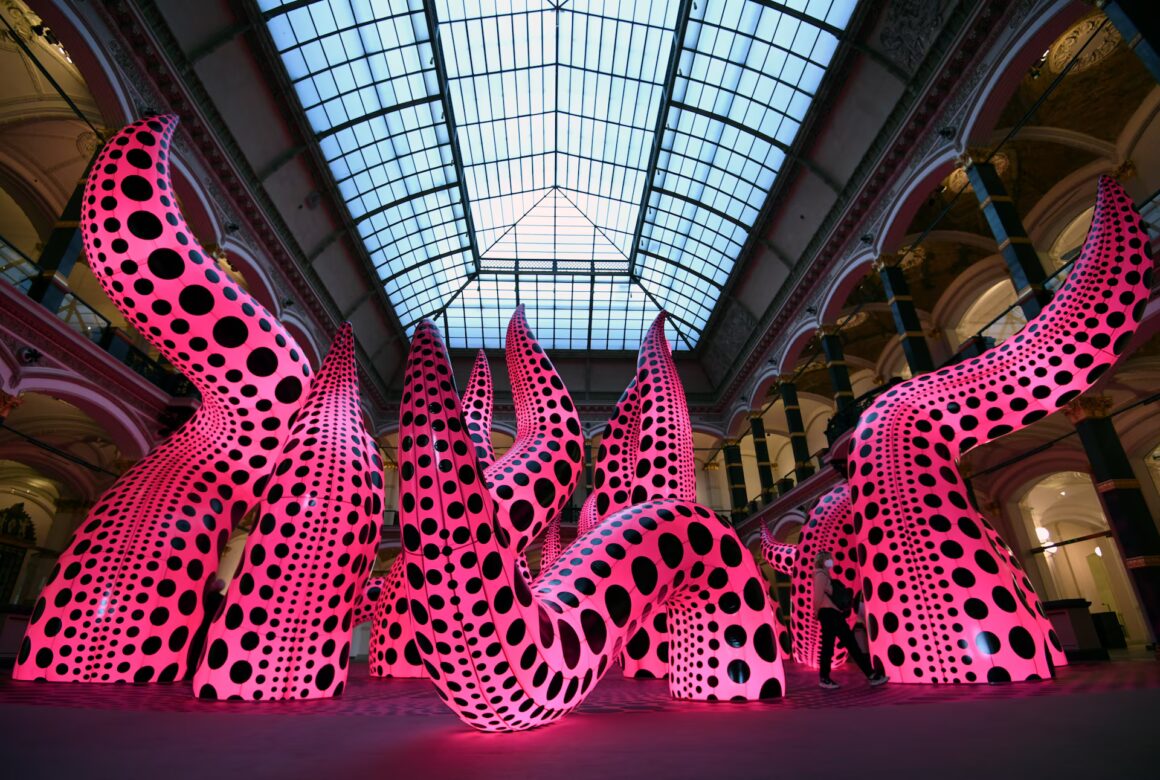
The dots could exist on a canvas, a sculpture, an installation or a commercial object. The mirrors could turn a museum room into an experience shared by thousands of visitors. Her pumpkins could move between intimate artworks and monumental public symbols.

Kusama created something rare: a visual language that could be immediately recognised without being completely separated from its conceptual origins.

The Final Encounter

The Stedelijk Museum’s retrospective now occupies a particularly poignant position in that story. Spanning more than seven decades of work, the exhibition brings together different periods of Kusama’s practice and places them within the context of a career that has now reached its physical conclusion.

The work itself, however, has not reached an ending.

That may be the most appropriate legacy for an artist whose practice was so deeply concerned with infinity.

Visitors will continue entering her mirrored rooms. They will continue seeing their reflections multiplied across infinite surfaces. They will continue encountering the dots, pumpkins and paintings that became part of the global visual imagination.

The artist is gone, but the system she created continues to operate.

Kusama spent her life asking where the individual ends and the universe begins. In death, that question takes on a new dimension. Her physical presence has disappeared, but the artistic universe she constructed remains capable of expanding through every new viewer who enters it.

Yayoi Kusama is gone. Her infinity is not.
Total
0
Shares
Share 0
Tweet 0
Pin it 0
Grandiose

You May Also Like
View Post
  • ARTS AND CULTURE

Abigail Kubeka: The Voice Of A Generation

  • Grandiose
  • September 17, 2026
View Post
  • ARTS AND CULTURE
  • LIFESTYLE
  • SUAVE

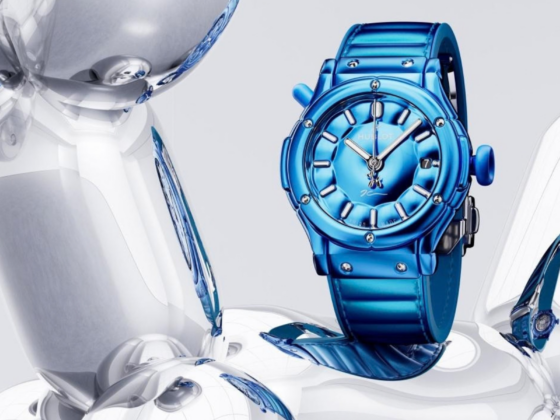
Hublot × Jeff Koons: A New Dialogue Between Art And Haute Horlogerie

  • Grandiose
  • September 17, 2026
View Post
  • ARTS AND CULTURE

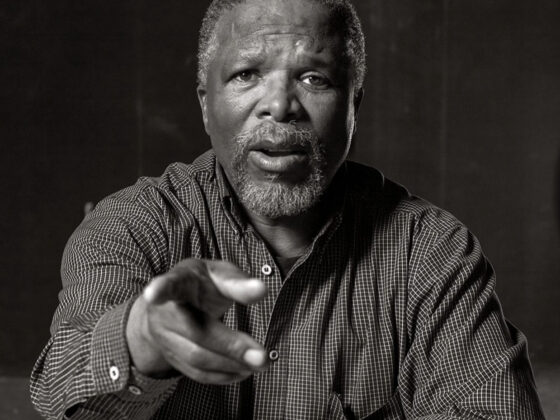
John Kani: A Life Written Into South Africa’s Cultural Memory

  • Grandiose
  • September 17, 2026
View Post
  • ARTS AND CULTURE

Kelebogile Marope: The Archaeology Of An Ordinary Life

  • Grandiose
  • September 8, 2026
View Post
  • ARTS AND CULTURE
  • LIFESTYLE
  • SUAVE

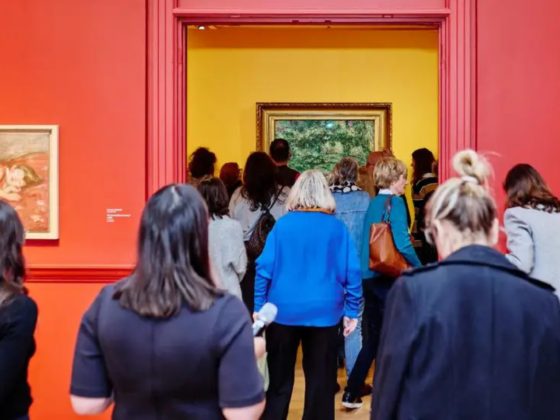
A Legendary Art Dealer’s Collection of Impressionist Masters Heads to Auction for Nearly R800 Million

  • Grandiose
  • September 6, 2026
View Post
  • ARTS AND CULTURE

Atang Tshikare: The Art Of Transcendence

  • Grandiose
  • August 28, 2026
View Post
  • ARTS AND CULTURE

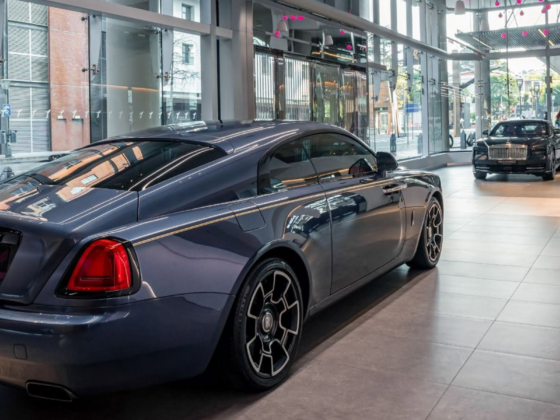
Mirrored Futures: Where Art, Nature and Technology Meet at Rolls-Royce Johannesburg

  • Grandiose
  • August 23, 2026
View Post
  • ARTS AND CULTURE

Takalani Ligege: This Is My Mountain, This Is My Path

  • Grandiose
  • August 18, 2026

Leave a Reply Cancel reply

Your email address will not be published. Required fields are marked *

    • ARTS AND CULTURE
    Abigail Kubeka: The Voice Of A Generation
    • 4 minute read
    • ARTS AND CULTURE
    • LIFESTYLE
    • SUAVE
    Hublot × Jeff Koons: A New Dialogue Between Art And Haute Horlogerie
    • 4 minute read
    • ARTS AND CULTURE
    John Kani: A Life Written Into South Africa’s Cultural Memory
    • 4 minute read
    • LIFESTYLE
    • SUAVE
    BRABUS Shadow 1000 XC Cross Cabin: 1,000 Horsepower on Water
    • 4 minute read
    • AUTOMOBILES
    • LIFESTYLE
    • SUAVE
    Aston Martin AMB 002 Roadster: A New Expression of Two-Wheeled Luxury
    • 4 minute read
GRANDIOSE
A world where Wealth meets Luxury; discover the lavish lifestyle choices enjoyed by the world’s most affluent; experience the grandeur of the most bespoke products and services available to the moneyed, famous and influential around the globe; a place where it is truly possible to have it all, and where Living Life Lavishly is the rule.
Categories
  • ARTS AND CULTURE
  • AUTOMOBILES
  • ENTREPRENEURSHIP
  • LIFESTYLE
  • SUAVE
  • TECH
  • TRAVEL
The end of an automotive legend. Bugatti has deli The end of an automotive legend.

Bugatti has delivered the final Mistral, bringing the marque’s iconic W-16 era to a close after more than two decades of redefining the hypercar.

Powered by a 1,578 hp quad-turbocharged 8.0-litre W-16, the Mistral is also the world’s fastest open-top production car, reaching an incredible 453 km/h.

While Bugatti now enters the hybrid age with the Tourbillon, the W-16 will forever remain one of the greatest engines ever built.

Read the full story on Grandiose Magazine.

#grandiosemagazine, #BugattiMistral, #W16, #Hypercar, #LuxuryCars
One of the world’s most iconic paintings has been One of the world’s most iconic paintings has been reimagined—brick by brick. 🎨🧱

LEGO has partnered with Vienna’s Belvedere Museum to recreate Gustav Klimt’s The Kiss as its largest art-inspired set ever, featuring nearly 4,000 pieces.

The collectible transforms Klimt’s masterpiece into a layered, three-dimensional work of art that celebrates craftsmanship, design and creativity in an entirely new way.

More than a building set, it’s a tribute to one of history’s most celebrated paintings.

Available from 1 August.

Read the full story on Grandiose Magazine.
#LEGO, #GustavKlimt, #TheKiss, #BelvedereMuseum, #grandiosemagazine
One of Japan’s most beloved whiskies is finally ba One of Japan’s most beloved whiskies is finally back. 🥃

After an 11-year absence, Nikka Miyagikyo 10 Year Single Malt returns with its signature silky character, layered notes of apple, citrus, vanilla and gentle oak.

First discontinued during Japan’s whisky shortage, the celebrated age-statement expression now returns in extremely limited numbers, with just 1,572 bottles allocated across the United States.

For collectors and whisky lovers, this isn’t simply another release.

It’s the return of a modern Japanese classic.

Read the full story on Grandiose Magazine.

#, #RareWhisky, #CollectorsEdition, #LuxuryDrinks, #SpiritsofJapan,
Before every Bentley becomes an icon, it begins as Before every Bentley becomes an icon, it begins as a sketch.

At the 2026 Goodwood Festival of Speed, Bentley celebrated the art behind automotive design by inviting acclaimed illustrator Stefan Marjoram to become its Artist-in-Residence.

Rather than simply displaying extraordinary cars, Bentley transformed its pavilion into a live studio where visitors watched modern grand tourers and century-old classics come to life through hand-drawn illustrations.

It’s a reminder that true luxury starts long before the factory floor—with imagination, creativity and the first confident line of a pencil.

Because every masterpiece begins as an idea.

Read the full story on Grandiose Magazine.
#LuxuryLifestyle#ArtMeetsDesign#BentleyHeritage#GrandioseMagazine
What if the future of luxury hospitality isn’t a h What if the future of luxury hospitality isn’t a hotel at all?

Perched above Japan’s Seto Inland Sea, NOT A HOTEL Setouchi by BIG reimagines travel through architecture, privacy, and landscape rather than traditional hospitality.

Built from rammed-earth walls formed using soil sourced directly from the site, the three-villa retreat blurs the boundaries between building and nature.

No grand lobby.

No crowded resort.

Just architecture designed to belong.

Read more on Grandiose Magazine.

#NOTAHOTEL #BIGArchitects #BjarkeIngelsGroup #LuxuryTravel #GrandioseMagazine
What happens when a museum becomes a living system What happens when a museum becomes a living system?

Opening in Los Angeles, DATALAND is the world’s first Museum of AI Arts—a cultural institution where artificial intelligence, architecture, nature, and creativity converge.

Its inaugural exhibition, *Machine Dreams: Rainforest*, transforms ecological data from the Amazon into immersive environments that evolve in real time.

The result is not simply an exhibition about technology.

It’s a glimpse into how art itself may evolve in the age of machine intelligence.

Read more on Grandiose Magazine.

#DATALAND #RefikAnadol #AIArt #DigitalArt #ContemporaryArt ImmersiveArt FutureOfCreativity ArtificialIntelligence CreativeTechnology MuseumOfAIArts ArtAndTechnology
Follow on Instagram
Featured Categories
Grandiose Magazine
  • About
  • Grandiose Luxury Awards
  • Partner With Grandiose
  • Contact
© Copyright 2027 - Phambana Investments

Input your search keywords and press Enter.