With Prada’s Spring/Summer 2027 collection devoted entirely to the knee-length skirt, Miuccia Prada and Raf Simons turn a wardrobe staple into a study of creativity, individuality and the enduring power of design.
In luxury fashion, certain garments become inseparable from the houses that define them. Burberry has its trench coat. Dior has its Bar jacket. At Prada, the skirt occupies a similarly distinctive position, serving as a recurring point of departure for Miuccia Prada’s exploration of femininity, construction and personal style.
The Italian designer’s relationship with the silhouette stretches back decades. Since taking over the family business in the late 1970s, Prada has repeatedly returned to the skirt as a foundation for experimentation, challenging the idea that a familiar garment must remain predictable.
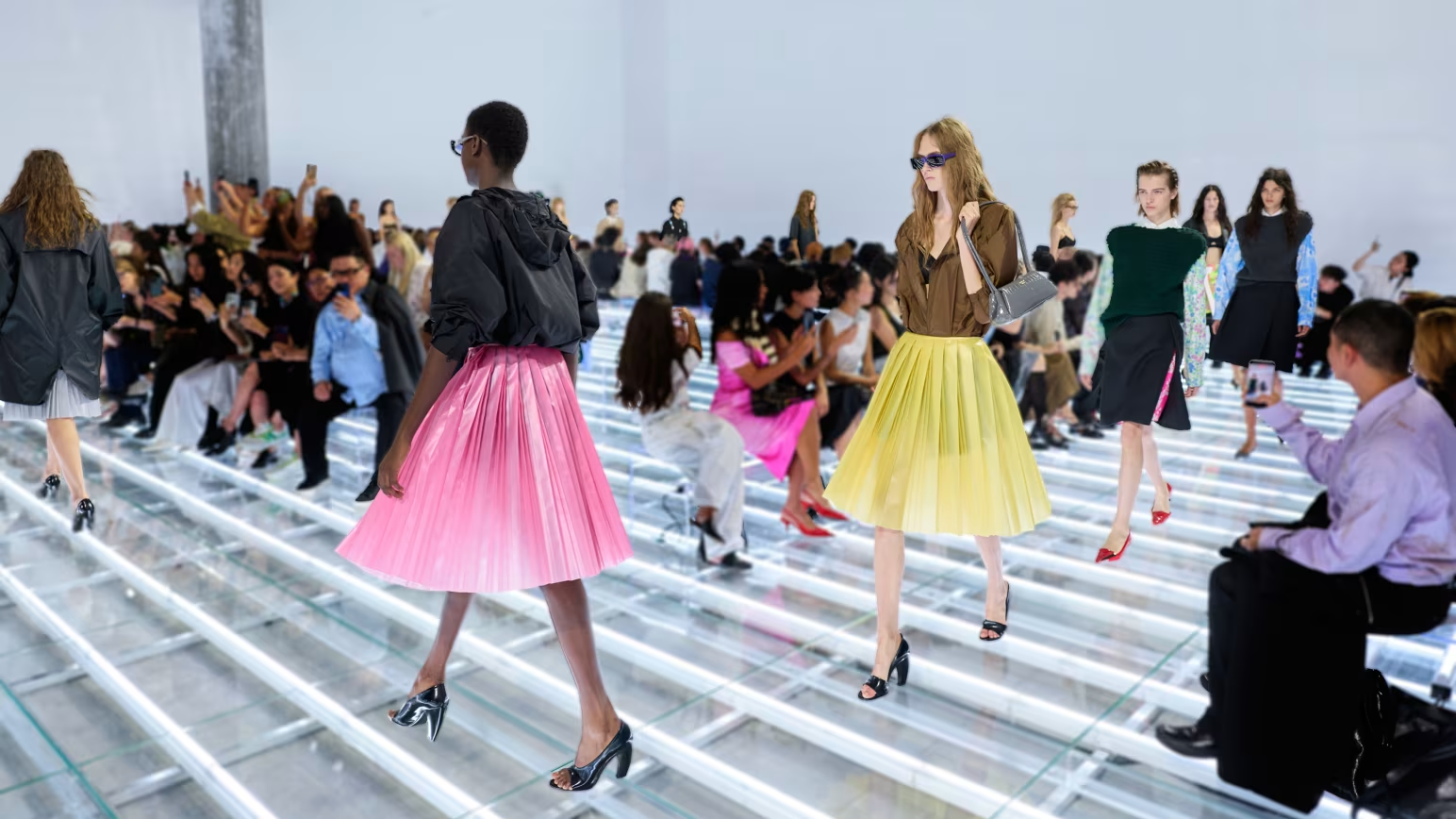
That commitment came into sharp focus during Milan Fashion Week in September 2026, when Prada and co-creative director Raf Simons presented the Spring/Summer 2027 womenswear collection under a deliberately direct title: The Skirt.
Across 63 looks, the collection imposed a singular focus on the lower half of the silhouette. There were no trousers, shorts or dresses. Instead, the designers explored the possibilities of one garment through changes in colour, texture, embellishment, proportion and styling.
The result was a collection that demonstrated how creative limitation can produce unexpected possibilities.
One Garment, Endless Possibilities
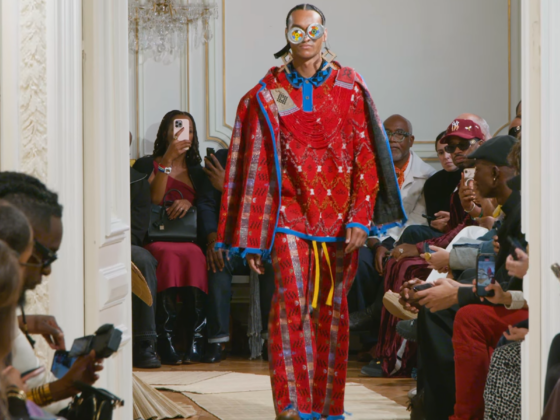
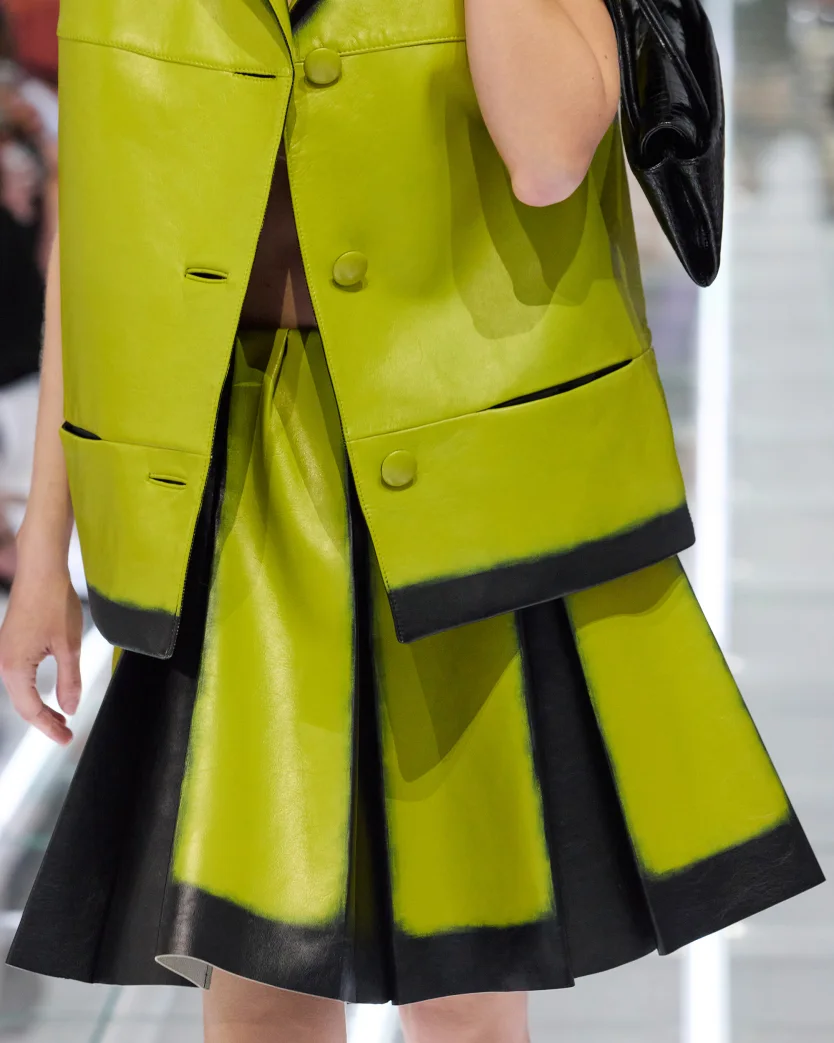
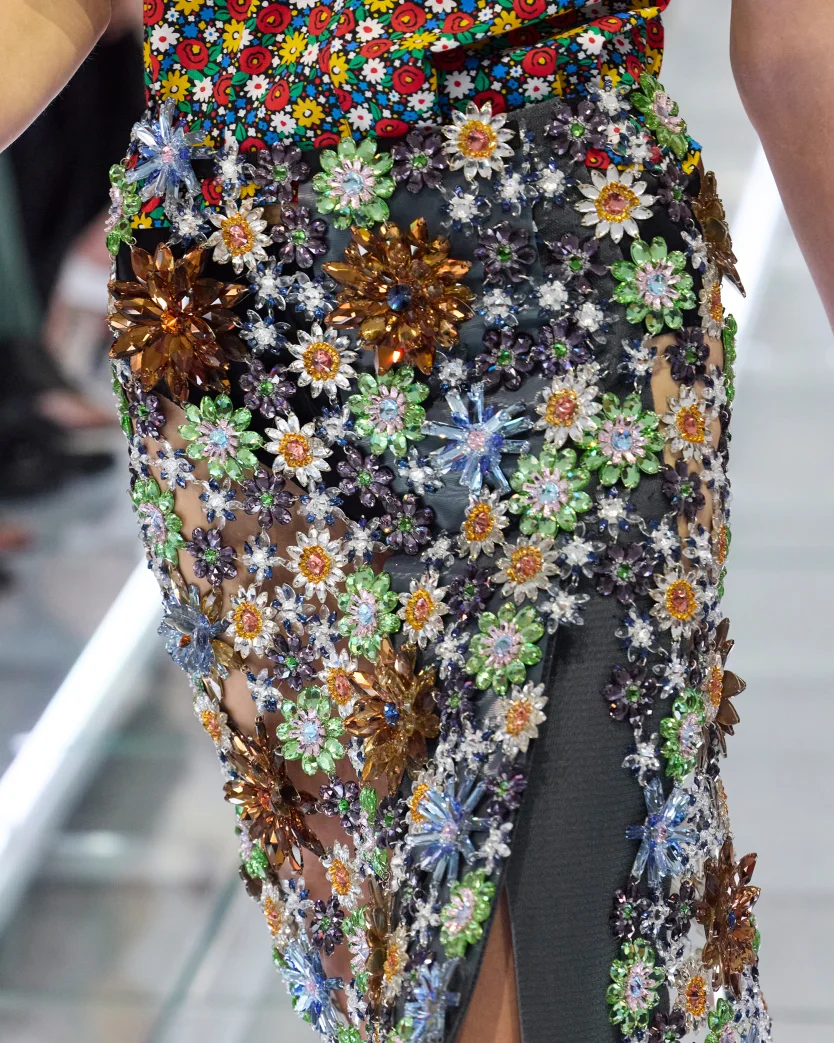
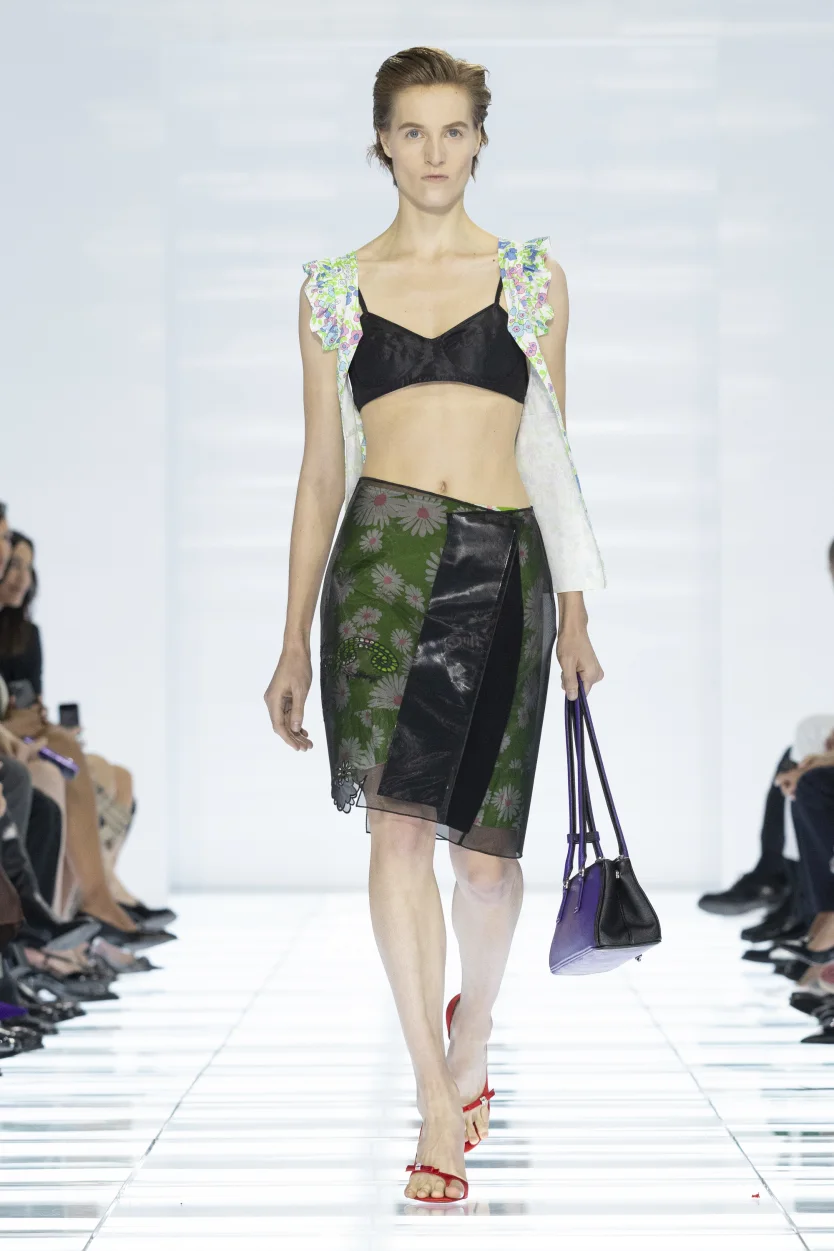
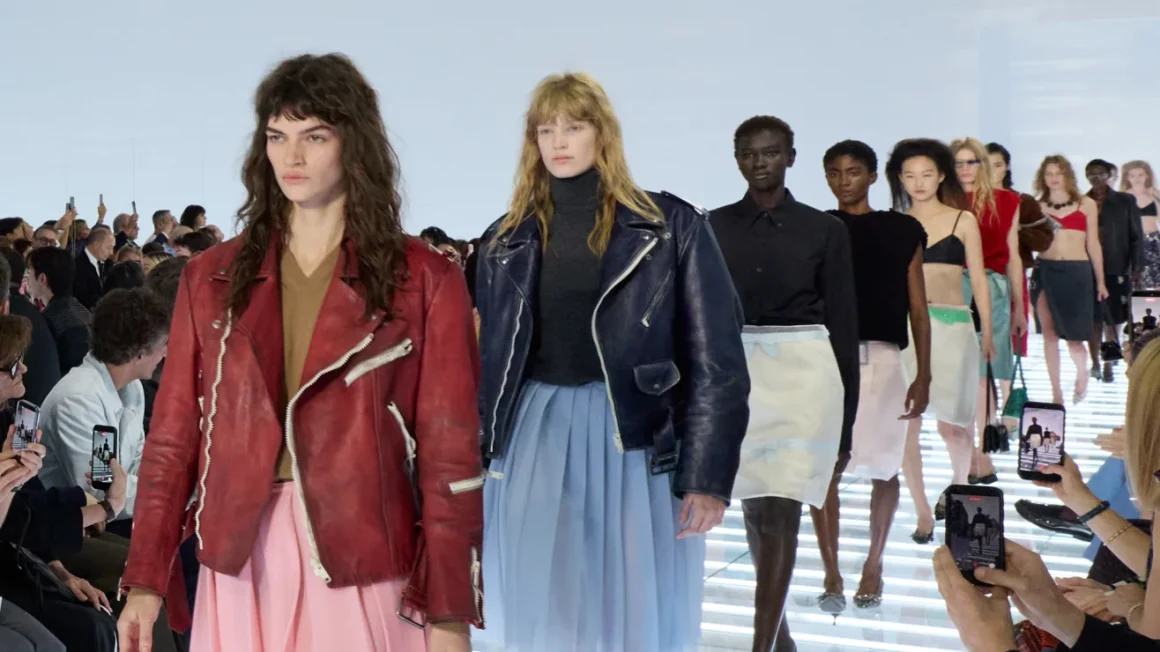
Prada’s Spring/Summer 2027 collection approached the knee-length skirt as a canvas rather than a fixed design. Pleated versions appeared in restrained shades of black and grey, punctuated by fluorescent colour. Other pieces introduced ruching, layered bows, graphic sketches, dip-dyed surfaces and dense crystal embellishment.
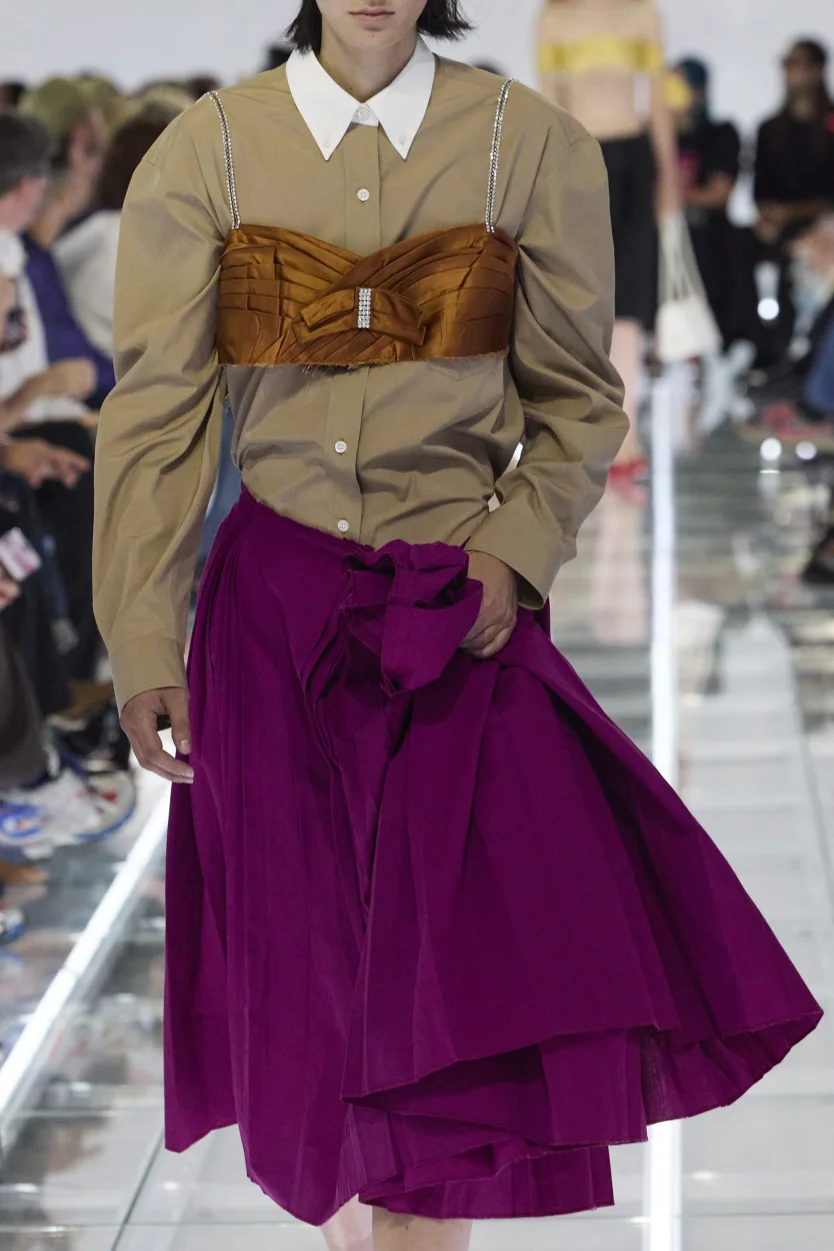
The familiar became deliberately unfamiliar. Some skirts carried the visual intensity of an abstract painting, while others brought decorative elements into contact with more industrial materials. Jewels applied to Velcro introduced a characteristic Prada tension between refinement and utility, elegance and disruption.
In the show notes, Prada and Simons described the collection as an exploration conducted within strict parameters. Simons also pointed to the importance of illogical behaviour within the Prada design language, suggesting that the unexpected remains central to the house’s creative identity.
That tension is part of what makes Prada distinctive. The clothes do not necessarily seek conventional harmony. Instead, they create interest through combinations that might initially appear incompatible, allowing different materials, references and ideas to coexist.
The skirts were paired with chunky leather jackets, tailored shirts and silky bra tops, demonstrating that the garment’s identity could change dramatically depending on what accompanied it. The skirt was the constant; everything around it became an opportunity for reinvention.
Miuccia Prada’s Personal Design Philosophy
Prada’s interest in the skirt extends beyond the runway. In a 2006 interview with Charlie Rose, she described it as a foundational garment from which other elements of a wardrobe could be developed.
Her preference reflects a broader understanding of clothing as a form of creative expression. A skirt offers possibilities through its length, volume, surface and relationship with other pieces. It can be formal or relaxed, restrained or exuberant, depending on how it is constructed and worn.
Prada has also spoken about the opportunities the garment provides for creativity, particularly in comparison with trousers. Her position is not simply that the skirt is a timeless wardrobe essential, but that it allows the wearer to participate in the design process through styling and combination.
This is an important distinction. A garment may leave the atelier as a completed object, but its final appearance is shaped by the person who wears it. The same skirt can communicate different ideas when paired with different shoes, outerwear, jewellery or proportions.
For Prada, that adaptability is central to its contemporary relevance.
The Beauty Of Contradiction
Prada has long explored the relationship between beauty and discomfort, polish and imperfection, luxury and the everyday. The Skirt continues that investigation through combinations that resist easy categorisation.
Crystals meet industrial fastenings. Restrained tailoring encounters exaggerated decoration. Muted colours sit alongside flashes of fluorescent brightness. The familiar silhouette becomes a vehicle for ideas that would be less apparent in a more conventional collection.
Simons described the design duo’s fascination with how Prada skirts have endured over time, pointing to their eccentricity, form and decoration. Their longevity, in this reading, is not dependent on remaining unchanged. It comes from their capacity to accommodate new ideas while retaining a recognisable design identity.
The collection therefore looks backwards and forwards simultaneously. It draws on a garment that has existed in wardrobes for generations while presenting it through a contemporary visual language.
The result is not nostalgia. It is continuity through experimentation.
A Wardrobe In Transition
The collection arrives at a moment when the skirt’s place in contemporary dressing is being reconsidered. After years in which tailored trousers, relaxed separates and tracksuit-inspired silhouettes have occupied prominent positions, designers are exploring the skirt’s potential in new ways.
The garment has also become a point of disagreement. Some fashion commentators regard its styling demands as a disadvantage, arguing that choosing lengths, footwear and accompanying pieces can make it more complicated to wear than trousers.
Prada’s approach offers a different perspective. The very decisions that might be considered inconvenient are also opportunities for personal expression. Length, proportion, texture and styling are not obstacles to overcome; they are part of the creative process.
The broader fashion conversation is therefore less about whether the skirt is returning than about how designers and consumers choose to interpret it. Its appeal can shift between seasons, but its possibilities remain available for reinvention.
The Luxury Of Individuality
At the heart of The Skirt is a proposition that extends beyond a single season: a well-designed garment does not have to dictate one definitive way of wearing it.
By concentrating an entire collection on the skirt, Prada and Simons demonstrate how much can be communicated through variation. The silhouette becomes a framework for exploring the relationship between design and the individual, allowing the wearer to influence the final meaning of the clothes.
This is particularly relevant to luxury fashion, where value increasingly resides not only in materials or craftsmanship but also in the strength of a design idea. A recognisable object becomes distinctive when it carries a point of view, and enduring when that point of view can evolve.
Prada’s devotion to the skirt illustrates how a house can revisit a familiar form without exhausting its creative potential. The garment is neither treated as a relic nor reinvented simply for novelty. It remains open to interpretation.
The Skirt As A Signature
With The Skirt, Prada and Simons have made a compelling case for the creative power of focus. Sixty-three looks built around one garment might appear restrictive, yet the collection uses that limitation to expose the range of possibilities within a single design category.
The skirt becomes a meeting point for craftsmanship, styling, material experimentation and individual identity. Its significance lies not in one particular length or finish, but in the different ways it can be transformed.
For Miuccia Prada, the skirt has never been merely an item of clothing. It is a recurring design question, one that can be asked differently with every collection and answered differently by every wearer.
That is the enduring appeal of The Skirt: a familiar silhouette with no final interpretation.