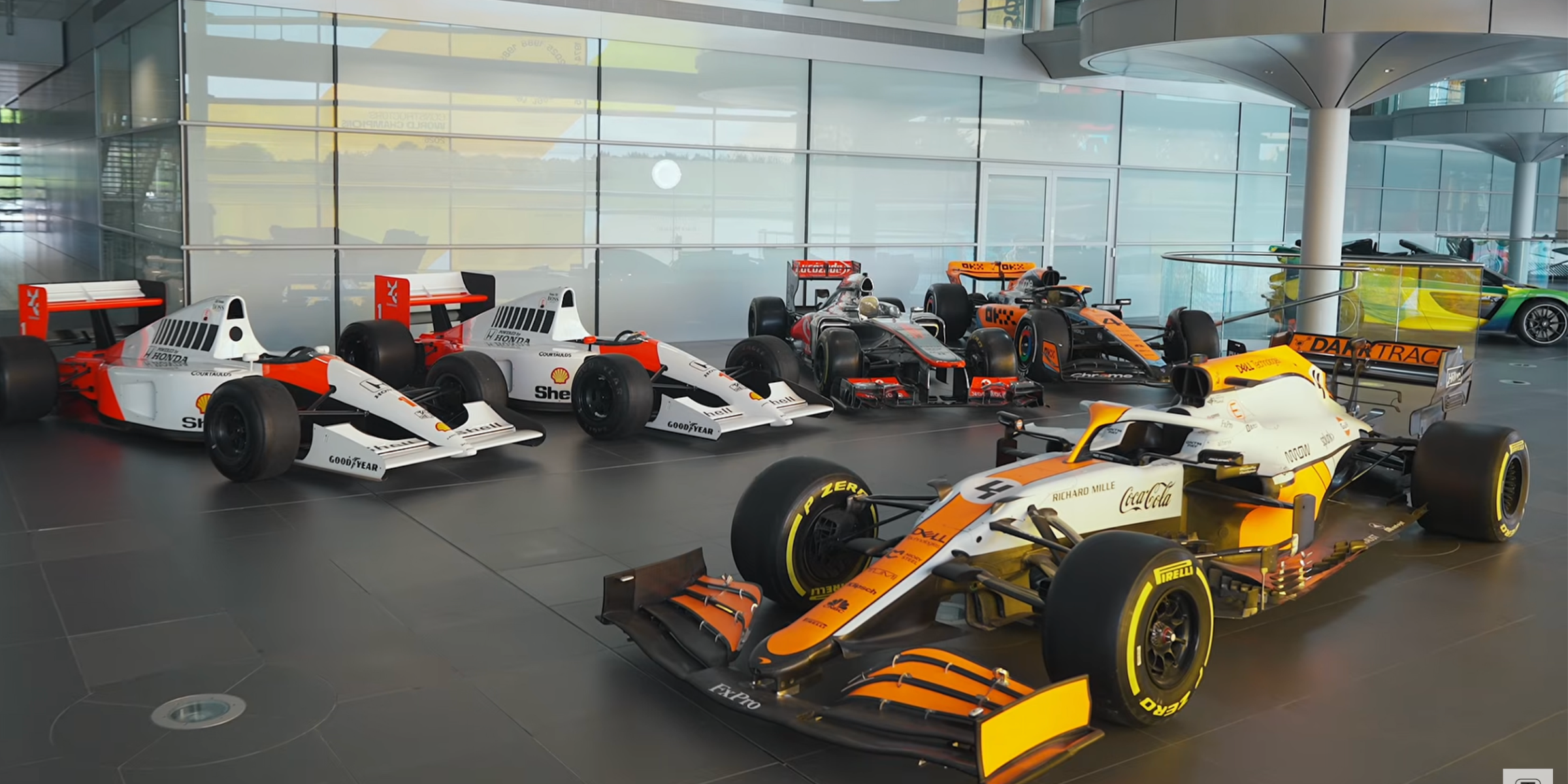
From Ayrton Senna’s V12-powered era to a modern Formula 1 car driven by Brad Pitt, McLaren Racing is offering five historic machines from its own collection, each carrying a direct connection to the team’s competitive history.
Formula 1 cars rarely become available with the kind of provenance that collectors dream about: a documented history within the team that raced them, connections to celebrated drivers and the possibility of seeing them return to the circuit. McLaren Racing is now offering five such machines from its own heritage collection through specialist dealer Tom Hartley Jnr, opening an unusual chapter in the market for historic motorsport.
The cars span more than three decades of Formula 1 engineering, from the naturally aspirated V12 era of Ayrton Senna and Gerhard Berger to the turbo-hybrid generation and a modern chassis driven by Hollywood actor Brad Pitt for a promotional feature. Their combined potential value has been estimated at up to US$70 million, approximately R1.17 billion at an indicative exchange rate of R16.70 to the dollar.
Prices have not been publicly disclosed, and the overall valuation remains an estimate rather than a confirmed sale figure. What makes the offering particularly significant is that the cars have remained within McLaren’s ownership since their racing careers ended.
For collectors, that continuity provides a direct link to the team’s own history. For McLaren, the sale is also an opportunity to place significant racing machines in the hands of owners who may continue to preserve, display and drive them.
The Senna And Berger Era: Two MP4/6A Chassis
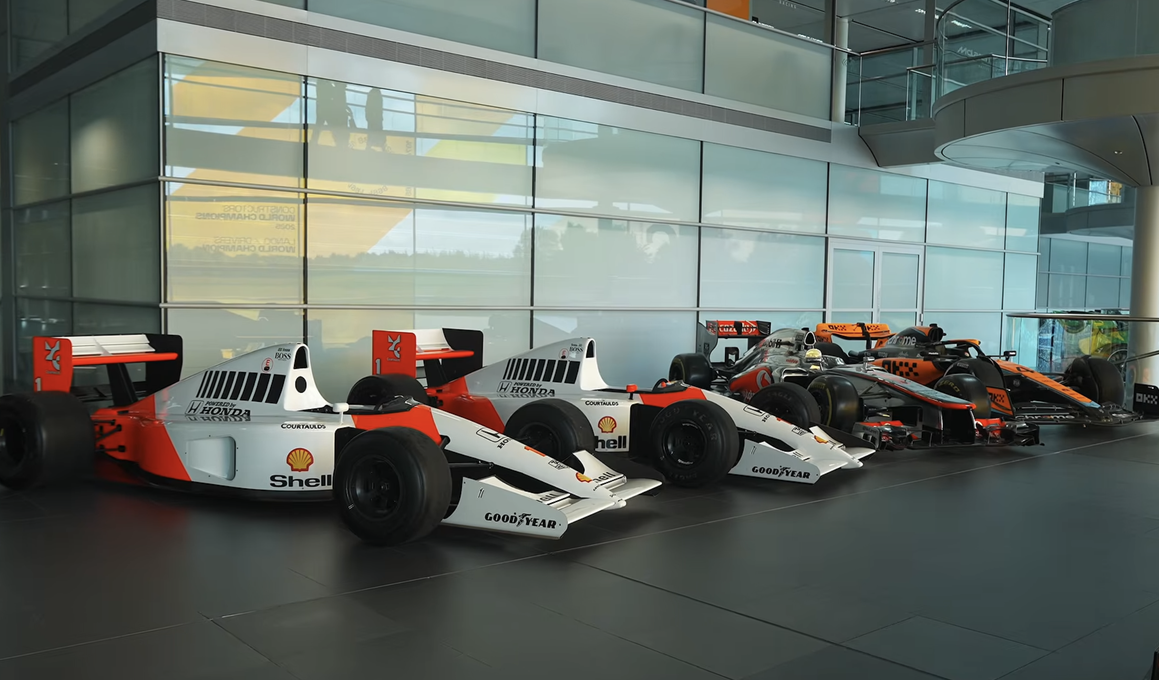
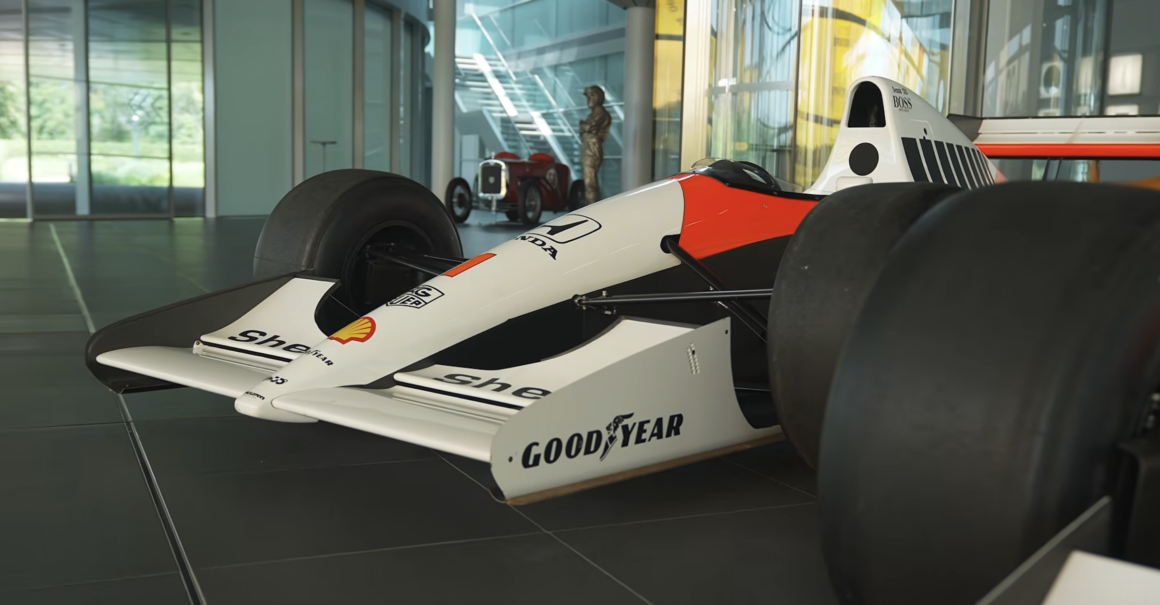
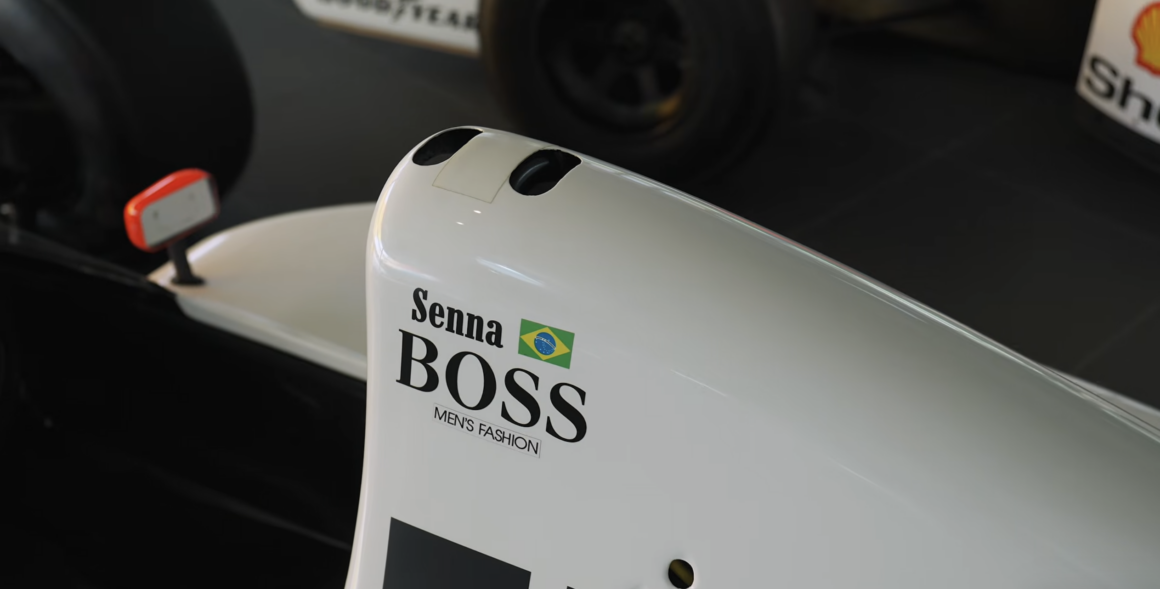
The collection’s most historically resonant entries are two 1991 McLaren MP4/6A chassis, powered by Honda’s naturally aspirated V12 engine. The MP4/6 belongs to one of the defining periods in McLaren’s Formula 1 history, when Senna and Berger competed at the front of the field.
Chassis 04 carries the story of Berger’s race at Imola, where he finished second behind Senna. Its significance lies in its direct connection to a specific Grand Prix and the competitive relationship between two drivers who helped define the team’s early-1990s identity.
Chassis 07 has a different distinction. According to the supplied sale information, Senna tested the car, which also has a race victory to its name. Its reported record of avoiding crashes during its racing career adds to its appeal as a surviving example of a period when Formula 1 cars were demanding, mechanically complex machines.
Together, the two cars offer complementary perspectives on McLaren’s V12 era. One recalls a particular race result; the other combines Senna’s association with a winning chassis and an unusually clean racing history.
For a collector seeking to build a coherent McLaren racing collection, acquiring both would bring together two related pieces of the same competitive story.
The 2012 MP4/27A: A Link Between Generations
The third car is the 2012 MP4/27A, chassis 01, raced by Jenson Button and tested by Lewis Hamilton during his final season with McLaren.
The car represents a different period in Formula 1 development, before the sport’s move to the current turbo-hybrid power-unit era. It also connects two drivers whose careers became central to modern Formula 1: Hamilton, who went on to establish himself as one of the sport’s most successful competitors, and Button, the 2009 world champion.
Its significance rests on that driver history and its place within McLaren’s continuing evolution. Rather than representing a single celebrated moment alone, the MP4/27A links the team to a transitional period in which changing regulations, engineering priorities and driver line-ups shaped the championship.
For collectors, cars with documented links to multiple prominent drivers can offer a particularly compelling combination of provenance and historical context.
The 2021 MCL35M: A Monza Connection
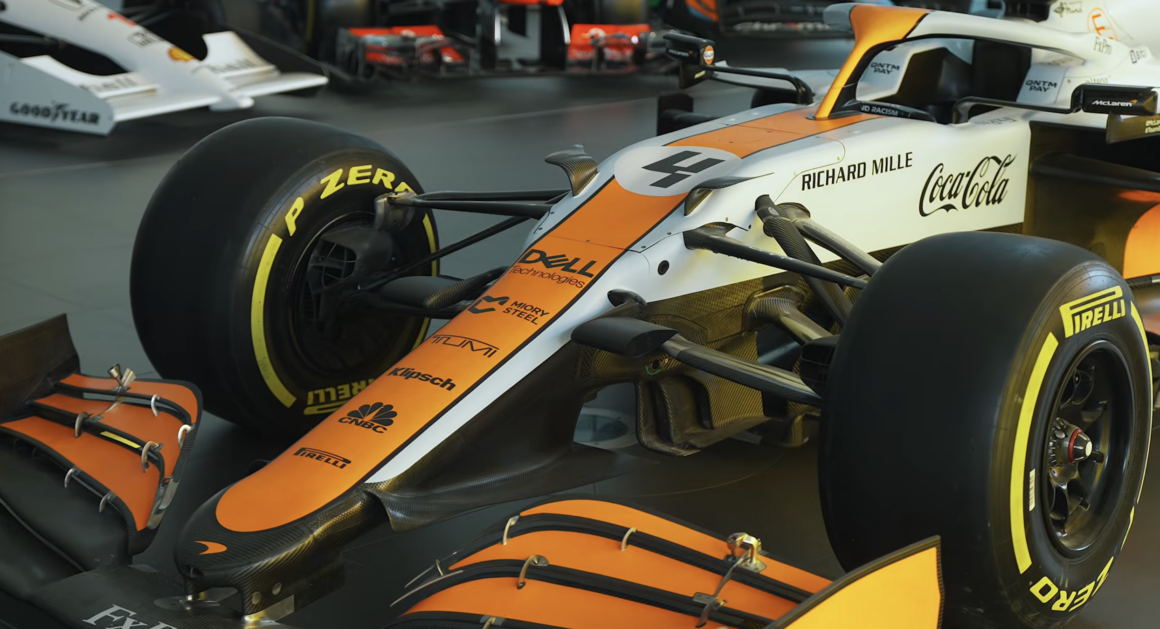
The fourth offering, the 2021 MCL35M, carries a connection to one of McLaren’s most memorable results of that season.
Lando Norris drove the chassis to second place at Monza, finishing behind teammate Daniel Ricciardo in a McLaren one-two finish. The result was an important moment for the team, which had spent years working to return to the front of the field.
The MCL35M belongs to Formula 1’s turbo-hybrid era, in which power-unit integration, aerodynamic development and energy management became central to competitive performance. Its technology and visual character differ substantially from those of the early-1990s V12 cars, making the five-car collection a cross-section of changing engineering philosophies.
Its Monza history also provides a clear competitive reference point: this is not simply a modern Formula 1 machine, but a chassis associated with a significant team result.
The Modern Icon: A McLaren Driven By Brad Pitt
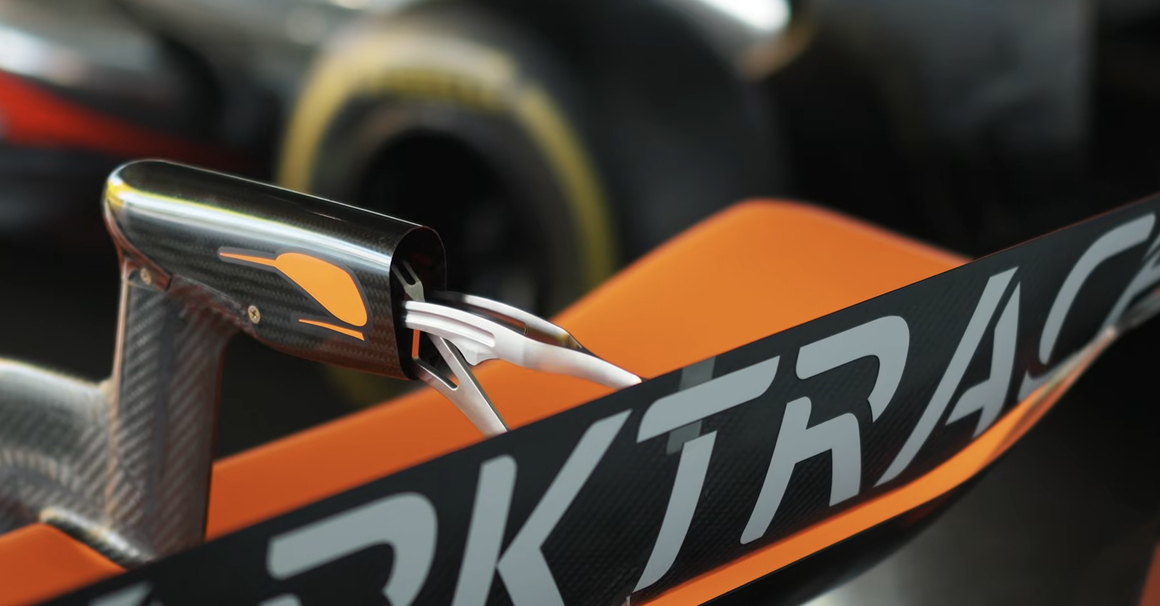
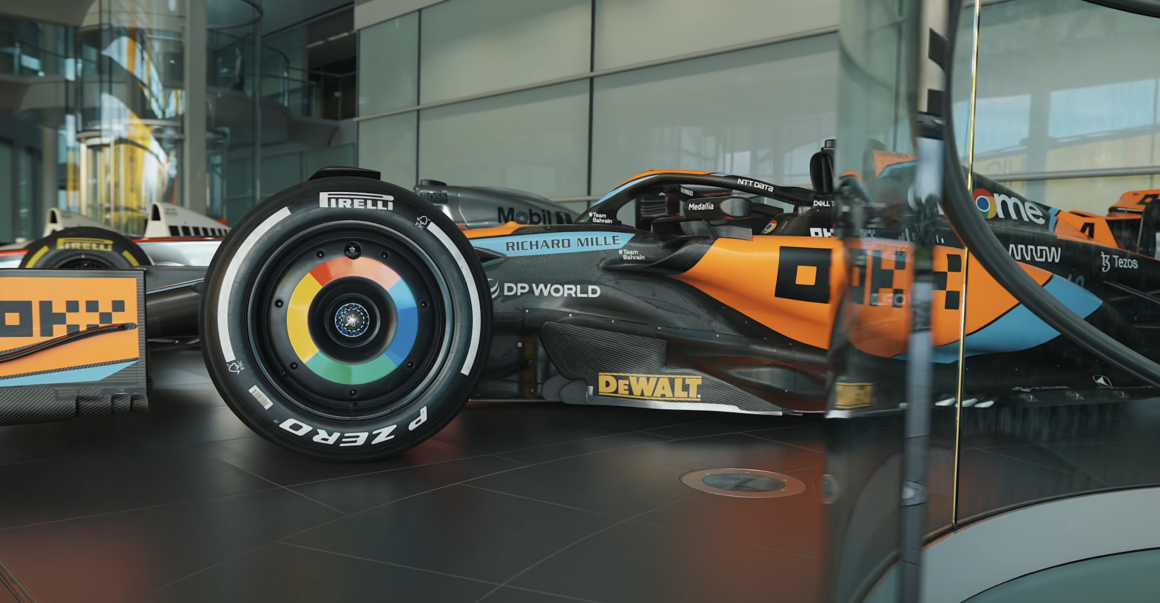
The newest car in the group is the 2023 MCL37, chassis 03, which has been driven by professional Formula 1 drivers and Brad Pitt during a promotional feature.
Pitt’s involvement gives the car an unusual cultural dimension. His connection to Formula 1 through a film project brought the sport’s machinery into a wider entertainment context, placing a real racing chassis at the intersection of motorsport and Hollywood.
The car also carries two podium finishes, according to the supplied sale information, giving it a competitive history independent of its celebrity association.
Its proposed entry into private ownership is notable because it represents a modern generation of Formula 1 engineering while retaining a documented connection to McLaren Racing. The sale information describes it as the most modern Formula 1 car to enter private hands, although that distinction depends on the status and delivery arrangements of other recently sold cars.
For a collector, the MCL37 offers a different proposition from the older machinery. It connects contemporary Formula 1 technology with a cultural moment that extended the sport’s reach beyond its established audience.
The Value Of Provenance
The market for historic Formula 1 cars is shaped by several factors: the driver associated with a chassis, its race results, technical significance, condition, originality and documented ownership history. The five McLarens bring these elements together in different ways.
The MP4/6A cars represent the Senna and Berger period. The MP4/27A links Hamilton and Button. The MCL35M carries the memory of a McLaren one-two finish at Monza, while the MCL37 combines contemporary racing history with its appearance in a promotional feature involving Pitt.
Their shared ownership history is particularly important. Because the cars have remained with McLaren Racing, the team has been able to preserve their records and maintain a direct relationship with their development and racing careers.
McLaren Racing chief executive Zak Brown has said the cars were built to be driven and raced, and that the team wants them to be used and enjoyed. That statement suggests a philosophy in which the sale is not intended simply to move significant cars into static collections. Their next owners may have the opportunity to see them running at private events, historic demonstrations or on appropriate circuits.
The older cars are to be restored by McLaren before delivery, while the more recent examples are expected to be delivered in running condition, according to the supplied information.

A Collection Worth More Than Its Parts
The five cars are being offered individually, with no fixed deadline for the sale. A single buyer could acquire more than one, potentially assembling a private collection that traces McLaren’s evolution across three distinct eras of Formula 1.
At a potential combined value of US$70 million, approximately R1.17 billion using the indicative exchange rate applied here, the collection represents a substantial opportunity for the historic motorsport market. The actual results will depend on private negotiations and the interest generated by each car.
The wider significance is not solely financial. Each chassis records a different chapter in McLaren’s history, from the visceral sound and mechanical character of the naturally aspirated V12 era to the sophisticated technology of modern Formula 1.
Taken together, they offer a tangible record of how the sport has evolved — and how one team has adapted across generations of drivers, regulations and engineering challenges.
For collectors, the opportunity is to acquire more than an historic racing car. It is to take custodianship of a piece of McLaren’s competitive story, with the documentation, preparation and heritage support of the team that built it.
The Five Cars At A Glance
- 1991 McLaren MP4/6A, Chassis 04: Gerhard Berger’s Imola car, which finished second behind Ayrton Senna.
- 1991 McLaren MP4/6A, Chassis 07: Tested by Senna and associated with a race victory.
- 2012 McLaren MP4/27A, Chassis 01: Raced by Jenson Button and tested by Lewis Hamilton.
- 2021 McLaren MCL35M: Driven by Lando Norris to second at Monza in McLaren’s one-two finish.
- 2023 McLaren MCL37, Chassis 03: Two podium finishes and driven by Brad Pitt for a promotional feature.
Sale Details
- Seller: McLaren Racing
- Dealer: Tom Hartley Jnr
- Combined Potential Value: Up to US$70 million, approximately R1.17 billion at an indicative R16.70/US$1
- Individual Prices: Not publicly disclosed
- Sale Format: Cars offered individually, without a fixed sale deadline