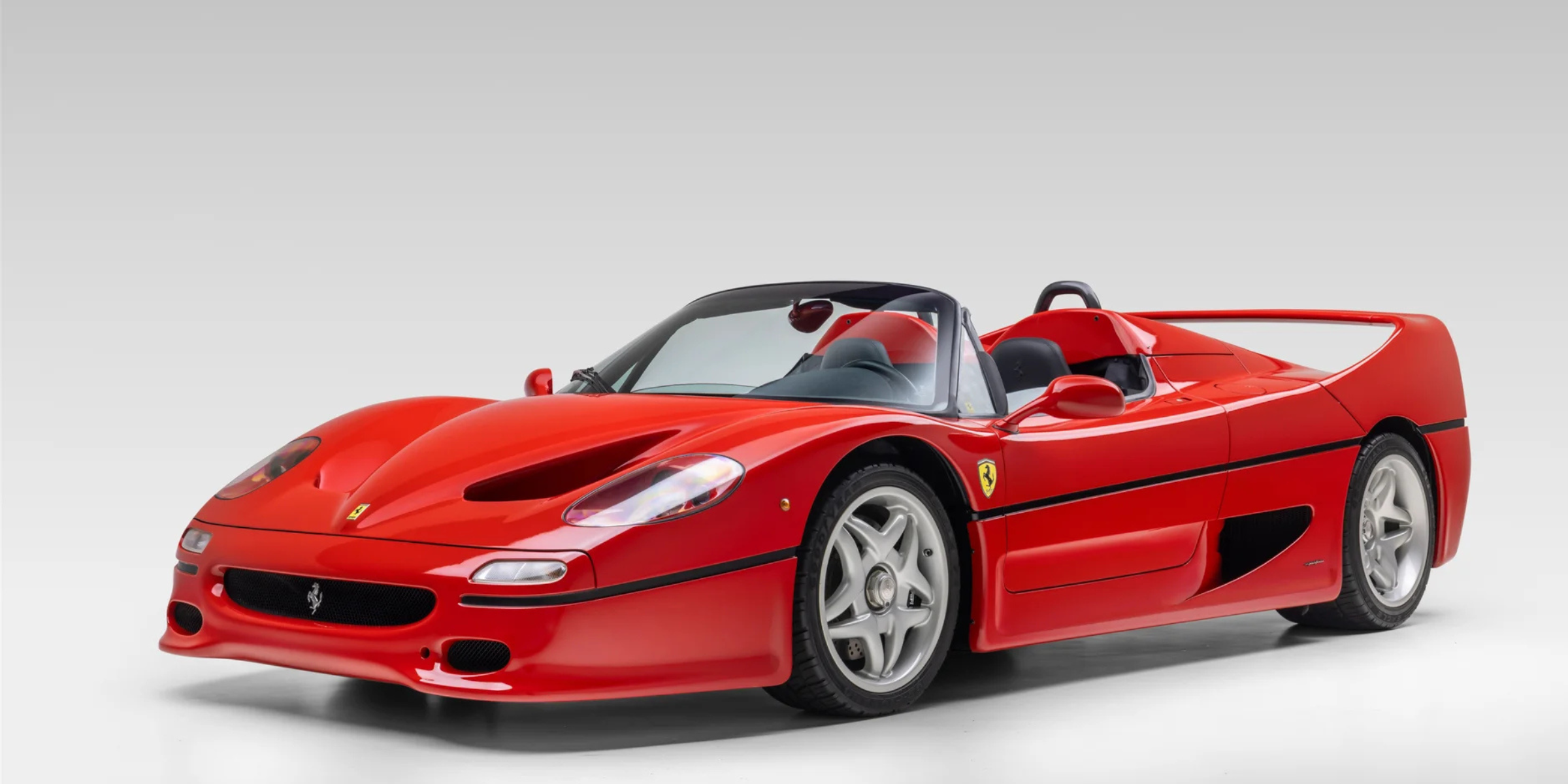
One of only 349 examples built, this 1997 Ferrari F50 is heading to auction in Las Vegas with just 106 miles on its odometer. Its estimated value of more than US$20 million could put it among the most expensive examples of the model ever sold.
There are supercars that earn their reputations through competition, others through design, and a select few through the extraordinary prices they command decades after leaving the factory. The Ferrari F50 belongs to all three categories. Now, a 1997 example with just 106 miles on its odometer is preparing to test the limits of the collector-car market.
Chassis 107165, one of only 349 Ferrari F50s produced, is expected to headline Broad Arrow Auctions’ Las Vegas sale on 31 October 2026, held in partnership with Concours at Wynn Las Vegas. The auction house expects the car to achieve more than US$20 million, equivalent to approximately R334 million at an indicative exchange rate of R16.70 to the dollar.
For a model originally conceived to bring Ferrari’s racing philosophy to the road, the car’s remarkable preservation presents an intriguing contradiction. The F50 was engineered to be driven, its naturally aspirated V12 and six-speed gated manual transmission delivering a direct connection between driver and machine. Yet this particular example has covered barely 106 miles in nearly three decades.
Its extraordinary mileage is now central to its appeal.
A Road Car With Racing At Its Core
Introduced in 1995 to celebrate Ferrari’s 50th anniversary, the F50 represented a particularly uncompromising interpretation of the road-going supercar. Rather than simply borrowing the visual language of Formula 1, Ferrari incorporated engineering principles drawn from its racing programme into the car’s fundamental architecture.
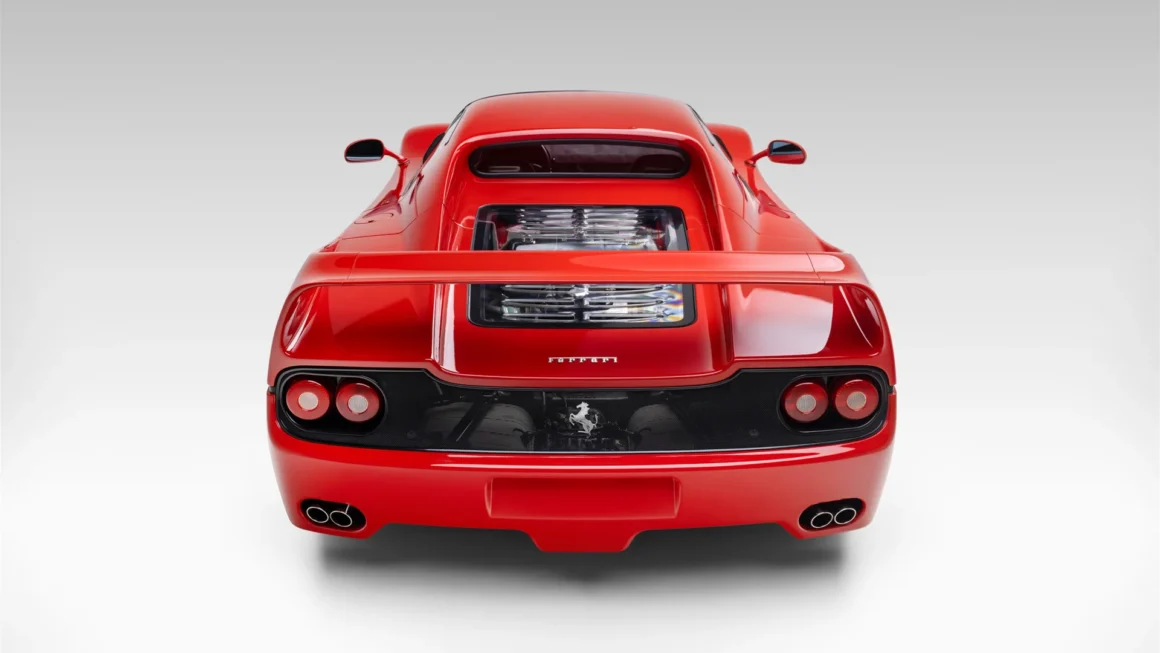
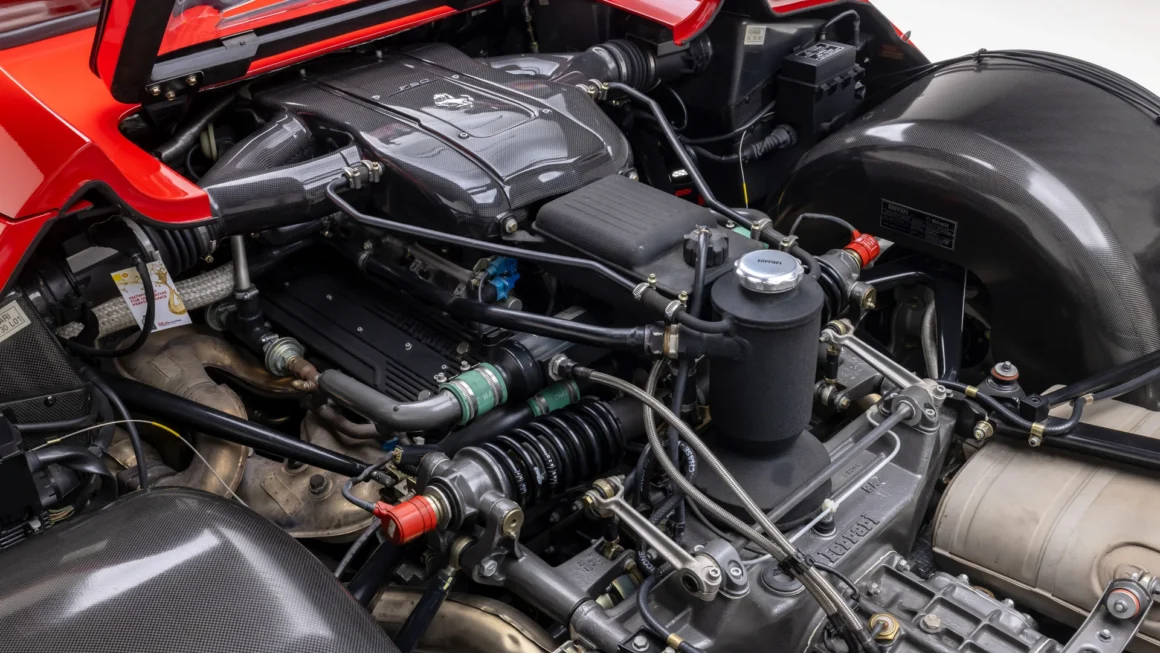
At its centre sits a 4.7-litre naturally aspirated V12 producing 513 horsepower. Derived from the architecture of Ferrari’s contemporary Formula 1 engine, the powerplant is mounted as a stressed structural component, contributing to the rigidity of the chassis.
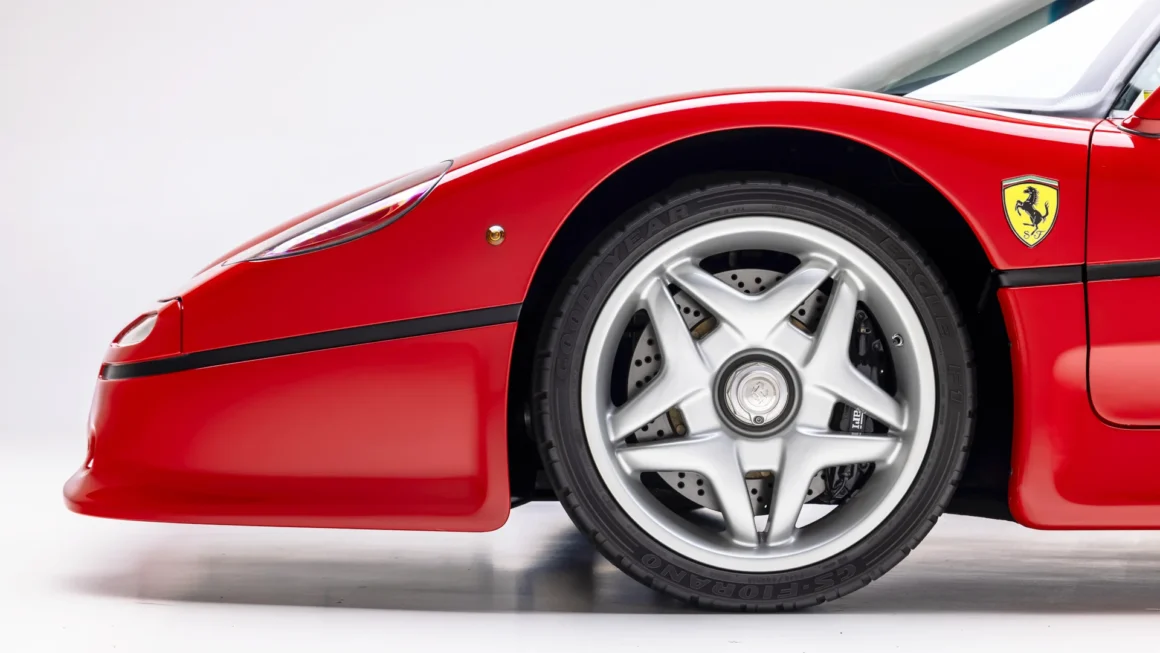
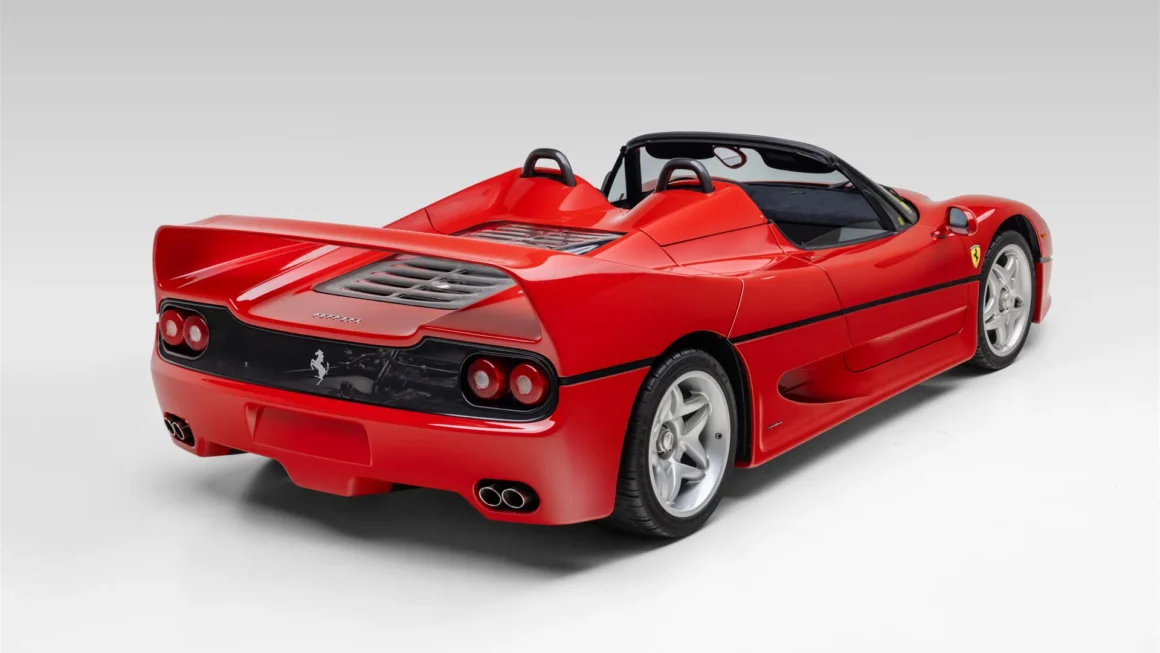
The six-speed manual transmission places the driver directly in control of the engine’s performance. There is no automatic gearbox or power steering to soften the experience, and the removable roof allows the car’s engine note to become an integral part of the drive.
The result is a machine built around mechanical involvement rather than electronic intervention. Its significance has grown as modern performance cars increasingly rely on sophisticated software, hybrid assistance and automated transmissions to deliver extraordinary speed.
The F50 belongs to a different philosophy: one in which the driver is expected to participate fully in the experience.
The Value Of 106 Miles
Low mileage is not unusual in the upper reaches of the collector-car market, but 106 miles on a car approaching 30 years old is exceptional. It raises the F50 beyond the category of a merely well-preserved supercar and into the territory of an almost untouched collector’s object.
The car is the 334th of the 349 examples produced and was delivered new through Maranello Sales in Egham, Surrey, as one of approximately 25 originally supplied to Britain. Its documented ownership history includes private collections in Japan and Germany before its more recent importation into the United States.
The reasons behind its exceptionally limited use remain unknown. What is clear is that the car has survived with a remarkable degree of originality.
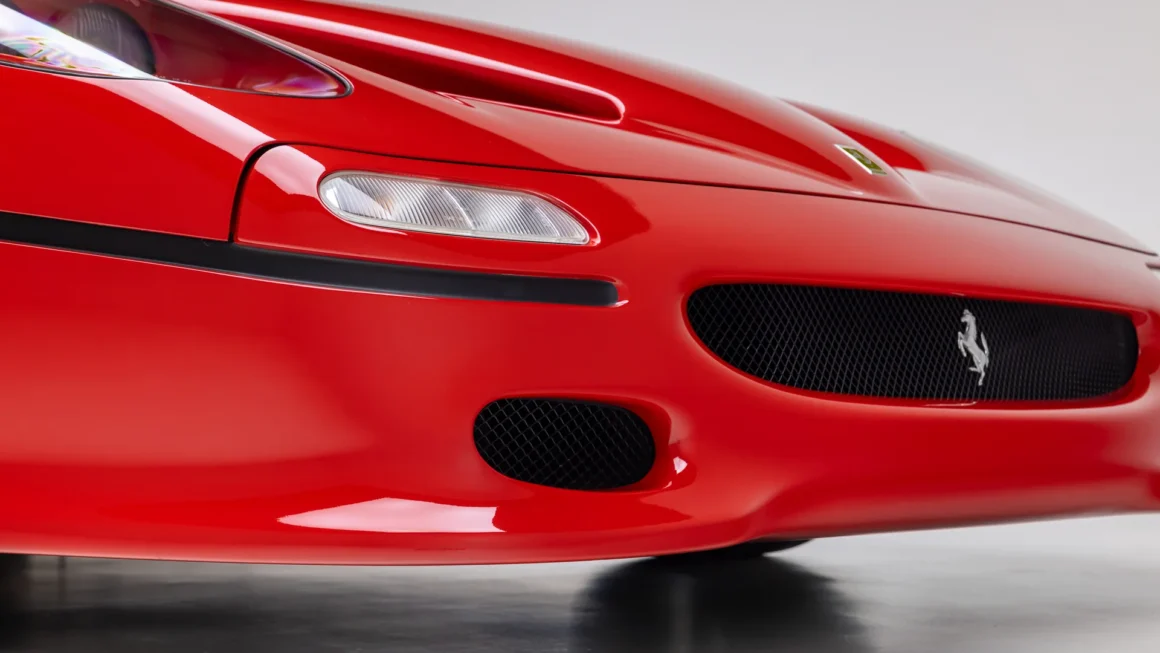
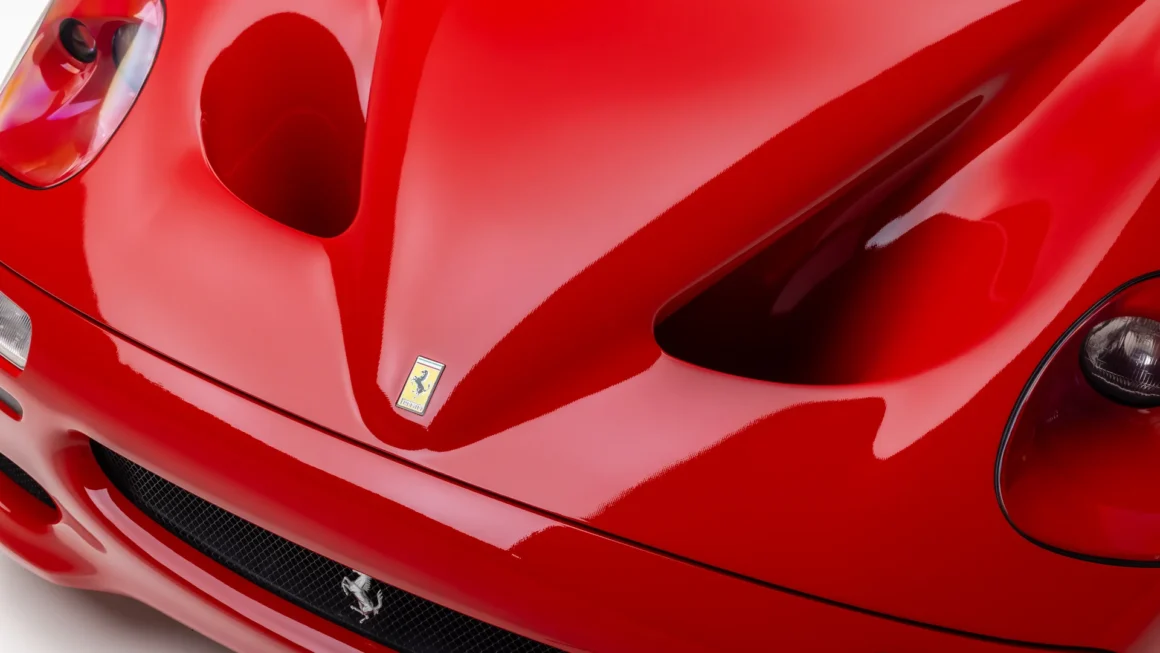
Finished in Ferrari’s signature Rosso Corsa, it features black leather upholstery with red seat inserts. The package also retains its removable hardtop, original flight case, three-piece Schedoni luggage set, J.P. Tod’s driving shoes, tools and other factory accessories.
These accompanying items strengthen the car’s appeal to collectors interested in provenance and completeness. The offering preserves not only the supercar itself but also elements of the ownership experience originally supplied with it.
Broad Arrow vice president Alexander Weaver has described the opportunity as being as close as a buyer can get today to taking delivery of a new F50. For a collector, that proposition is difficult to replicate.
A Collector’s Market For Ferrari’s Most Analog Era
The F50 occupies a distinctive position in Ferrari’s modern history. Produced between 1995 and 1997, it followed the F40 and preceded the Enzo, forming part of a celebrated lineage of limited-production flagship supercars.
Where the F40 became synonymous with lightweight construction and turbocharged aggression, the F50 pursued a more direct relationship with Ferrari’s naturally aspirated racing heritage. Its V12, manual gearbox and removable roof created an experience that differed substantially from the increasingly digital performance cars that followed.
That distinction helps explain the model’s enduring appeal. Collectors are not simply buying acceleration or top speed; they are acquiring a particular moment in the evolution of Ferrari engineering.
The limited production run adds another layer of scarcity. With only 349 examples built, the F50 was never intended to become a common sight, even among wealthy enthusiasts. Cars with unusual provenance, exceptional condition and exceptionally low mileage occupy an even narrower category.
The challenge for the market is determining how much of a premium should attach to a car that has been preserved so carefully. Low mileage is desirable, but a vehicle designed for driving also invites questions about mechanical recommissioning, long-term storage and the difference between originality and usability.
For the eventual buyer, those considerations will form part of the decision alongside the car’s rarity and condition.
The Price Of Preservation
At an expected price exceeding US$20 million, this Ferrari F50 would be valued at approximately R334 million using the indicative exchange rate applied here. That places it in a rarefied segment of the international collector-car market, where provenance, scarcity and condition can exert as much influence as performance.
The headline figure also invites comparisons with other celebrated F50s associated with high-profile owners, including boxing champion Mike Tyson and fashion designer Ralph Lauren. The supplied source suggests that this example could surpass prices paid for those cars, although a definitive comparison requires the confirmed sale results and relevant auction records.
The distinction matters because auction estimates are not final prices. The eventual result will depend on bidding, buyer demand and the terms of the sale.
Nevertheless, the combination of limited production, Formula 1-derived engineering, documented history and just 106 miles makes chassis 107165 an unusually compelling offering.
A Ferrari Frozen In Time
The F50 was created to deliver an uncompromising driving experience, yet this particular example has spent much of its life away from the road. That tension is central to its story. Its extraordinary preservation has become a defining feature of a car whose engineering was intended to be experienced rather than merely observed.
When it crosses the auction block in Las Vegas on 31 October, collectors will have the opportunity to decide what that preservation is worth. A result above US$20 million would place the car among the most valuable F50s ever offered and reinforce the premium attached to exceptional examples of Ferrari’s limited-production flagships.
For the next owner, the choice will be whether to continue preserving the car as a near-time-capsule collectible or finally experience the machine as its engineers intended.
Either way, this F50 demonstrates how a supercar’s value can evolve beyond its original performance figures. Sometimes, what makes a car extraordinary is not how far it has travelled, but how little of its life it has revealed.
Auction Details
- Car: 1997 Ferrari F50
- Chassis: 107165
- Production: One of 349 examples
- Mileage: 106 miles
- Engine: 4.7-litre naturally aspirated V12
- Power: 513 horsepower
- Transmission: Six-speed manual
- Exterior: Rosso Corsa
- Auction: Broad Arrow Auctions, in partnership with Concours at Wynn Las Vegas
- Date: 31 October 2026
- Expected Price: More than US$20 million, approximately R334 million at an indicative exchange rate of R16.70/US$1