|
Getting your Trinity Audio player ready...
|
In Venice, Es Devlin turns craftsmanship into an immersive experience, bringing together more than 500 makers from around the world at a moment when the value of human creativity has never felt more relevant.
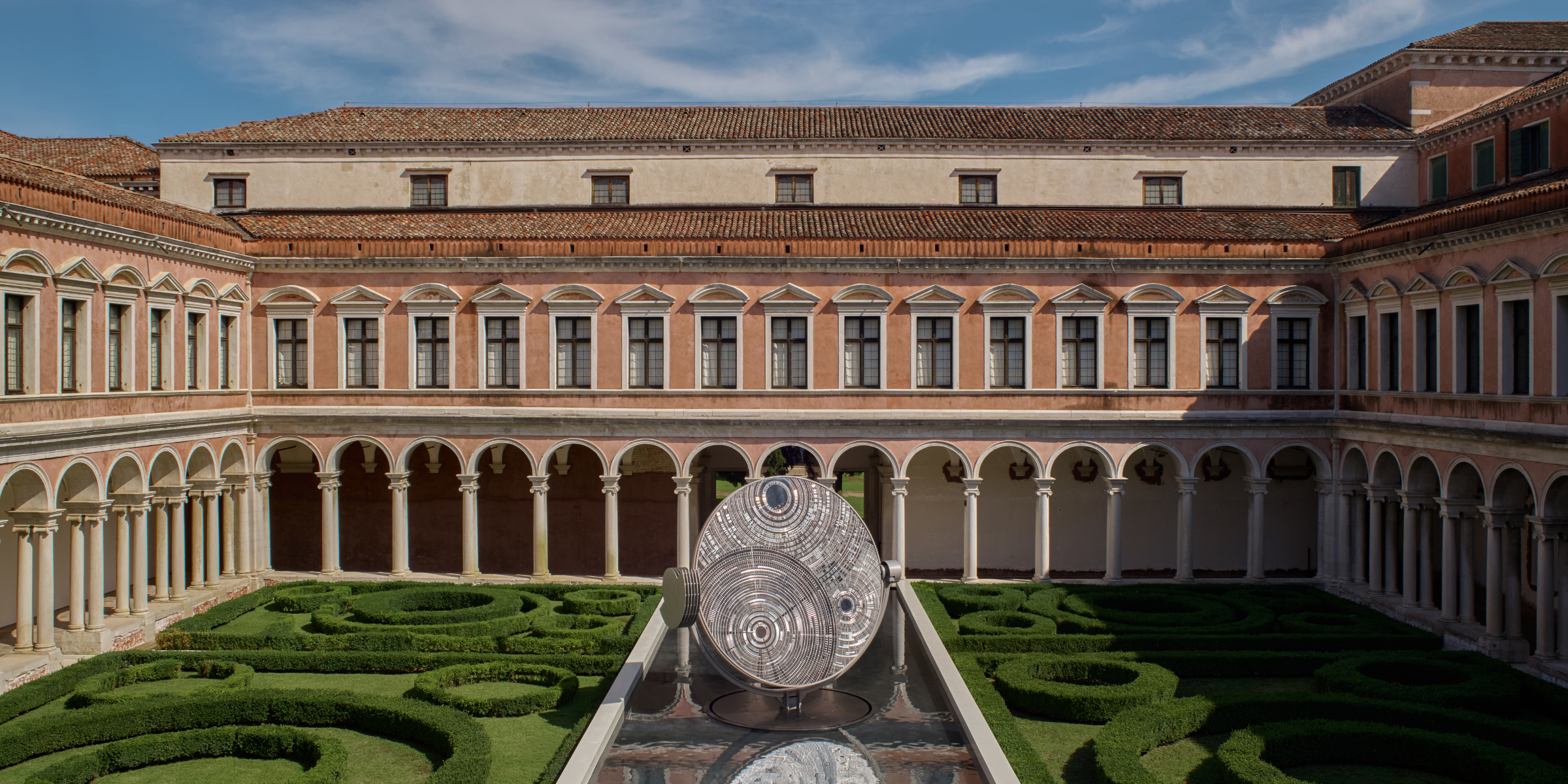
Homo Faber 2026: An Island of Light is now open in Venice, transforming the Fondazione Giorgio Cini on San Giorgio Maggiore into a vast celebration of contemporary craftsmanship.
Running until 30 September 2026, the fourth edition of the biennial brings together more than 700 handcrafted objects by over 500 craft artists from more than 70 countries, presented through 15 immersive installations conceived by British artist and designer Es Devlin.
And this year’s Homo Faber arrives at an interesting moment.
Technology can now generate images, imitate voices and reproduce forms with extraordinary speed. Against that backdrop, the exhibition turns attention back towards something much older and increasingly precious: the human hand.
As Hanneli Rupert, Executive Vice-Chair of the Michelangelo Foundation, puts it, there is a renewed desire for “evidence of the human hand” — individuality, imperfection, skill and intention.
That idea sits at the heart of An Island of Light.

A WORLD BUILT BY HAND
Curated by the Michelangelo Foundation for Creativity and Craftsmanship and organised with Fondazione Giorgio Cini and Fondazione Cologni dei Mestieri d’Arte, the exhibition brings artisans themselves into the centre of the experience.
Devlin’s installations use light, water, mirrors, movement and sound to create an environment that moves beyond conventional exhibition display. Visitors encounter not only finished objects, but the people, workshops, tools and materials behind them.
Notably, 85 percent of the artisans exhibiting are participating in Homo Faber for the first time, giving this edition a particularly broad international perspective.
THE VALUE OF MAKING
There is something increasingly luxurious about knowing who made an object.
In an era of instant production, the time invested in mastering a technique becomes part of the object’s value.
A craftsperson’s knowledge cannot simply be separated from the thing they create.
The material carries decisions.
The surface carries touch.
The finished object carries time.
Devlin’s intention is for visitors to leave with a greater understanding of the journey behind the objects they encounter — the hands that made them and the conditions in which they were produced.

INSIDE THE ATELIER
One of the exhibition’s most engaging elements is An Atelier Alive, where visitors can watch master artisans working with porcelain, leather, paper, textiles and other materials.
Elsewhere, woodworkers and weavers demonstrate their practices in A Rooted Ascent, while participatory workshops explore Japanese traditions including kintsugi and hanko. There is even an origami laboratory where visitors contribute handmade flowers to an evolving installation throughout September.
This emphasis on participation is important.
Homo Faber isn’t asking audiences simply to admire craftsmanship.
It is asking them to understand making.

CRAFT AS CULTURAL MEMORY
The exhibition also extends beyond the walls of Fondazione Giorgio Cini.
Across Venice, 130 Venetian artisanal workshops featured on the Homo Faber Guide are opening their doors throughout September, while exhibitions and craft events form part of the wider city programme.
That turns Venice itself into part of the exhibition.
The city becomes an extension of the argument Homo Faber is making: craftsmanship isn’t an isolated museum category.
It is living culture.
It exists in workshops, studios, kitchens, ateliers and family traditions.
It survives because somebody continues to make.

THE NEW LUXURY
Perhaps this is where Homo Faber becomes particularly relevant to the luxury world.
Luxury has long been associated with rarity, exclusivity and exceptional materials.
But craftsmanship introduces another measure of value:
human time.
The hours required to learn.
The years required to master.
The patience required to repeat.
The intelligence required to understand a material deeply enough to transform it.
That is difficult to automate.
And perhaps increasingly, that is precisely why it matters.

AN ISLAND OF LIGHT
Homo Faber 2026 is ultimately a celebration of people who have chosen making as a way of thinking, working and living.
Its scale is international, but its central idea is intimate.
Every extraordinary object begins somewhere.
With a material.
A technique.
A decision.
And, ultimately, a pair of human hands.
In Venice this September, Homo Faber gives those hands the spotlight.
And in an increasingly digital world, that may be one of the most compelling expressions of luxury there is.